Thousands of Foreign Trucks Illegally Cross Weakened Dutch Bridge Despite Ban
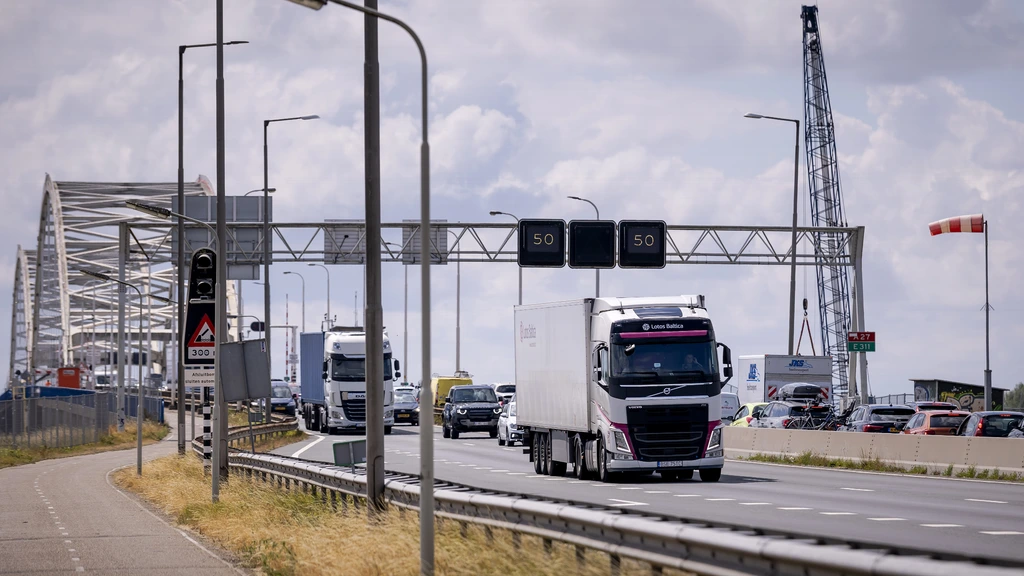
Thousands of foreign trucks and coaches continue to disregard a ban and cross the weakened Merwedebrug bridge on the A27 near Gorinchem, Netherlands. Between Saturday and Wednesday, 8,141 heavy vehicles traversed the bridge, which has been closed to such traffic since July 18 due to structural weaknesses in its steel arch. Approximately 80 percent of these vehicles had foreign license plates. Due to current regulations, these foreign-plated vehicles cannot be automatically fined as their license plates are not registered by the camera systems, and there are no existing European agreements for data exchange that would facilitate such enforcement. While the total number of heavy vehicles crossing has decreased significantly from an average of 18,000 per workday to around 2,500, Rijkswaterstaat (RWS) aims for zero violations. In the same five-day period, 96 fines were issued, and 567 penalty notices were sent to the Central Judicial Collection Agency, each resulting in a €500 fine, exclusively for vehicles with Dutch license plates. Police and enforcement officers can still stop and fine foreign drivers manually. RWS is evaluating additional measures to address the ongoing non-compliance, with details yet to be determined.
The enforcement challenge highlights a systemic gap in cross-border traffic regulation, where technological enforcement capabilities outpace international data-sharing agreements. While Rijkswaterstaat has reduced overall heavy traffic, the persistent high volume of foreign vehicles underscores the need for more robust international cooperation on traffic violations. Future infrastructure management may require proactive integration of international license plate recognition and data exchange protocols to ensure consistent application of safety regulations, especially as autonomous vehicle systems become more prevalent and potentially bypass national enforcement mechanisms. The current situation presents a trade-off between immediate safety concerns and the complexities of international legal frameworks, prompting consideration of more harmonized enforcement strategies across the EU.
AI-generated to prompt reflection — not editorial opinion, not advice, not a statement of fact. How this works.