Thousands of Migrants Cross into Spanish Enclave of Ceuta from Morocco
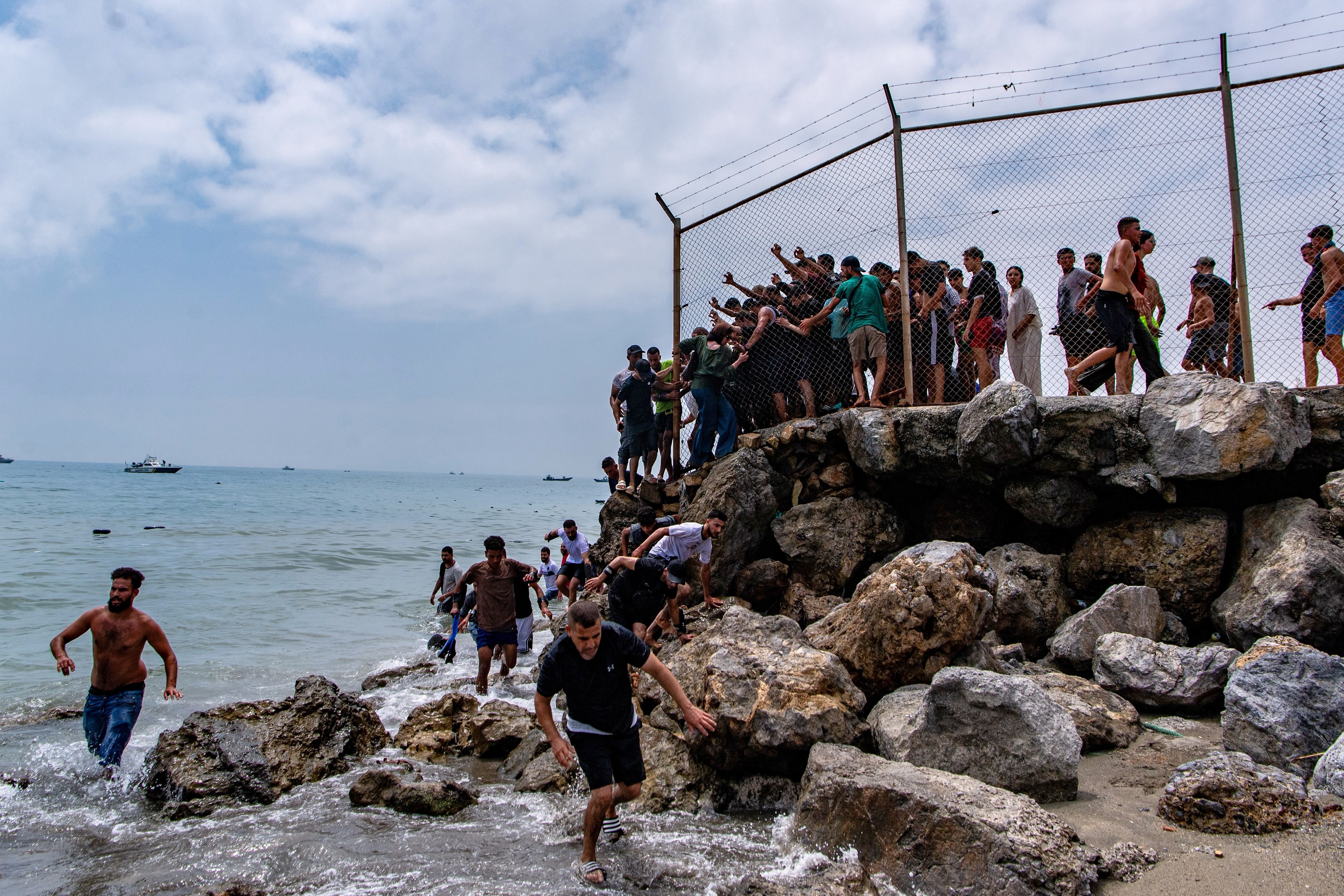
Thousands of migrants have recently crossed the border from Morocco into Ceuta, a Spanish enclave in North Africa, triggering significant reactions in Spain and the European Union and escalating diplomatic tensions between Madrid and Rabat. Spanish authorities estimate that around 60,000 people have reached the territory by land or sea, with videos of thousands swimming towards Ceuta going viral. The influx has overwhelmed the city of approximately 83,600 inhabitants, causing chaos and fear among residents. Spanish officials confirmed the deaths of at least 57 individuals attempting the crossing. In response, the Spanish central government deployed military forces to reinforce security in Ceuta and the neighboring enclave of Melilla, where an additional 300 to 400 border crossings were reported. Approximately 7,000 of the individuals who entered irregularly in the past 24 hours are minors.
Ceuta and Melilla, which have been under Spanish control for over five centuries, represent the only land borders between the EU and Africa. Morocco claims these cities as its own territory, though international law and the UN do not recognize them as territories pending decolonization. The Spanish Prime Minister, Pedro Sánchez, described the events as an "attack" and a "violation of territorial integrity," blaming trafficking mafias for deceiving migrants. He announced the installation of containment buoys and pledged to use "all state resources" to ensure security. However, the Mayor of Ceuta declared a state of "absolute humanitarian and social emergency," requesting national emergency status, which the central government has not granted, citing a lack of legal framework for migratory flows. Opposition parties criticized Sánchez's response, with some accusing him of weakness and others blaming Morocco for "blackmail."
The recent surge in migration has been partly attributed to a Spanish Supreme Court ruling three weeks prior, which prevents the immediate return of migrants intercepted at sea trying to reach Ceuta or Melilla. The Interior Ministry accused human trafficking networks of exploiting this ruling to encourage irregular migration. Spain has also reached an agreement with Morocco to enhance coordination and expedite the return of irregular migrants. The White House, meanwhile, linked the situation to Spain's "far-left globalist policies," warning of destructive consequences. Morocco's ambassador to Spain, Karima Benyaich, expressed that the situation is not desired by Rabat, urging Moroccan citizens who crossed to return home and emphasizing the need for "orderly and secure immigration."
The mass crossing of migrants into Ceuta highlights the persistent geopolitical friction between Spain and Morocco, exacerbated by differing interpretations of international law and border control responsibilities. The event underscores the complex interplay of humanitarian concerns, national security, and diplomatic leverage, particularly as Morocco may be utilizing migration flows as a tool in its broader relationship with Spain and the EU. The Spanish government's response, balancing security reinforcement with humanitarian considerations and internal political pressures, reflects the difficult challenge of managing external borders in an era of increased global displacement. Future policy will likely involve continued negotiation with Morocco, efforts to deter irregular migration through enhanced border security and interdiction, and the ongoing debate within Spain and the EU about sustainable approaches to asylum and migration management.
AI-generated to prompt reflection — not editorial opinion, not advice, not a statement of fact. How this works.