Thousands of Moroccan Migrants Reach Spanish Ceuta by Sea Amid Border Crisis
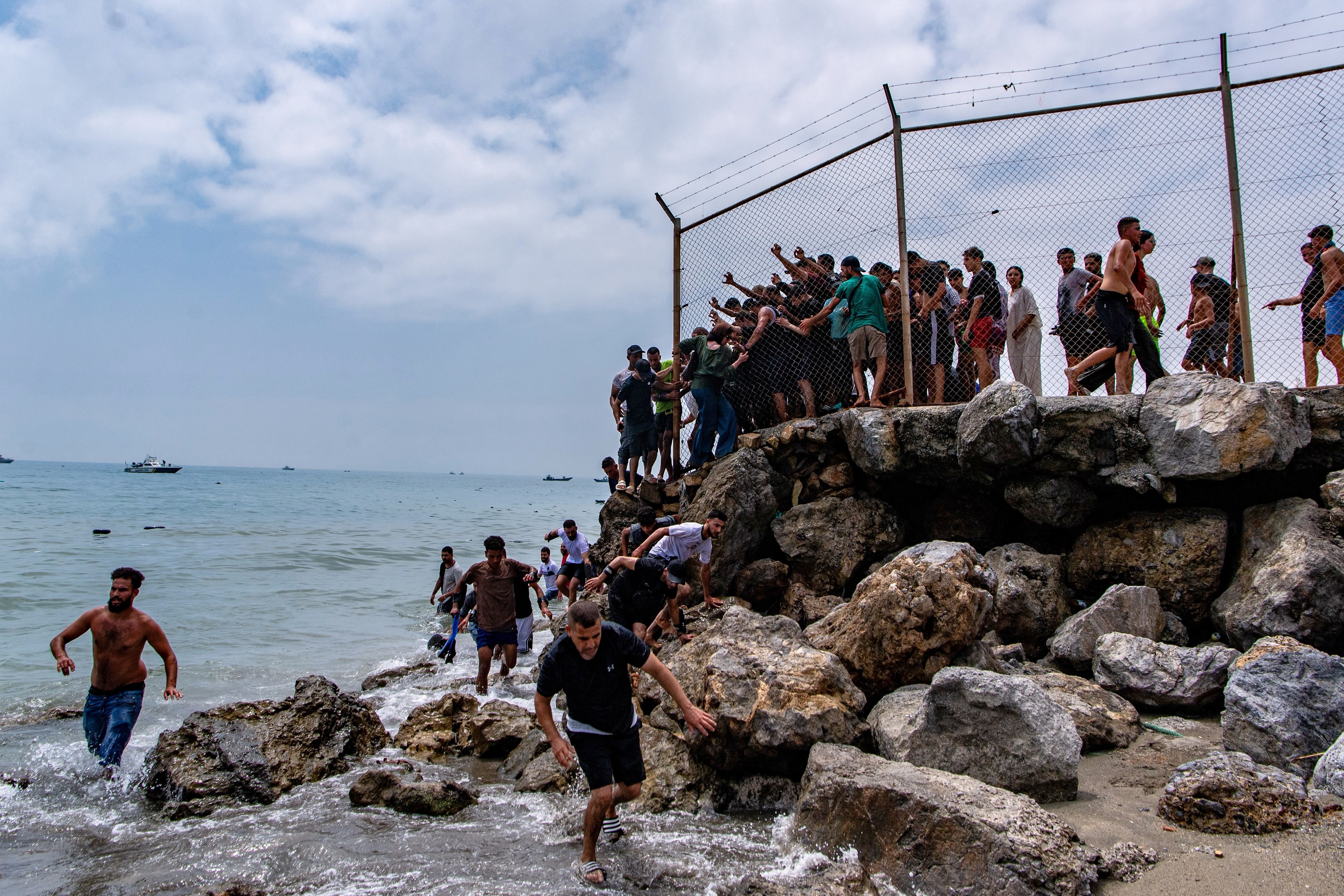
A significant migration crisis unfolded as thousands of individuals, primarily young Moroccans, swam and crossed the border into the Spanish city of Ceuta, an autonomous territory in North Africa. Spanish authorities estimate that approximately 4,000 migrants arrived on Thursday alone, overwhelming the city's already strained reception centers. The influx has led to a heightened security response, with the Spanish government deploying military units to reinforce border police and the Civil Guard. At least 10 people have reportedly died during the perilous sea crossing, highlighting the dangers of this route, which is considered one of the most hazardous for migrants attempting to reach Europe. Ceuta, situated on the Mediterranean coast opposite the Strait of Gibraltar, is a key gateway to the European Union for many seeking entry. Morocco claims sovereignty over Ceuta, leading to recurrent diplomatic tensions with Spain. In response to the surge, Prime Minister Pedro Sánchez announced a visit to Ceuta alongside the Interior Minister. Spain also intends to bolster cooperation with Morocco to control the border and expedite the return of migrants where legally permissible. The European Union has pledged support to Spain and is considering increased collaboration with Frontex, the EU's border control agency. This event echoes a similar crisis in May 2021, which was linked to diplomatic friction between Spain and Morocco over Madrid's medical treatment of the Western Sahara independence movement leader. While the exact causes of the current flow are under investigation, Spanish officials suggest potential involvement of human trafficking networks, possibly exploiting changes in immediate return policies for intercepted migrants. However, direct coordination by the Moroccan government has not been confirmed. Migrants entered Ceuta by swimming around breakwaters, walking along coastal jetties, or attempting to scale fences. Those arriving are being processed, with asylum seekers' claims to be evaluated and others potentially facing return to Morocco.
This event underscores the persistent challenge of irregular migration routes to Europe, particularly through maritime borders. The situation in Ceuta highlights the complex interplay between geopolitical disputes, such as Morocco's claim over the territory, and humanitarian pressures. From a systemic perspective, the crisis reveals the limitations of current border control mechanisms and the strain on reception capacities when faced with sudden, large-scale movements. The EU's response, focusing on enhanced border cooperation and Frontex deployment, reflects a strategy prioritizing external border security. However, this approach may not address the underlying drivers of migration, such as economic disparities and regional instability. Looking ahead, a sustainable solution will likely require a multi-faceted strategy that includes addressing root causes in origin countries, fostering legal migration pathways, and ensuring humane treatment and processing of asylum seekers, while respecting international legal frameworks and the sovereignty of nations involved.
AI-generated to prompt reflection — not editorial opinion, not advice, not a statement of fact. How this works.