Thousands of Moroccans Reach Spanish Enclave in Africa, Sparking Migration Crisis
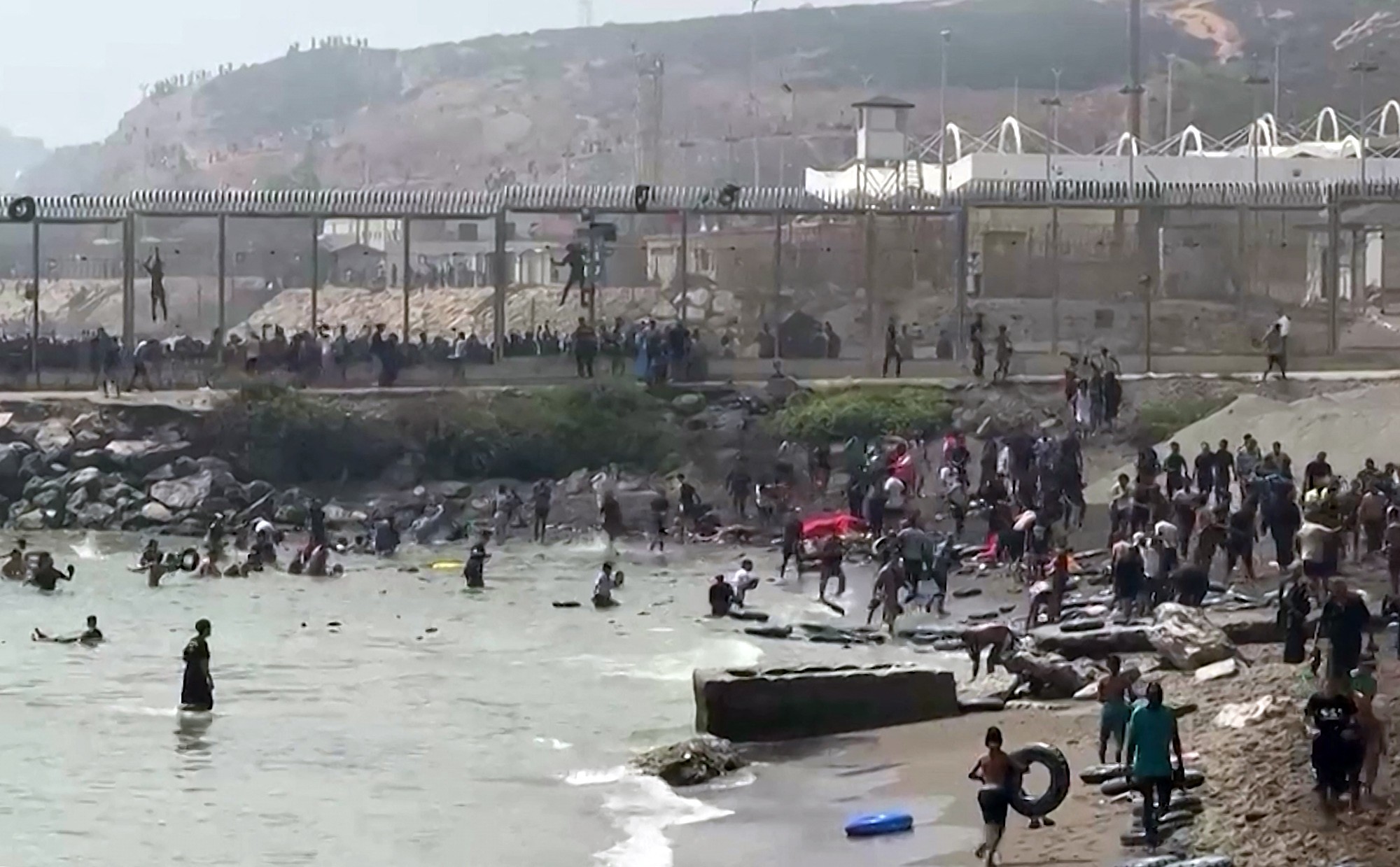
Thousands of Moroccans illegally entered Spain on Thursday, May 30th, triggering a significant migration crisis. The arrivals were not in mainland Europe, however, but in Ceuta, a Spanish city located on the northern coast of Africa. This situation highlights the complex geopolitical status of Spanish territories like Ceuta and Melilla, which are geographically in Africa but politically part of Spain. Spain has controlled Ceuta since 1668 and Melilla since 1497, both legacies of European maritime expansion. Morocco, which gained independence in 1956, claims sovereignty over these territories, viewing them as occupied by European colonialism, while Spain asserts centuries-long historical ties. Over 49,000 immigrants, primarily young Moroccans but also including families and children, entered Ceuta within 24 hours, according to Spain's Ministry of the Interior. Although legally on European Union soil, their entry into Ceuta does not guarantee automatic passage into the Schengen Area. Migrants must still undergo Spanish and European immigration procedures. In response to the influx, Italy temporarily suspended its free movement agreement with Spain, closing air and sea borders and reinstating checks for travelers from Spain, citing a threat to public order and internal security.
The surge of migrants into Ceuta underscores the persistent global disparities in economic opportunity and the enduring appeal of European living standards, even when the immediate destination is geographically disconnected from the European mainland. This event highlights the tension between national sovereignty claims over territories and the practical realities of migration flows, particularly when historical colonial legacies create unique border situations. The EU's Schengen Area, designed for seamless internal travel, faces challenges when external border pressures manifest in unexpected ways, forcing member states to re-evaluate internal security protocols. The situation also points to the complex relationship between Spain and Morocco, where territorial disputes intersect with migration management, suggesting that a sustainable resolution will require coordinated diplomatic and economic strategies rather than solely focusing on border enforcement.
AI-generated to prompt reflection — not editorial opinion, not advice, not a statement of fact. How this works.