Thousands protest AfD party congress in Germany; leaders re-elected
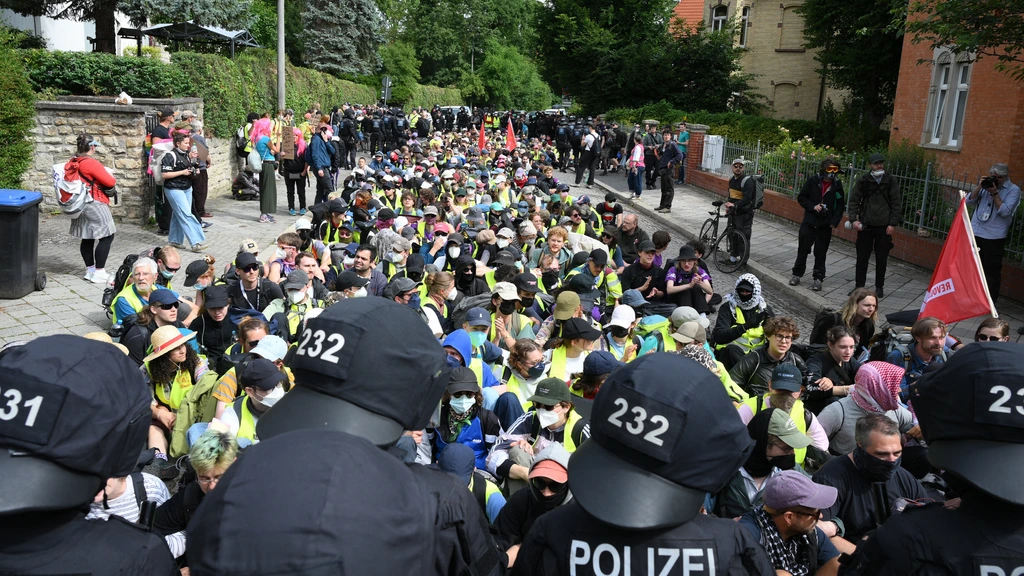
Over 30,000 demonstrators gathered in Erfurt, Germany, to protest the national congress of the far-right Alternative for Germany (AfD) party. Despite the large protest aimed at disrupting the event, the congress proceeded as planned, with party leaders Alice Weidel and Tino Chrupalla being overwhelmingly re-elected. Both leaders currently head the AfD, which, according to opinion polls, is the largest party in Germany. Local authorities expressed relief that the first day concluded with no major incidents, having prepared with 6,000 police officers to maintain order. Police intervened to clear access roads around Erfurt that had been blocked by protesters demonstrating against fascism and xenophobia, in an effort to prevent AfD members from reaching the venue. However, with 540 out of 600 AfD delegates already present by early morning, the meeting commenced on schedule at 10:00 AM. The police reported that two journalists were assaulted during the protests and received hospital treatment for their injuries, though the police did not confirm if they were from a specific right-wing news outlet. The local AfD party office was vandalized with paint, and fireworks were thrown. Protesters who breached police cordons were met with batons and pepper spray. Thuringia's Interior Minister Georg Maier stated his relief at the day's proceedings, hoping for continued relative calm. Erfurt's mayor, Andreas Horn, described the atmosphere as "wonderfully relaxed" and the colorful protest as "advertising for the city."
The events in Erfurt highlight the significant societal polarization surrounding the AfD's political platform, particularly its stance on immigration and national identity. While the protests aimed to delegitimize the party's congress, the AfD's leadership successfully proceeded with their agenda and reaffirmed their positions, indicating a resilient core support base. The AfD's framing of the protests as "anti-democratic" and their rhetoric about "saving the country" and "sending them back" reflect a strategy to mobilize voters by appealing to nationalistic sentiments and anxieties about societal change. This approach, coupled with the party's current standing in polls as the largest opposition force, suggests a potential for continued electoral growth, especially if dissatisfaction with the incumbent government persists. The contrast between the protesters' aims and the authorities' focus on maintaining order, alongside the reported clashes, underscores the complex challenges of balancing freedom of assembly with public security in a politically charged environment. Looking ahead, the AfD's ability to leverage public sentiment against established political parties and its consistent messaging on key issues will likely shape Germany's political landscape over the next decade.
AI-generated to prompt reflection — not editorial opinion, not advice, not a statement of fact. How this works.