Thousands reach Spanish exclave Ceuta; Spain and Morocco deploy forces
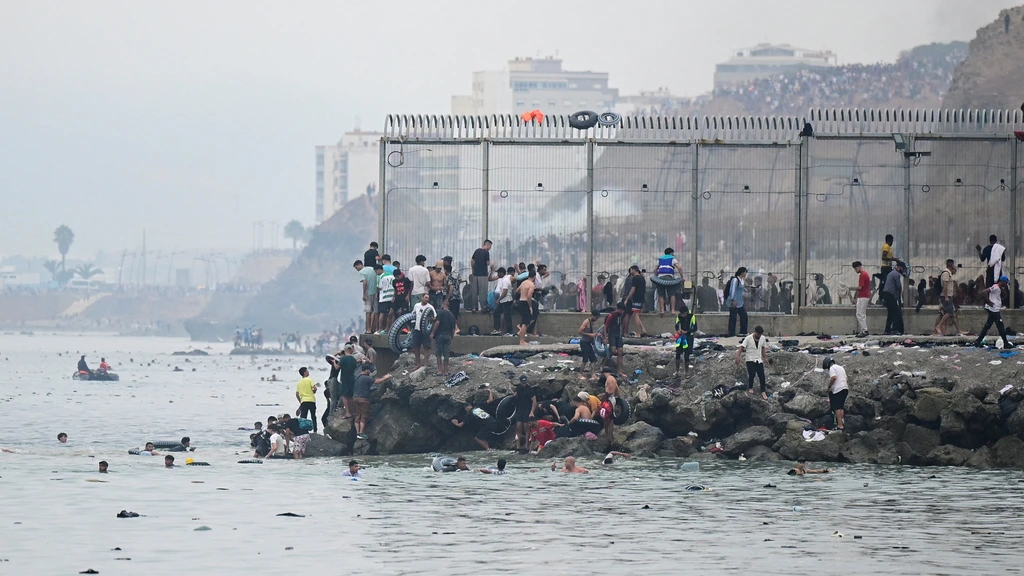
Tens of thousands of migrants have recently arrived in the Spanish exclave of Ceuta, primarily from Morocco, via sea and border fences. Spanish Interior Ministry figures indicate approximately 50,000 people reached Ceuta in a 24-hour period, with over 48,300 already returned to Morocco. The influx included young men, women, and families, though many returned due to overcrowding and lack of basic necessities. Ceuta, with a population of about 83,000, saw migrants wandering its streets, prompting Spain to deploy dozens of soldiers and Morocco to increase police presence with water cannons. Spanish Prime Minister Sánchez attributed the surge to a misinterpretation of a recent Supreme Court ruling, suggesting it was spread by human trafficking organizations. This ruling reportedly allowed intercepted sea arrivals to follow a standard procedure, contrasting with the immediate return policy for those crossing illegally over land. The situation mirrors a similar mass influx in 2021, which was linked to a diplomatic dispute between Morocco and Spain that led to relaxed border controls. Reaching mainland Spain from Ceuta is difficult due to strict controls on ferries and the dangers of swimming the distance. Special Schengen rules apply to Ceuta, requiring passport checks for travel to mainland Spain or other Schengen countries, and asylum applications must be made from the exclave itself. The geographical location of Ceuta, a 6-kilometer border with Morocco and a buffer zone, facilitates sea crossings from nearby Moroccan towns like Fnideq. Tragically, the number of migrant deaths attempting to reach Ceuta has risen to 57. Ceuta, strategically located on the Strait of Gibraltar, was originally conquered by Portugal in 1415 and later ceded to Spain in 1668. Morocco does not recognize Ceuta or the nearby exclave of Melilla as Spanish territory, considering them occupied lands.
The recent surge of migrants into Ceuta highlights the complex interplay of geopolitical positioning, legal interpretations, and humanitarian pressures at Europe's southern borders. The differing interpretations of Spanish legal rulings regarding migrant entry and return, amplified by social media and potentially exploited by trafficking networks, underscore the challenges in border management. Morocco's role in controlling its border with the Spanish exclave, influenced by its diplomatic relationship with Spain, appears to be a critical factor, as seen in past events. The event also brings into sharp focus the inherent vulnerabilities of exclaves and the precariousness of the journey for migrants, marked by significant loss of life. Looking ahead, the sustainability of current border control strategies and the efficacy of international cooperation in managing migration flows will be crucial as demographic shifts and regional instabilities continue to shape migration patterns over the next decade.
AI-generated to prompt reflection — not editorial opinion, not advice, not a statement of fact. How this works.