Three Dead After Car Catches Fire, Explodes in Osasco Highway Accident
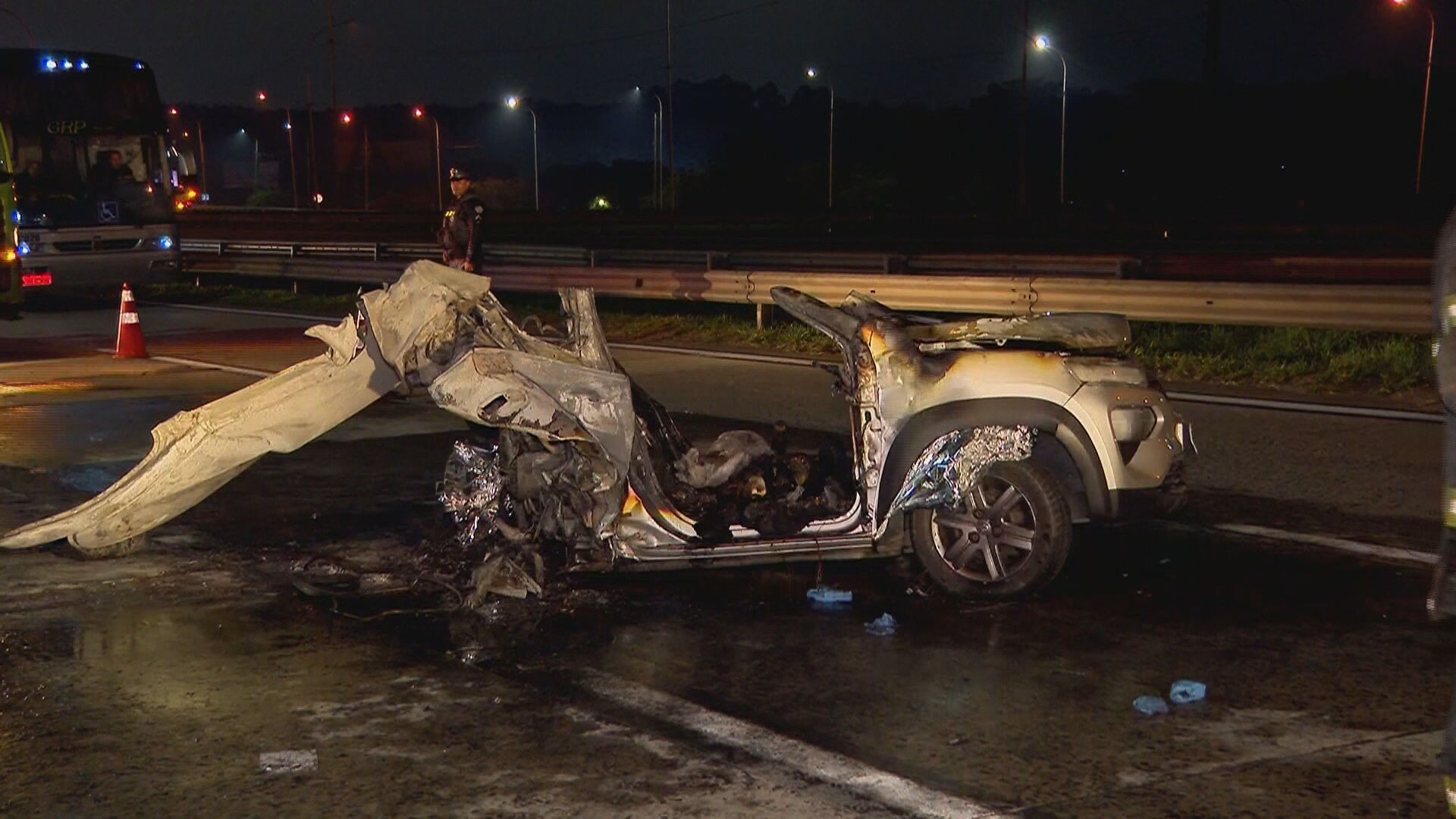
Three individuals, including a 5-year-old child, perished when a car caught fire and exploded following a collision on Rodovia Castello Branco in Osasco, São Paulo, late Sunday night, November 6th. The incident occurred around kilometer 17.6 of the highway, in the direction of the capital. Initial reports indicate a Honda Civic struck the rear of a Renault Kwid. Witnesses informed the police that the Civic's driver was traveling at high speed. The collision caused the Kwid's fuel tank to ignite, leading to the explosion. The three occupants of the Kwid were trapped and could not escape the burning vehicle. The driver of the Honda Civic sustained a head injury and was taken to a hospital in Osasco under police guard. Authorities reported that the driver refused to undergo a breathalyzer test. Emergency services, including forensic teams, controlled the fire and removed the wreckage. The victims' bodies were recovered by a funeral home early Monday morning. Traffic lanes and the shoulder were closed overnight for cleanup and investigation. Both vehicles were impounded for further examination.
This tragic event highlights the critical importance of adherence to traffic laws and safe driving practices. The reported high speed and subsequent collision underscore the severe consequences of reckless behavior behind the wheel, particularly when it involves the potential for catastrophic outcomes like vehicle fires and explosions. The driver's refusal to take a breathalyzer test raises questions about potential impairment, a factor that often exacerbates the risk of severe accidents. Moving forward, enhanced enforcement of speed limits and impaired driving laws, coupled with public awareness campaigns emphasizing the devastating impact of such actions, could contribute to preventing similar future tragedies. The incident also points to the need for robust emergency response protocols to mitigate the immediate aftermath of severe accidents.
AI-generated to prompt reflection — not editorial opinion, not advice, not a statement of fact. How this works.