Three Harbor Porpoises Released Back into North Sea After Months of Rehabilitation
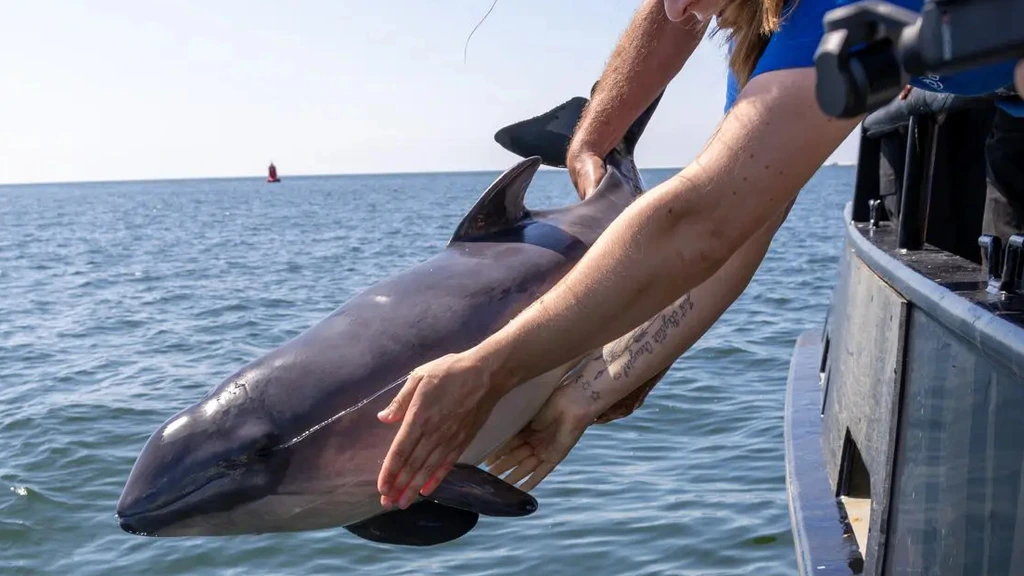
Three young harbor porpoises, which stranded on the Dutch coast in March and April, have been successfully released back into the North Sea after months of intensive care by the SOS Dolfijn foundation. The two male porpoises, named Jantje and Roelof by the foundation, were found on Vlieland and showed signs of injury, including a seal attack on Roelof and skin damage and a fungal lung infection for Jantje. A few weeks later, a female porpoise, named Coco, stranded on Texel. She was severely weakened and required constant support to prevent drowning. Extensive health tests confirmed that the trio had recovered sufficiently to be returned to the wild. They were released from Den Helder, with caregivers observing them surface a few times, described as a 'special moment'. The porpoises were approximately one year old at the time of stranding. SOS Dolfijn explained that young harbor porpoises often swim closer to the Dutch coast in the spring as they leave their mothers and begin independent lives, making them more vulnerable to stranding due to their inexperience. Two other porpoises stranded in March, one on Ameland and another on the Zeeland coast, but unfortunately did not survive.
The successful rehabilitation and release of these three young harbor porpoises highlight the critical role of specialized wildlife rescue organizations like SOS Dolfijn. The stranding events underscore the inherent vulnerabilities of young marine mammals navigating new environments and the potential impact of human activities and natural predation, such as the seal attack on Roelof. Understanding the seasonal migration patterns and the developmental stage of young porpoises is key to mitigating future stranding incidents. Future conservation efforts might focus on enhanced monitoring of coastal areas during peak stranding seasons and public awareness campaigns to report stranded animals promptly, thereby increasing survival rates and contributing to the overall health of the North Sea ecosystem.
AI-generated to prompt reflection — not editorial opinion, not advice, not a statement of fact. How this works.