Three RS Cities Rename Streets and School Honoring Dictatorship Presidents
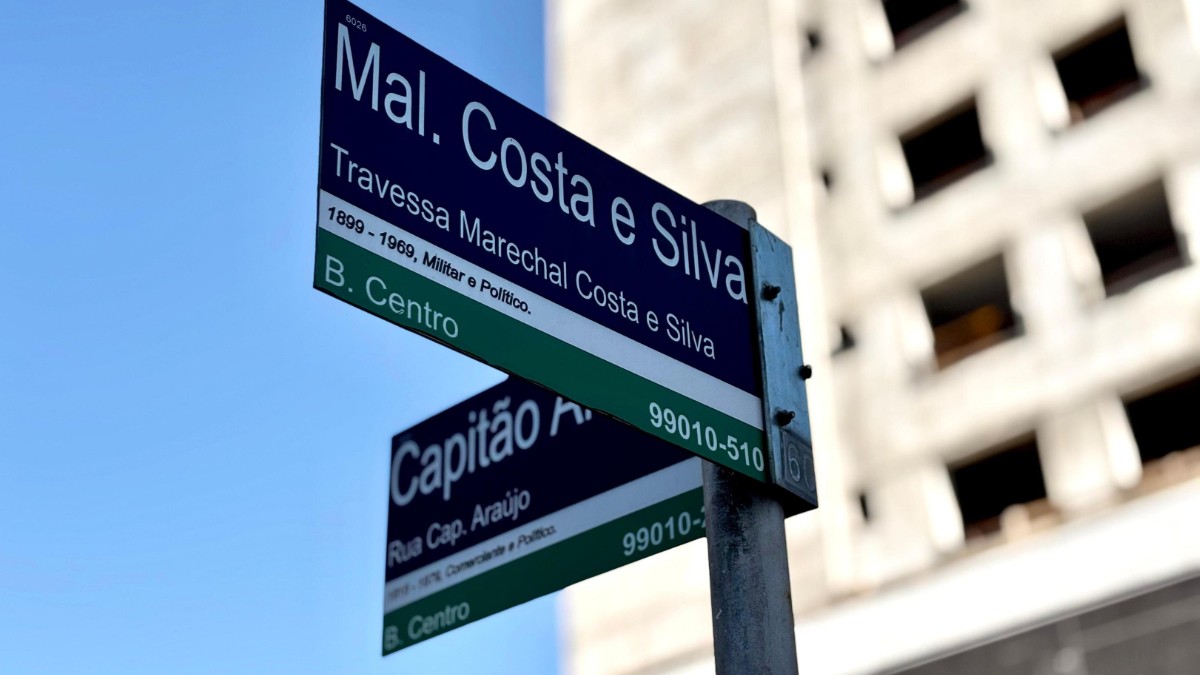
Three municipalities in Rio Grande do Sul, Brazil, have changed the names of streets and a public school that previously honored former presidents of the 1964-1985 civil-military dictatorship. These alterations followed recommendations from the Federal Public Prosecutor's Office (MPF), which argued that honoring individuals responsible for grave human rights violations is incompatible with a democratic regime. The MPF stated that maintaining such names trivializes the dictatorship's offenses and encourages revisionist narratives. A g1 survey revealed that, as of the 2022 IBGE Census, Rio Grande do Sul had 156 streets and 33 avenues named after the five presidents of that era. In Machadinho, a municipal law renamed "Rua Marechal Castelo Branco" to "Rua Agustinho Polidoro." Similarly, São José das Missões changed "Rua Ernesto Geisel" to "Rua Ipiranga" through municipal legislation. In Carazinho, the Municipal Secretariat of Education renamed the Escola Municipal de Ensino Fundamental Presidente Castelo Branco to Escola Municipal de Ensino Fundamental Castelo. The MPF's directive is grounded in the 2014 Final Report of the National Truth Commission (CNV), which identified the military presidents as responsible for state-sponsored systematic repression, including torture, summary executions, forced disappearances, and arbitrary detentions. This action also aligns with the 2009 National Human Rights Plan (PNDH-3), which advises against naming public buildings after individuals recognized as torturers.
This initiative reflects a broader societal effort to reconcile with historical injustices and align public spaces with contemporary democratic values. The renaming process, driven by prosecutorial recommendations and national human rights frameworks, underscores the evolving interpretation of historical commemoration. It highlights a tension between acknowledging past regimes and upholding principles of human rights and accountability in the present. The decision to remove names associated with human rights violations from public institutions signals a commitment to preventing the normalization of authoritarian legacies and fostering a civic environment that prioritizes democratic principles. This trend may influence similar actions in other regions grappling with the legacy of past dictatorships, prompting a re-evaluation of how historical figures are honored in the public sphere.
AI-generated to prompt reflection — not editorial opinion, not advice, not a statement of fact. How this works.