Three workers rescued from swaying scaffold during Rio de Janeiro windstorm
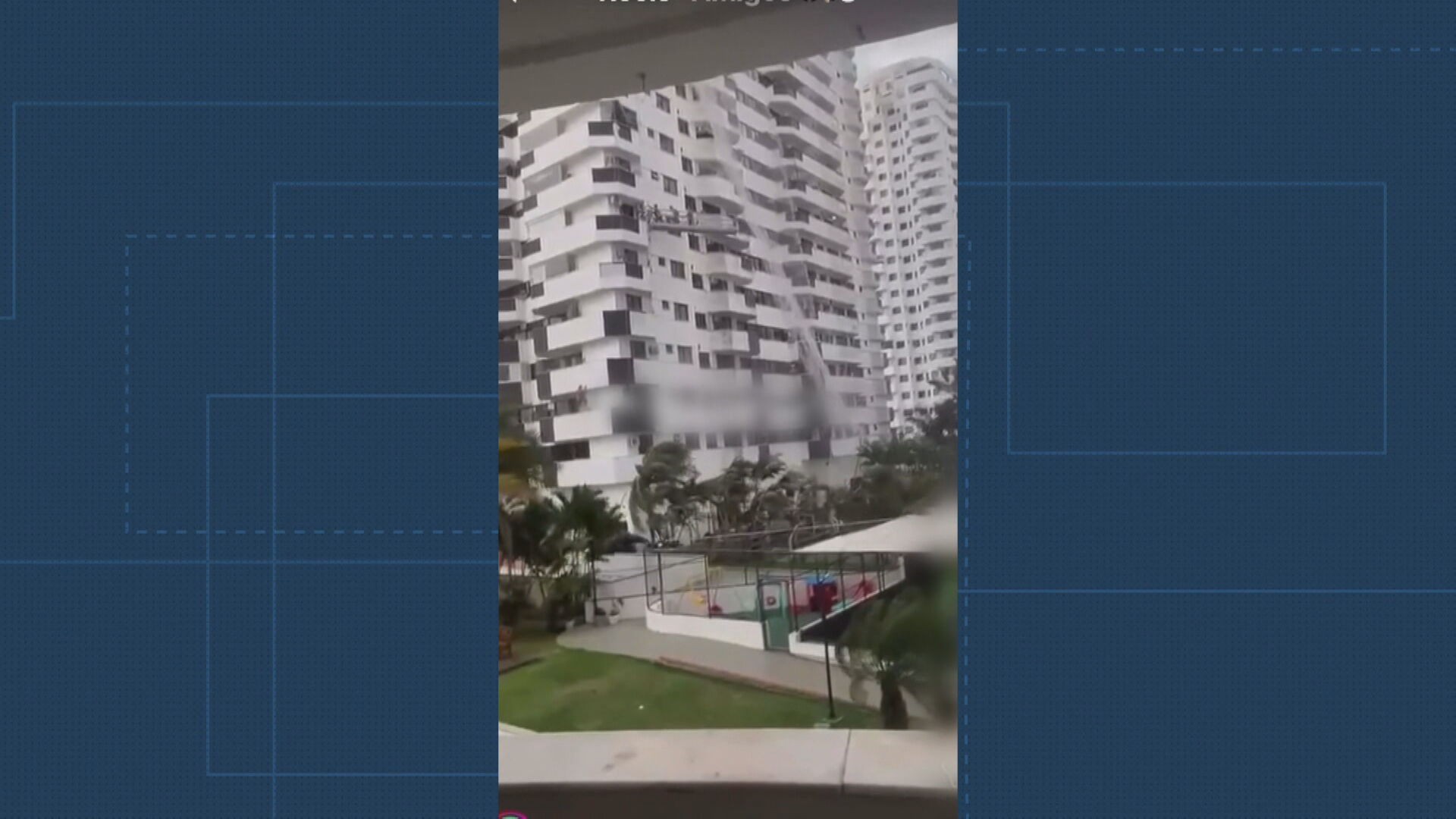
Three individuals were trapped on a scaffold that swayed precariously high up on a building in the Barra da Tijuca neighborhood of Rio de Janeiro on Wednesday afternoon, May 29th. The strong winds, which reached speeds exceeding 100 km/h due to a cold front, caused the structure to be thrown towards the buildings. Firefighter teams were mobilized for the rescue operation, and fortunately, there were no reports of injuries. The incident occurred amidst a severe storm that brought widespread disruption to the city and its metropolitan area. This included power outages, disruptions to train and metro services, the closure of Santos Dumont Airport, and numerous fallen trees. The Rio de Janeiro City Hall declared a Stage 2 alert, advising residents to avoid unnecessary travel. The wind intensity began to decrease by late afternoon, though rain was still forecast for the evening. Separately, two people died in Santa Teresa after being struck by a falling wall during the same storm.
This event highlights the critical importance of robust infrastructure safety standards and emergency preparedness in urban environments subject to extreme weather. The strong winds, exceeding 100 km/h, underscore the increasing frequency and intensity of meteorological events, likely exacerbated by climate change. While the immediate focus is on the successful rescue, the incident prompts consideration of the risk assessment and mitigation strategies employed for high-rise construction and maintenance. Future urban planning and building codes will need to account for more volatile weather patterns, potentially requiring advanced engineering solutions for scaffolding and other temporary structures to ensure worker safety and public security. The city's response, including the Stage 2 alert, demonstrates a reactive capacity, but the long-term challenge lies in proactive resilience building against predictable environmental shifts.
AI-generated to prompt reflection — not editorial opinion, not advice, not a statement of fact. How this works.