Tick-Infested Yellow Anaconda Filmed in Pantanal, Biologist Explains
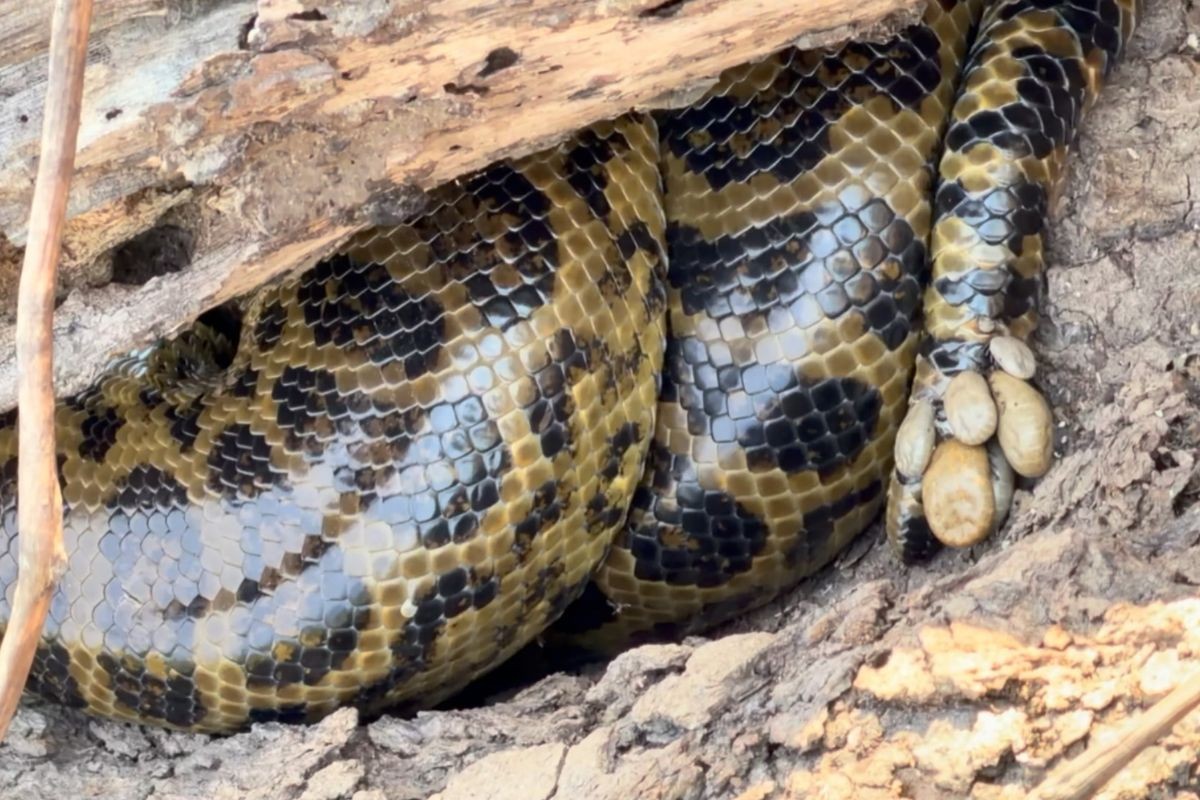
A yellow anaconda, an iconic snake of the Pantanal in Mato Grosso do Sul, Brazil, has garnered significant attention online after being filmed with dozens of ticks concentrated on its tail. The striking footage was captured by Zé Mineiro, a tour guide and content producer for Pantanal Brazil. While ticks are commonly associated with mammals, biologist Henrique Abrahão notes that various species also parasitize birds and reptiles, including lizards, turtles, caimans, and different snake species. Abrahão explained that ticks typically attach to anacondas in areas with thinner scales or small skin folds, which facilitates their feeding. He added that observing anacondas with ticks is common. The sheer number of parasites seen in this instance suggests the snake likely spent an extended period out of the water, allowing the ticks to accumulate. As semi-aquatic animals, anacondas can shed some ticks by submerging themselves for prolonged periods. However, ticks possess remarkable resilience, and snakes can still be found with them. Shedding skin, a process known as ecdysis, also helps remove many ticks. Despite this, ticks firmly attached may remain until they have fed or detach naturally, meaning snakes can still carry them even after molting. While a few ticks pose little risk to a healthy adult snake, severe infestations can cause irritation, skin lesions, blood loss, and increase the likelihood of secondary infections. The yellow anaconda, smaller than the green anaconda, is non-venomous and kills prey by constriction. It typically measures between 2.4 and 4.6 meters and weighs around 30 kilograms, with females being larger than males. These snakes inhabit swamps and marshes but can also be found in forests and caves, feeding on birds, eggs, fish, reptiles, and small mammals, occasionally taking down larger prey like deer and capybaras.
The visual of a large snake heavily infested with ticks, while startling, highlights the complex ecological interactions within the Pantanal ecosystem. The biologist's explanation frames this as a common, though potentially exacerbated, natural phenomenon, influenced by the snake's behavior and environmental conditions, such as prolonged time spent on land. This incident underscores the vulnerability of even apex predators to parasitic loads, which can be influenced by factors like habitat availability, climate, and the snake's own health status. From a systems perspective, intense parasitic pressure can impact individual animal health and, in turn, population dynamics, potentially affecting predator-prey relationships and disease transmission within the broader ecosystem over the long term. Understanding these dynamics is crucial for conservation efforts, particularly in environments facing ecological shifts.
AI-generated to prompt reflection — not editorial opinion, not advice, not a statement of fact. How this works.