Tilburg Street Transforms into Month-Long Vacation Spot for Residents
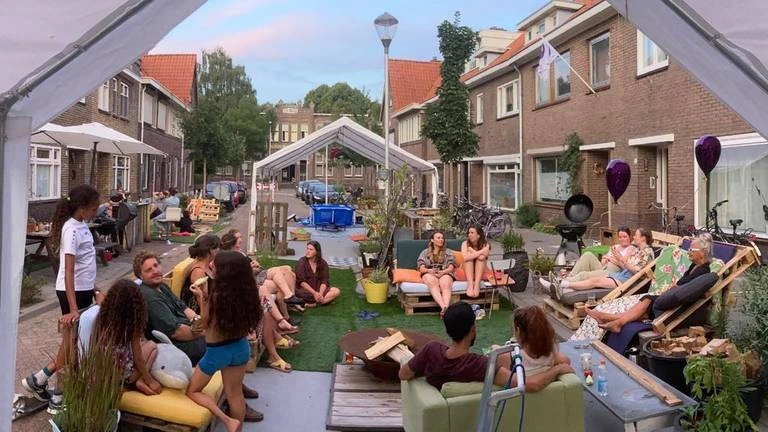
Residents of a street in Tilburg, Netherlands, have transformed their neighborhood into a month-long vacation destination by removing cars and setting up amenities like a swimming pool, party tents, seating areas, and a bar. This initiative, known as a 'leefstraat' or 'living street,' aims to foster community interaction and provide a shared outdoor space for recreation. According to resident Esther van Kempen, the street becomes like a campsite or living room, with daily organized activities for all ages. This is the eighth summer the Jan van der Leestraat has been converted into such a communal area, welcoming not only residents but also friends and family. The street hosts a variety of events including barbecues, workshops, sports classes, film nights, and even a musical, all on a voluntary basis. The idea was inspired by similar initiatives in other Dutch cities like Utrecht and Amsterdam, and residents secured municipal approval through a petition. Children, like 11-year-old Joni and her sister Efia, have grown up with this tradition, describing it as a unique and special experience akin to living in a large house where neighbors naturally interact. Parents, such as Tegest Pecht-Guido, appreciate the opportunity for children to learn from different parenting styles and for neighbors to gain insights into each other's family dynamics. Albert Dietvorst highlights that the arrangement significantly strengthens neighborly bonds, leading to greater mutual understanding and a lower threshold for asking for help. The only drawback mentioned by Van Kempen is that the extensive street activities can lead to household chores being neglected.
The 'leefstraat' initiative in Tilburg exemplifies a grassroots response to urban isolation and a desire for enhanced community cohesion. By temporarily reclaiming public street space for social and recreational purposes, residents are actively shaping their immediate environment to prioritize human connection over vehicular access. This model highlights a systemic tension between traditional urban planning, which often prioritizes traffic flow, and emergent community needs for shared public spaces that foster social capital. The success of such initiatives suggests a growing demand for more adaptable and resident-centric urban governance, capable of facilitating localized, temporary transformations of public areas. Looking ahead, the scalability and replicability of these 'living streets' could offer valuable insights into designing more resilient and socially integrated urban neighborhoods in an era increasingly defined by digital interaction and potential physical disconnection.
AI-generated to prompt reflection — not editorial opinion, not advice, not a statement of fact. How this works.