Tissue Culture Technology Revolutionizes Bangladesh's Commercial Agriculture
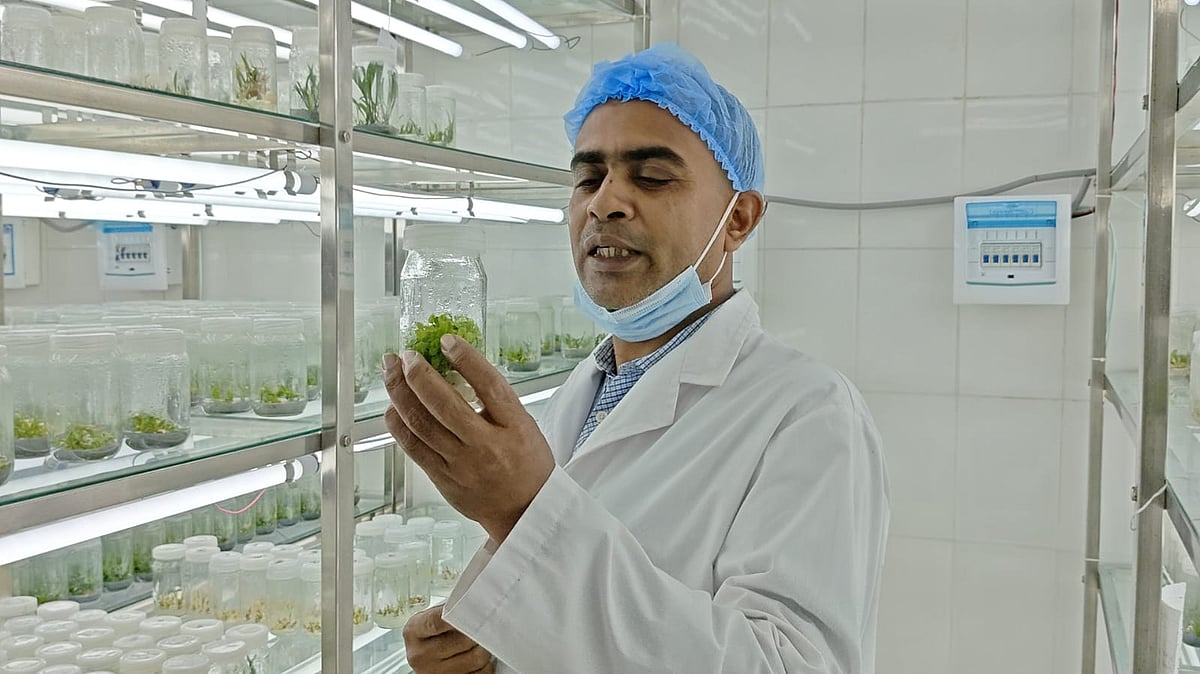
Bangladesh is embracing tissue culture technology to produce disease-free saplings, marking a new era in commercial agriculture. This innovative method, utilizing small glass bottles, transforms tiny plant tissues into thousands of healthy saplings within months. These saplings are then used for the large-scale cultivation of various high-value fruits, flowers, and ornamental plants, including bananas, pineapples, strawberries, dragon fruit, orchids, lilies, gerberas, stevia, and papayas. As a result, farmers are gaining access to superior quality saplings at more affordable prices. Experts highlight that this technology is crucial for modernizing agriculture, increasing productivity, and enabling the production of millions of disease-free saplings in limited spaces, offering no viable alternative for such scale. Previously, many of these varieties, such as the G-9 banana and MD-2 pineapple, had to be imported from countries like India and Thailand. The Madaripur Horticulture Center, a leading facility, reported selling over 203,000 saplings in the 2025-26 fiscal year, generating 5.23 million Taka for the government. The center has expanded its production to include flowers and ornamental plants, with lily saplings being distributed as far as Panchagarh. The national goal is to produce approximately 10 million disease-free saplings annually, with current efforts focused on establishing modern tissue culture labs across the country, including three operational labs in Madaripur, Bogura, and Mymensingh, and eight more under construction. In the past year, these three labs produced over 212,000 saplings, with nearly 193,000 supplied to farmers and entrepreneurs, the highest demand being for G-9 banana, gerbera, and strawberry saplings. This technology ensures the preservation of the mother plant's characteristics, reduces reliance on imported saplings, and lowers cultivation costs for farmers. Farmers like Abdul Quader in Madaripur have seen significant yield increases, with G-9 banana bunches bearing 250-300 fruits compared to the 130-160 of local varieties. Entrepreneurs are also finding commercial success; for instance, Md. Rezwanul Islam in Bogura's 'Green One' institution generates 12,000-15,000 Taka weekly from selling gerbera flowers, benefiting from cheaper, locally produced saplings. The Madaripur center leads in sapling sales among the country's 76 horticulture centers, followed by Chapainawabganj for mango saplings, Pabna for jujube, Dinajpur for litchi, Barisal for coconut and ambarella, and Gazipur for the Dhaka region. Government revenue from sapling sales across horticulture centers reached 73.7 million Taka in the 2025-26 fiscal year.
The widespread adoption of tissue culture technology in Bangladesh signifies a strategic shift towards agricultural self-sufficiency and modernization. By enabling the domestic production of high-value, disease-free saplings, the country is reducing its dependence on imports, thereby conserving foreign exchange and bolstering local economies. This technological advancement not only promises increased yields and profitability for farmers but also contributes to a more resilient agricultural sector capable of adapting to future market demands and climate challenges. The government's investment in expanding these facilities suggests a long-term vision for agricultural development, positioning Bangladesh to potentially become a regional supplier of advanced plant materials. Future considerations may include optimizing resource allocation across various labs, fostering further research into novel crop varieties suited to local conditions, and ensuring equitable access to this technology for smallholder farmers to maximize its socioeconomic impact.
AI-generated to prompt reflection — not editorial opinion, not advice, not a statement of fact. How this works.