Top 10 Brazilian pre-candidates raise nearly R$3 million via online "piggy banks"
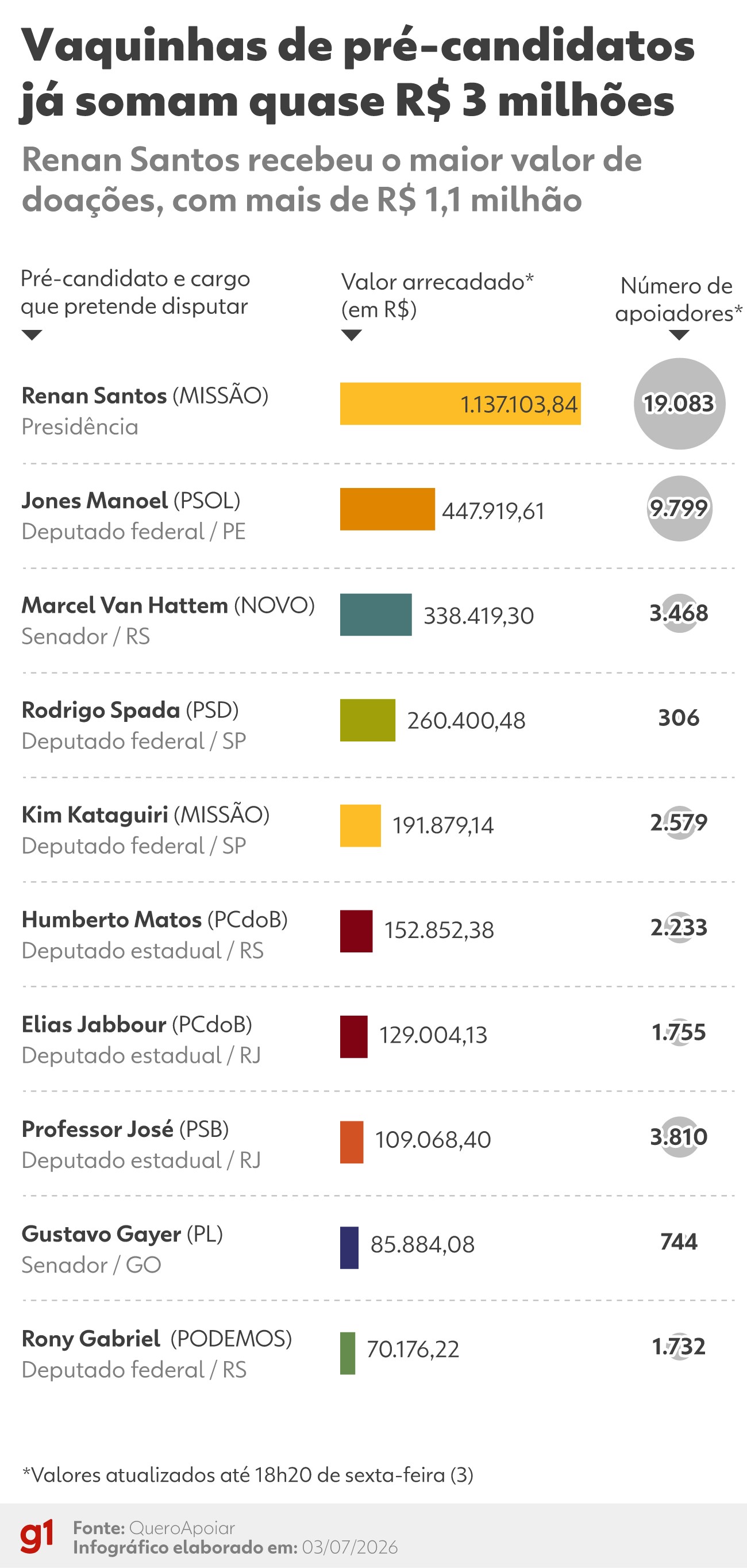
Fifty days after the launch of "virtual piggy banks" for the 2026 elections, the top 10 pre-candidates have collectively raised nearly R$3 million through online donations. The platform QueroApoiar, authorized by the Superior Electoral Court (TSE), shows Renan Santos leading with over R$1.1 million from approximately 19,000 donors. Other leading pre-candidates include Jones Manoel (R$447,000), Marcel Van Hattem (R$338,000), Rodrigo Spada (R$260,000), and Kim Kataguiri (R$191,000). The list of top fundraisers is predominantly composed of right-leaning politicians with a strong social media presence. Political scientist Marco Antonio Teixeira notes that right-wing politicians have historically been more active on social media, correlating this with monetary support. He explains that social media allows politicians to engage potential supporters who are not part of traditional political structures, acting as online activists. Teixeira also points out that the success of these candidates, even those not widely known, is a result of organized structures and years of work, citing Renan Santos and Kim Kataguiri's affiliation with the Missão party and Jones Manoel's significant online following. The Missão party, despite its small size and limited access to the Electoral Fund, relies heavily on these online donations, as confirmed by Amanda Vettorazzo, coordinator of Renan Santos's campaign. In contrast, larger candidacies, which receive substantial funding from the Electoral Fund, tend to launch their online fundraising campaigns later. The TSE regulates these "collective financing" initiatives, allowing individuals to donate up to 10% of their previous year's gross income, with all donations requiring identification and specific transaction methods for larger amounts.
The emergence of "virtual piggy banks" for political campaigns highlights a shift towards decentralized, grassroots fundraising, particularly among candidates with strong digital presences. This method allows individuals to directly support candidates, potentially bypassing traditional party structures and large corporate donors. The correlation between social media engagement and fundraising success suggests that digital mobilization is becoming a critical factor in campaign viability, especially for smaller parties or candidates with limited access to public campaign funds. This trend raises questions about the influence of online visibility versus established political machinery and the potential for digital echo chambers to shape electoral outcomes. As regulations evolve, the balance between individual donor empowerment and the prevention of undue influence or manipulation in the digital political sphere will be a key consideration for electoral integrity in the coming decade.
AI-generated to prompt reflection — not editorial opinion, not advice, not a statement of fact. How this works.