Top Chinese Official Ma Xingrui Expelled from Party and Public Office
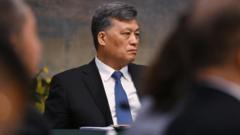
Ma Xingrui, a member of the Chinese Communist Party's Politburo and former Party Secretary of Xinjiang, has been expelled from the Party and removed from public office. This disciplinary action, known as 'Shuang Kai,' was announced by the official Xinhua News Agency. Ma Xingrui's downfall marks a significant event within the current political landscape of China. He was previously considered a prominent figure, often associated with the 'technocratic' cadre group favored during the Xi Jinping era. His expulsion follows that of at least two other Politburo members, indicating a potential shift or consolidation of power within the highest echelons of the Chinese government. The specific reasons for his dismissal have not been detailed by Xinhua, but such severe disciplinary measures typically suggest serious violations of Party discipline or law. His former positions, including his role in Xinjiang, were high-profile and politically sensitive. The implications of his removal are likely to be felt across various sectors of Chinese governance and policy-making.
The expulsion of Ma Xingrui, a Politburo member and former Xinjiang Party Secretary, from the Communist Party and public office signifies a notable development in Chinese political dynamics. This event, termed 'Shuang Kai,' suggests a rigorous application of internal Party discipline, potentially aimed at reinforcing political loyalty and adherence to leadership directives. The categorization of Ma as a 'technocrat' representative of the Xi era, alongside the reported fall of other Politburo members, may indicate a broader trend of personnel adjustments within the Party's top leadership. Such actions can be interpreted through the lens of governance consolidation, where adherence to established political norms and ideological alignment are prioritized. The long-term impact may involve a recalibration of career paths for officials, potentially favoring those with demonstrated political acumen and unwavering loyalty over purely technical expertise, especially in sensitive regions like Xinjiang. This could influence future appointments and the overall direction of policy implementation.
AI-generated to prompt reflection — not editorial opinion, not advice, not a statement of fact. How this works.