Tornado Strikes Southern Brazil, Prompting Explanations of Storm Phenomena
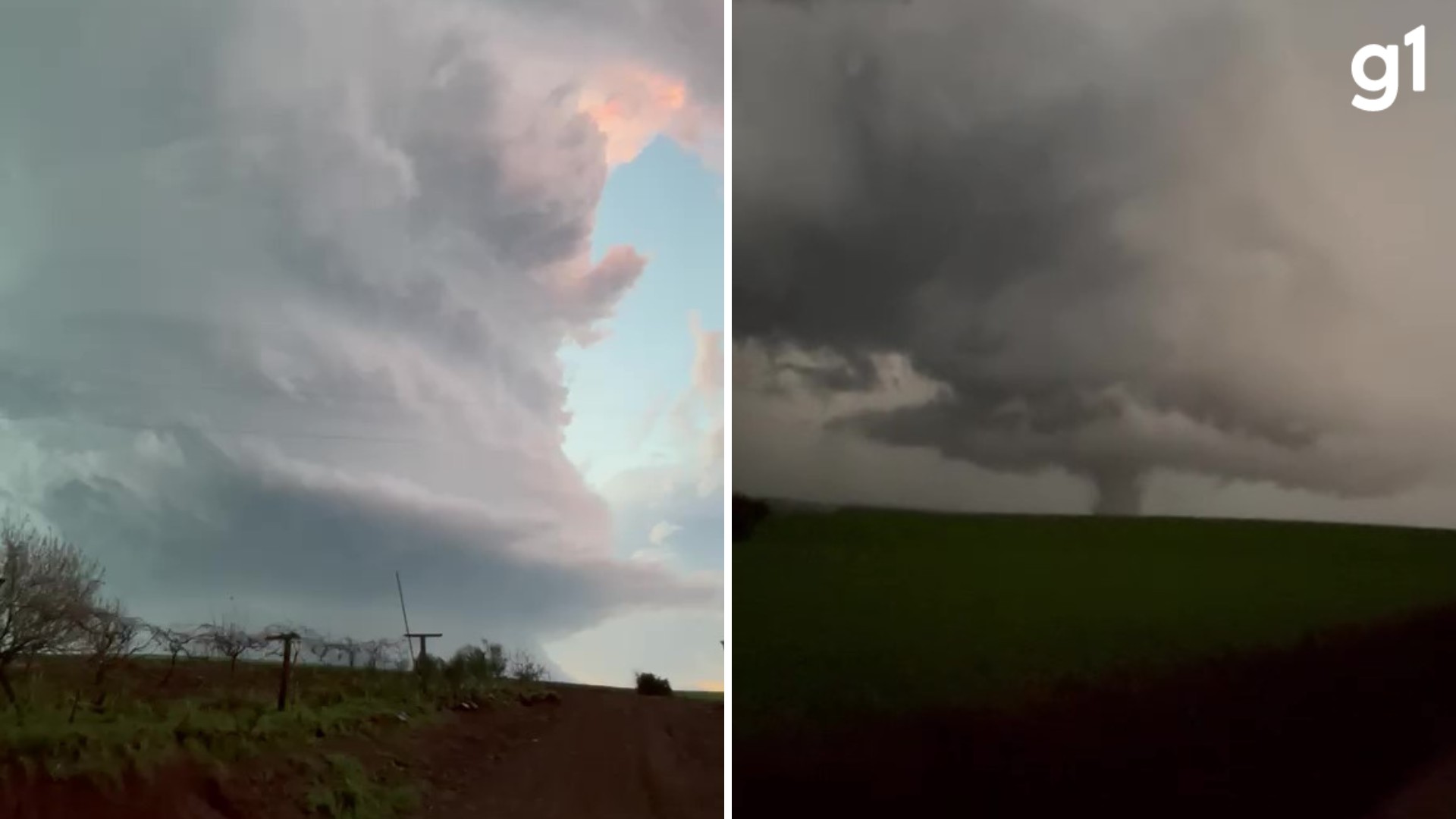
A tornado recently struck three municipalities in northwestern Rio Grande do Sul, Brazil, on Tuesday evening, injuring seven people and causing significant destruction. The powerful winds damaged roofs, felled trees and utility poles, and injured animals. The state's Civil Defense reported the tornado occurred around 6:25 PM and was detected by radar from Chapecó, Santa Catarina, over 200 kilometers away. This event was generated by a supercell, an intense storm type capable of producing large hail, strong winds, and, in some cases, tornadoes. The article clarifies the distinctions between tornadoes, cyclones, and hurricanes, noting differences in scale, duration, and formation. Tornadoes are characterized by their narrow path and short duration, packing intense winds in a concentrated area. Supercells are defined by a rotating updraft within the cloud, leading to severe weather. Cyclones are larger low-pressure systems that can spawn severe storms but are not giant tornadoes. Hurricanes are tropical cyclones that reach a specific region, with Hurricane Catarina in 2004 being the only one recorded in South America, causing 11 deaths and significant damage. While tornadoes are not common in Rio Grande do Sul, the region's climate, where warm, moist air meets cold air masses, can favor severe storms. The article explains that while meteorologists can identify conditions for severe storms, predicting the exact formation and touchdown point of a tornado remains challenging. Extratropical cyclones, common in southern Brazil, are formed by contrasting air masses, while tropical cyclones (hurricanes/typhoons) form over warm equatorial waters. Although extreme weather events may become more intense due to climate change, directly attributing every cyclone or tornado to global warming is complex, as their formation depends on multiple atmospheric factors. The frequency of tornadoes in Brazil is uncertain due to their small scale and difficulty in recording, with increased reporting potentially linked to advancements in detection technology and social media.
The recent tornado in Rio Grande do Sul highlights the complex interplay of atmospheric conditions that lead to severe weather events. While the immediate impact is destruction and injury, understanding the meteorological distinctions between phenomena like tornadoes, supercells, and cyclones is crucial for public safety and preparedness. The article correctly notes that while climate change may influence the intensity and frequency of extreme weather, attributing any single event directly to it is scientifically challenging due to the multitude of contributing factors. Increased reporting of such events may also reflect advancements in detection technology and broader public awareness, rather than solely an increase in their occurrence. Future preparedness strategies should focus on enhancing early warning systems and community resilience, acknowledging the inherent uncertainties in predicting localized, rapid-onset phenomena like tornadoes.
AI-generated to prompt reflection — not editorial opinion, not advice, not a statement of fact. How this works.