Torrential Rains Trigger Severe Flooding and Landslides in Gilgit-Baltistan, Stranding Thousands
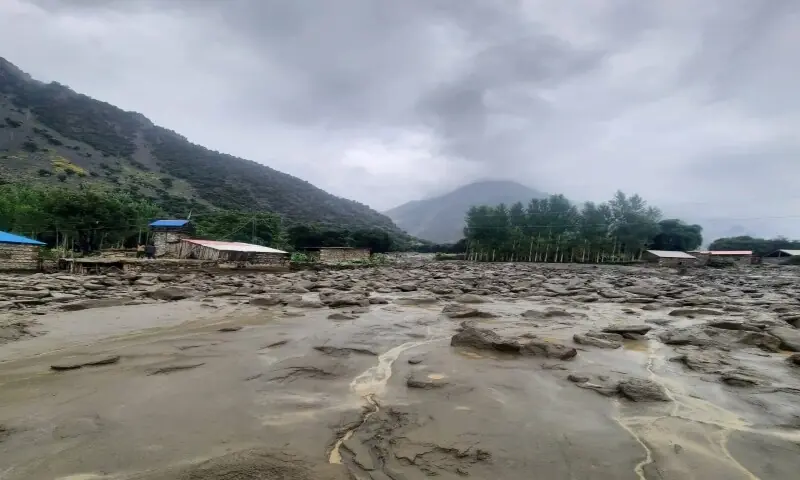
Torrential rains have caused widespread devastation in Gilgit-Baltistan (GB), Pakistan, leading to severe travel disruptions, flash floods, and landslides that have washed away roads and bridges. Thousands of people, including tourists, are stranded across the mountainous region. The Pakistan Meteorological Department (PMD) has forecast continued rain and warned of potential glacial lake outburst floods (GLOFs) in GB until July 26. Major highways such as the Karakoram Highway (KKH), Babusar Road, and others connecting remote areas are blocked at multiple points, isolating communities and hindering relief efforts. In Skardu, the Tormak Nallah area experienced severe flooding that destroyed at least three communication bridges, including the Malan Bridge. Roads, bridges, farmlands, crops, and infrastructure have been significantly damaged in districts like Kharmang, Ghanche, and Shigar. Suspension bridges and power houses in Haramosh were also affected. Electricity and water supply systems, along with communication services, have been disrupted in areas including Astore, Tangir, and Thore. Dozens of families in Astore and Diamer districts have been rendered homeless due to floods and landslides. The GB Disaster Management Authority (GBDMA) is coordinating relief activities, including shifting affected families to safer locations and providing essential supplies like tents, rations, and medicines. Chief Minister Amjad Hussain has directed authorities to expedite relief work, ensure round-the-clock alertness, and mobilize heavy machinery for infrastructure repairs. He also emphasized the importance of institutional cooperation with the National Disaster Management Authority (NDMA) for disaster risk management, highlighting the increasing risks from climate change impacts like GLOFs and flash floods in GB.
The extreme weather event in Gilgit-Baltistan underscores the escalating vulnerability of mountainous regions to climate change impacts, particularly GLOFs and flash floods. The destruction of critical infrastructure, including roads and bridges, highlights systemic challenges in maintaining connectivity and delivering aid in remote areas, especially when faced with rapid-onset disasters. The response efforts, while active, will be tested by the scale of damage and the logistical complexities of the terrain. Future resilience will depend on integrating advanced early warning systems, such as those employing scientific monitoring of glaciers, with robust infrastructure development and community preparedness strategies. This event serves as a stark reminder of the need for proactive, climate-informed adaptation measures to protect both human populations and vital transportation networks in disaster-prone regions.
AI-generated to prompt reflection — not editorial opinion, not advice, not a statement of fact. How this works.