Total Solar Eclipse on August 12 to Cross Northern Hemisphere, Including Parts of Europe
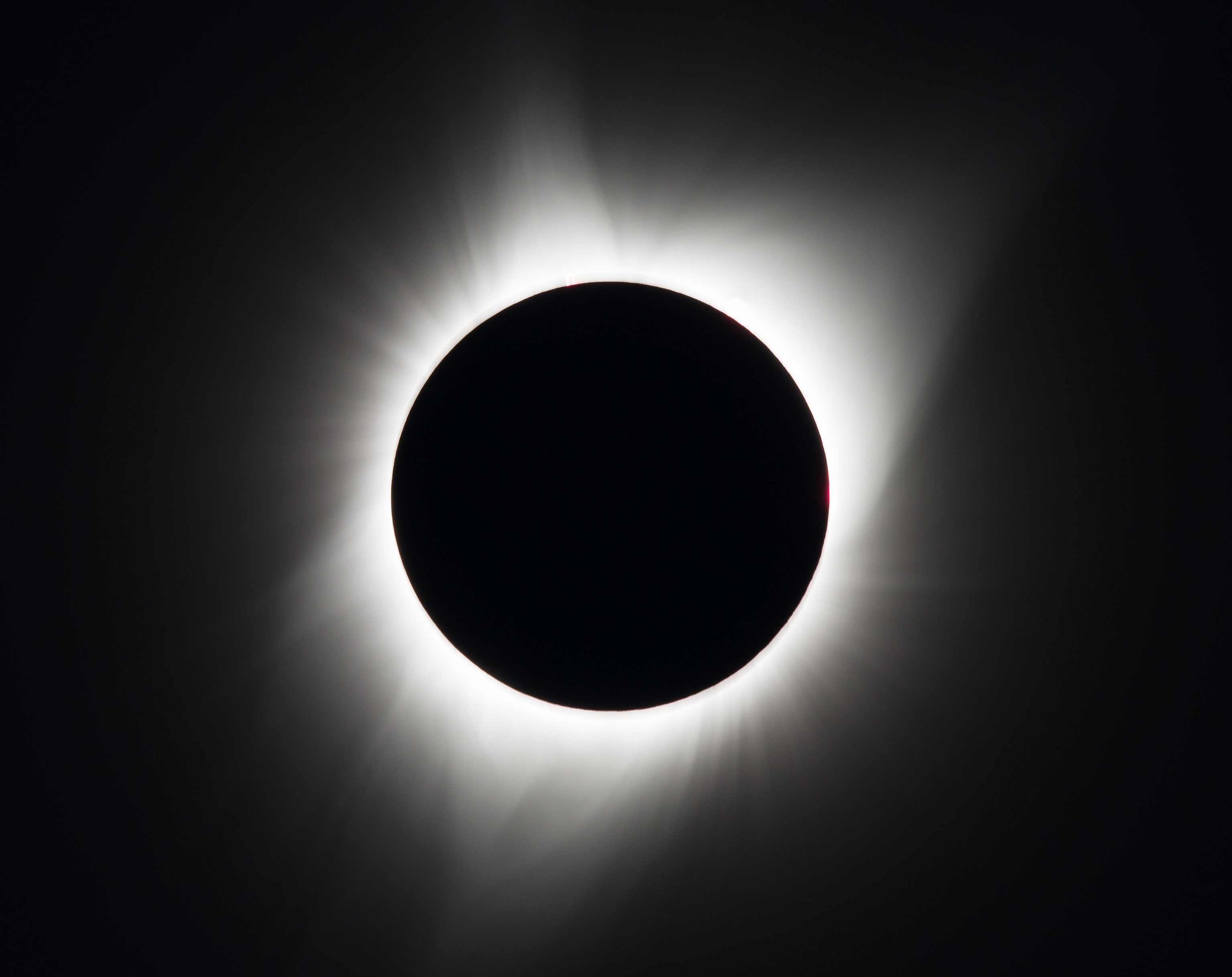
A total solar eclipse will occur on August 12, darkening skies for several minutes across parts of the Northern Hemisphere. The phenomenon will be fully visible along a path stretching through Greenland, Iceland, northern Russia, and Spain, with a small area of Portugal also experiencing totality. Most of Europe will witness a partial solar eclipse, while the event will not be observable in Brazil. A solar eclipse happens when the Moon passes between the Sun and Earth, casting a shadow on our planet. A total solar eclipse occurs when the Moon completely blocks the Sun's light. While solar eclipses are regular occurrences, experiencing totality from a single location is rare due to the narrow path of visibility. The maximum duration of total darkness during the August eclipse is expected to be just over two minutes. The Sun and Moon may appear to be nearly the same size in the sky due to their respective distances from Earth, allowing the Moon to completely obscure the Sun and reveal the solar corona. In Spain, the eclipse's totality will coincide with sunset, requiring observers to have a clear view of the western horizon. The maximum duration of totality is predicted to be approximately 2 minutes and 18 seconds, with shorter periods in many locations and varying based on proximity to the path's center. Weather conditions will be crucial for observation. Spain is set to experience a rare sequence of eclipses, with another total solar eclipse in August 2027 and an annular solar eclipse in January 2028, making the Iberian Peninsula a key destination for astronomy enthusiasts. Brazilians will not see this solar eclipse but can watch online streams and will be able to view a partial lunar eclipse on the night of August 27-28.
This celestial event highlights the predictable yet awe-inspiring nature of astronomical alignments. The narrow path of totality underscores the precise orbital mechanics governing solar eclipses, emphasizing that visibility is a function of geographic position and timing. The recurrence of significant eclipses in Spain over consecutive years presents an opportunity for scientific observation and tourism, potentially boosting local economies. However, it also raises questions about resource management and infrastructure preparedness for increased visitor numbers. The contrast between visibility in Europe and its absence in Brazil illustrates the Earth's spherical geometry and orbital dynamics, reminding us that global phenomena are experienced differently based on location. Future eclipse events will continue to test our ability to forecast and manage public engagement with natural wonders, balancing scientific inquiry with widespread public access and safety.
AI-generated to prompt reflection — not editorial opinion, not advice, not a statement of fact. How this works.