Toucan Recovers Vision After BR-040 Road Strike in Petrópolis
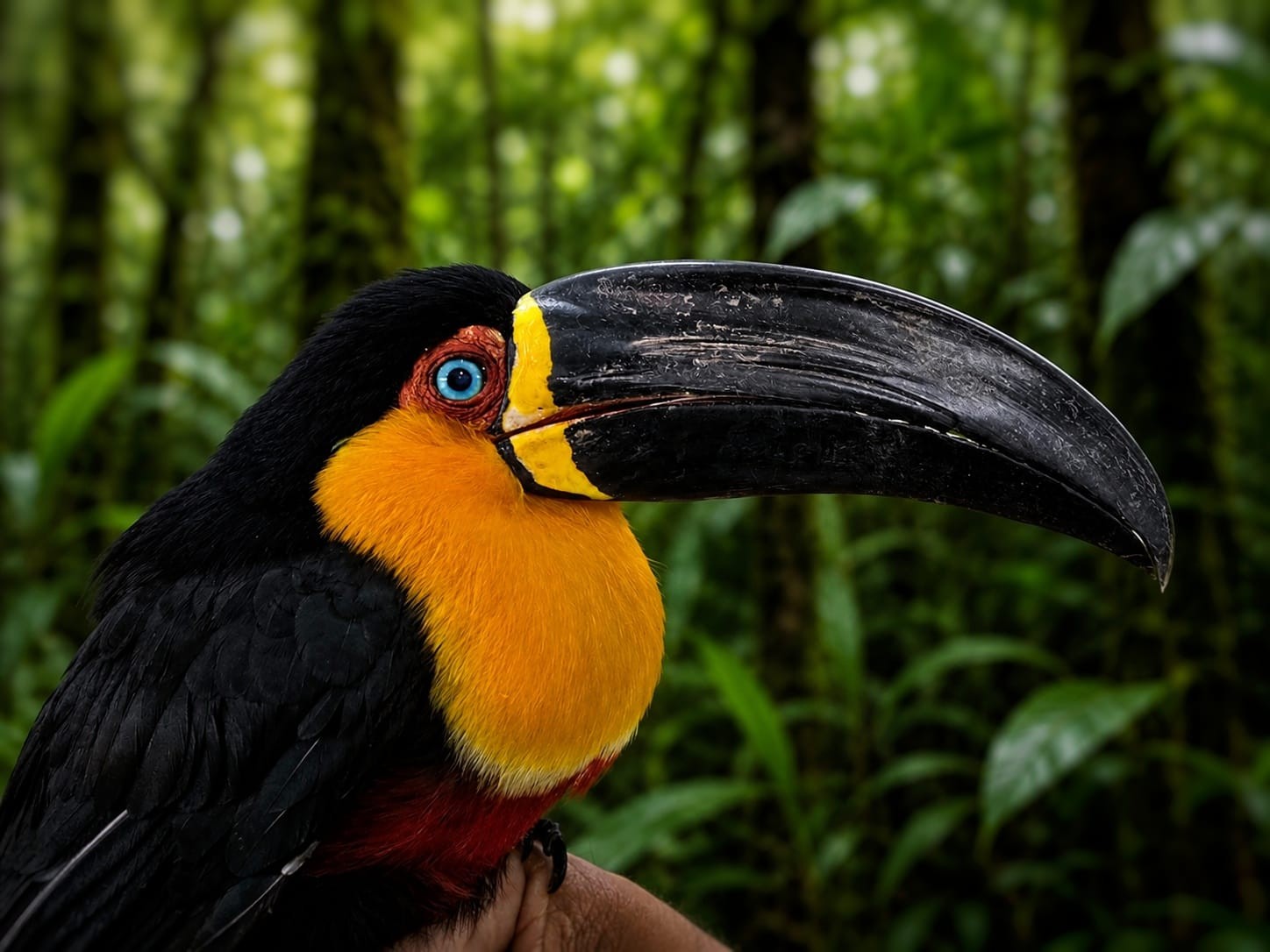
A toucan, struck by a vehicle on the BR-040 highway near Petrópolis, Rio de Janeiro, has regained its sight following specialized veterinary surgery and treatment in Juiz de Fora, Minas Gerais. The successful recovery offers hope for its eventual return to the wild. This case is part of a broader initiative by Elovias's Environmental team, which focuses on rescuing and rehabilitating wild animals. The team's primary goal is to reintroduce animals back into their natural habitats. When reintroduction is not feasible, animals are transferred to sanctuaries by ICMBio for ongoing care. Although the toucan is showing positive progress, it remains under observation. Veterinarians note that the bird has not yet resumed spontaneous feeding, a crucial behavior for its release back into nature. If this behavior does not return, the toucan will be placed in a sanctuary. Another animal treated was a young female capuchin monkey, also a victim of a road accident. Despite physical recovery, the monkey developed a strong dependence on human interaction during its rehabilitation, making its return to the wild impossible. Consequently, it was sent to a sanctuary in Angra dos Reis on the 13th of the month. Additionally, a bush dog with fractured hind legs from a collision on the BR-040 has undergone surgery and rehabilitation, now walking normally and awaiting release. A boa constrictor was also rescued by the concessionaire's team, received veterinary care, and has recovered sufficiently to be returned to its natural environment. Marcelo Madeira, a biologist with Elovias, emphasized the commitment to returning animals to their habitats whenever possible, with permanent care provided in sanctuaries otherwise.
This incident highlights the ongoing conflict between wildlife and expanding transportation infrastructure, particularly major highways like the BR-040. The efforts by Elovias and ICMBio demonstrate a growing recognition of corporate responsibility in mitigating the environmental impact of road networks. However, the frequency of such animal-vehicle collisions underscores the systemic challenge of habitat fragmentation. While rehabilitation and sanctuary placement offer solutions for individual animals, they do not address the root cause of increased wildlife mortality on roads. Future infrastructure planning and management must integrate advanced ecological considerations, such as wildlife crossings and habitat connectivity corridors, to proactively reduce these encounters and ensure the long-term survival of species in human-dominated landscapes. The dependency of some rescued animals on human care also raises questions about the ethical implications of long-term captivity versus the risks of reintroduction.
AI-generated to prompt reflection — not editorial opinion, not advice, not a statement of fact. How this works.