Tourist Films Emotional Encounter with Tapir at São Paulo State Park
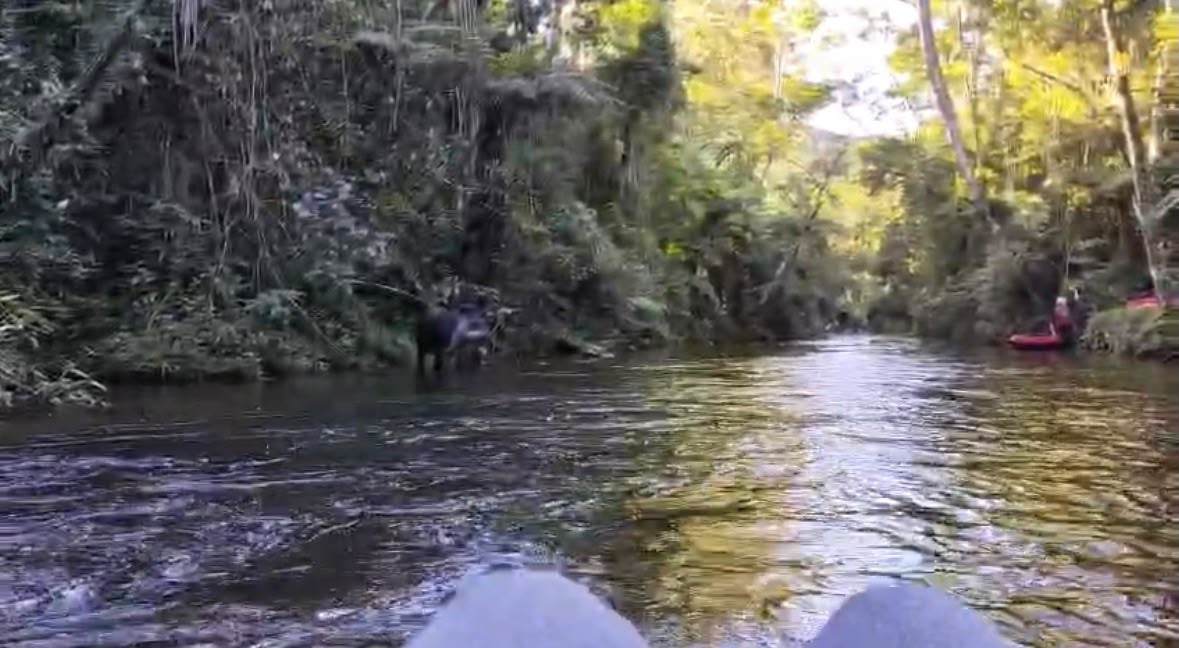
A tourist visiting the Carlos Botelho State Park in São Miguel Arcanjo, São Paulo, Brazil, had an emotional encounter when she filmed a tapir drinking water. Thais Oliva Gallego, a resident of São Paulo city, captured the moment on July 1st while participating in a river tubing activity called 'boia cross' on the Taquaral River. Initially believing her excursion was ending, Thais was surprised to see the tapir at the river's edge. The animal drank water for a few seconds before retreating into the forest. Gallego, an animal and nature enthusiast, described the experience as unforgettable, stating she cried with emotion upon seeing the tapir in its natural habitat. This was her first time seeing a tapir, and she hopes to return to the park to spot a Southern Muriqui, the largest primate in the Americas, and to go camping. She also saw a squirrel during a self-guided trail walk. The park's tour guide, Aelson Apolinário, confirmed that tapirs frequently use the Taquaral River for drinking, bathing, and foraging, and sightings are common in the area. The Carlos Botelho State Park, spanning 38 hectares across São Miguel Arcanjo, Sete Barras, and Capão Bonito, is part of one of Brazil's largest preserved Atlantic Forest regions. It features 14 trails, birdwatching opportunities, waterfalls, and attracts approximately 600 visitors monthly.
This event highlights the positive impact of well-managed conservation areas on wildlife visibility and visitor experience. The presence of a tapir drinking at the river's edge, observed by a tourist, underscores the ecological health of the Carlos Botelho State Park and its role as a vital habitat. Such encounters can foster greater public appreciation for nature and bolster support for conservation efforts. From a systems perspective, the park's management, including its trails and visitor activities like 'boia cross,' appears to be effectively balancing ecological preservation with public access. This model, if scalable, could serve as a blueprint for other protected areas seeking to enhance both biodiversity and human engagement in the coming decade, particularly as urban populations grow and the desire for natural experiences intensifies.
AI-generated to prompt reflection — not editorial opinion, not advice, not a statement of fact. How this works.