Toyota Moves Tacoma Production to Texas, Raising Concerns for Mexican Workers Amid T-MEC Uncertainty
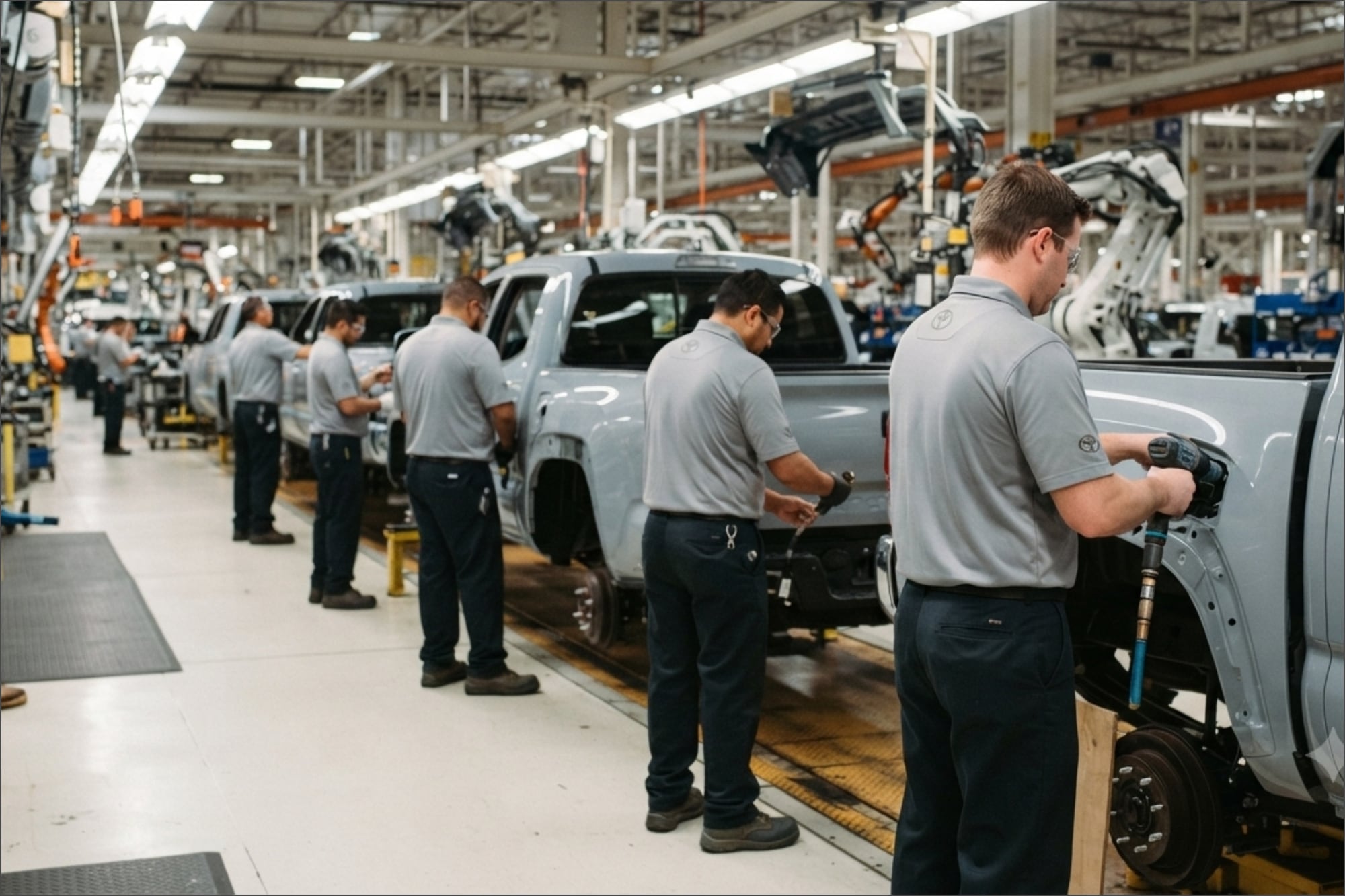
Toyota's decision to relocate the production of its Tacoma model to Texas is causing concern for Mexican workers and the automotive sector in Mexico. This move comes at a time of uncertainty surrounding the T-MEC trade agreement, which has seen some slowdowns or 'brakes' in its implementation or expected benefits. The relocation raises questions about the future of Tacoma production in Mexico, with current plans suggesting a potential shift towards 2030. This development highlights the complex interplay between international trade agreements, manufacturing decisions, and their impact on employment and industrial capacity in different countries. The automotive industry, a significant contributor to Mexico's economy, is particularly sensitive to such shifts. The decision by a major automaker like Toyota to move production can have ripple effects, influencing investment decisions and labor market dynamics. Further details are emerging regarding the specific implications for Mexican operations and the broader automotive supply chain.
Toyota's production shift from Mexico to Texas, framed by T-MEC uncertainties, illustrates the dynamic nature of global supply chains and manufacturing location strategies. Companies continuously re-evaluate operational footprints based on evolving trade policies, labor costs, logistical efficiencies, and market access. The T-MEC's perceived 'brakes' may signal regulatory hurdles or economic conditions that disincentivize production in Mexico, prompting a recalibration towards a jurisdiction perceived as more stable or advantageous. This decision underscores the inherent tension between national economic interests, international trade frameworks, and corporate imperatives for profitability and resilience. Over the next decade, such strategic realignments will likely intensify as automation, geopolitical shifts, and climate-related regulations reshape industrial landscapes, demanding adaptive governance and flexible economic policies.
AI-generated to prompt reflection — not editorial opinion, not advice, not a statement of fact. How this works.