Trabiju Declares Emergency After Fire Destroys 17 Municipal Vehicles, Causing $10 Million in Damages
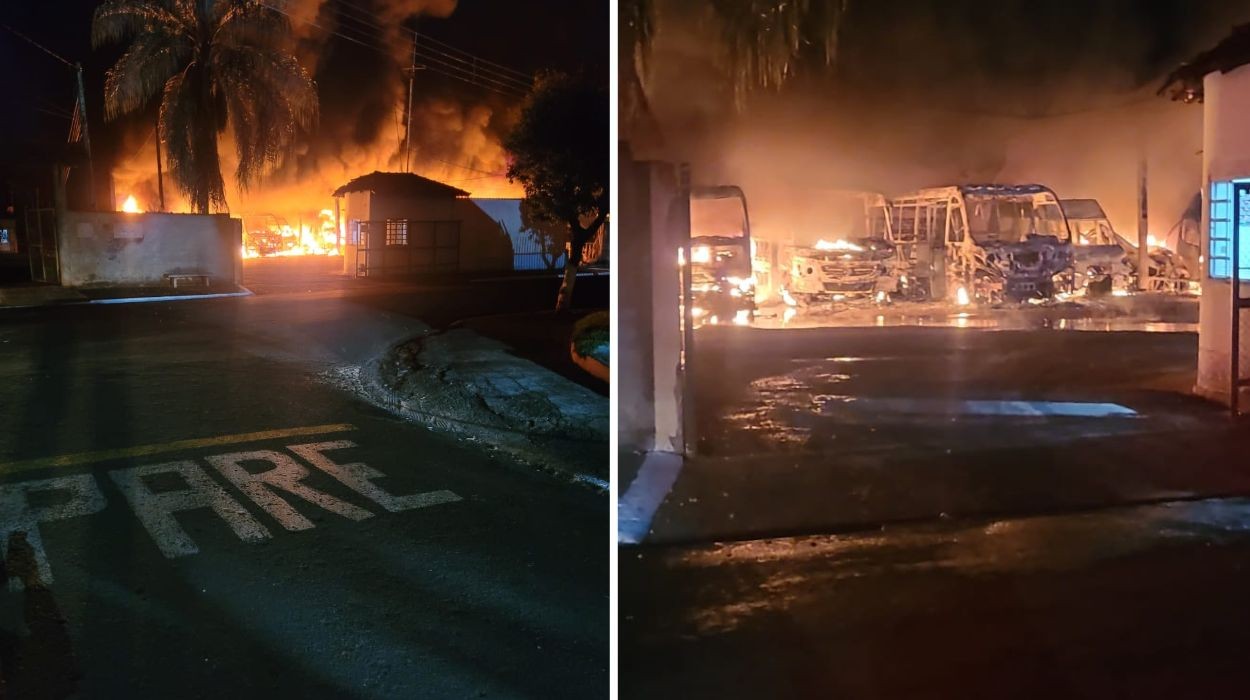
The municipality of Trabiju, in São Paulo state, Brazil, has declared a state of emergency following a large-scale fire that destroyed its municipal vehicle garage in the early hours of Tuesday, October 28th. The blaze resulted in the total loss of the facility and 17 public vehicles, with estimated damages reaching approximately R$ 10 million, including the garage structure. Fortunately, no one was injured in the incident.
The fire has significantly impacted essential public services, including school transportation, patient transport, road maintenance, urban cleaning, Civil Defense operations, and social protection services. The emergency declaration, based on a report from the Municipal Coordination of Protection and Civil Defense, allows for the mobilization of all municipal bodies and the recruitment of volunteers for recovery efforts. It also grants authorities the power to enter private properties if necessary and authorizes emergency contracting and purchases without public bidding, in accordance with federal law. The decree is valid for 365 days.
Trabiju is seeking support from state and federal governments to rebuild its fleet and operational capacity, noting that some vehicles were insured. The Civil Police have opened an investigation into the fire's cause, with surveillance camera footage from the garage already provided to authorities. Initial indications suggest a short circuit in one of the vehicles may have triggered the fire. While most services are affected, selective waste collection will continue as normal. The municipality is working to restore services as quickly as possible and will provide updates on its progress.
The fire at the Trabiju municipal garage, resulting in significant financial losses and service disruptions, highlights the critical importance of robust infrastructure resilience and emergency preparedness for small municipalities. The incident underscores the systemic risks associated with concentrating essential public assets in a single location, especially in areas potentially lacking advanced firefighting capabilities, as evidenced by the reliance on regional fire departments and industrial brigades. The declaration of a state of emergency and the authorization for emergency procurement reflect a necessary, albeit reactive, response to mitigate immediate service gaps. Looking ahead, this event prompts consideration of decentralized asset management, enhanced fire prevention protocols for vehicle fleets, and diversified contingency planning to ensure continuity of essential services against unforeseen events, particularly in the context of increasing climate-related risks and aging infrastructure.
AI-generated to prompt reflection — not editorial opinion, not advice, not a statement of fact. How this works.