Train traffic halted for hours to rescue cats in Drenthe
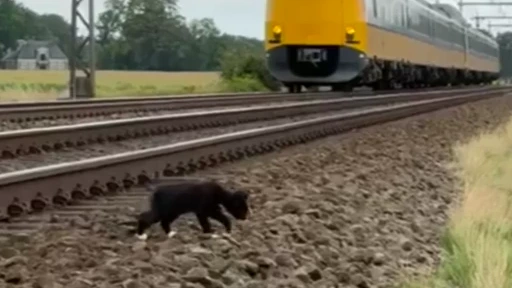
Train traffic between Meppel and Hoogeveen in Drenthe was delayed and temporarily halted for several hours yesterday to safely rescue a stray cat and her two kittens. ProRail, in collaboration with animal ambulance services, set up cages along the tracks to capture the animals. The rescue operation was initiated by train driver Jos van der Veen, who spotted the black kittens near the rails around 9:30 AM while traveling from Groningen to Meppel. Although official protocols for livestock like sheep or cows dictate halting trains due to potential danger, Van der Veen reported the situation due to the kittens' proximity to the tracks. Upon his return journey towards Groningen, he observed ProRail personnel and the animal ambulance setting up capture cages. The decision to halt all train traffic was made when the cats ventured very close to the tracks and began crossing them. Shortly thereafter, trains were allowed to resume, but at a reduced speed. Around 12:30 PM, three hours after the initial report, one kitten was successfully captured. The mother cat and the second kitten were later lured into cages, possibly by the first kitten's meows and the scent of cat food. Once all three animals were secured, normal train operations resumed. The animal ambulance took the cats for a microchip check; if unregistered, they would be taken to an animal shelter. However, train driver Van der Veen expressed his desire to adopt the cats if they are not chipped.
This incident highlights the tension between operational efficiency in public transportation and the ethical imperative to protect animal life. While ProRail's protocols prioritize safety and may not explicitly cover feline rescues, the decision to halt trains demonstrates a flexible response to an emergent welfare concern. The involvement of multiple agencies, including ProRail and an animal ambulance, suggests a developing, albeit informal, inter-agency cooperation framework for such situations. Looking ahead, as urban and suburban environments increasingly encroach on natural habitats, infrastructure operators like ProRail may need to proactively develop more standardized procedures for animal-related disruptions, balancing safety, cost, and animal welfare considerations within evolving societal expectations.
AI-generated to prompt reflection — not editorial opinion, not advice, not a statement of fact. How this works.