Trial Begins for Two Military Police Officers Accused of Executing Surrendered Youth
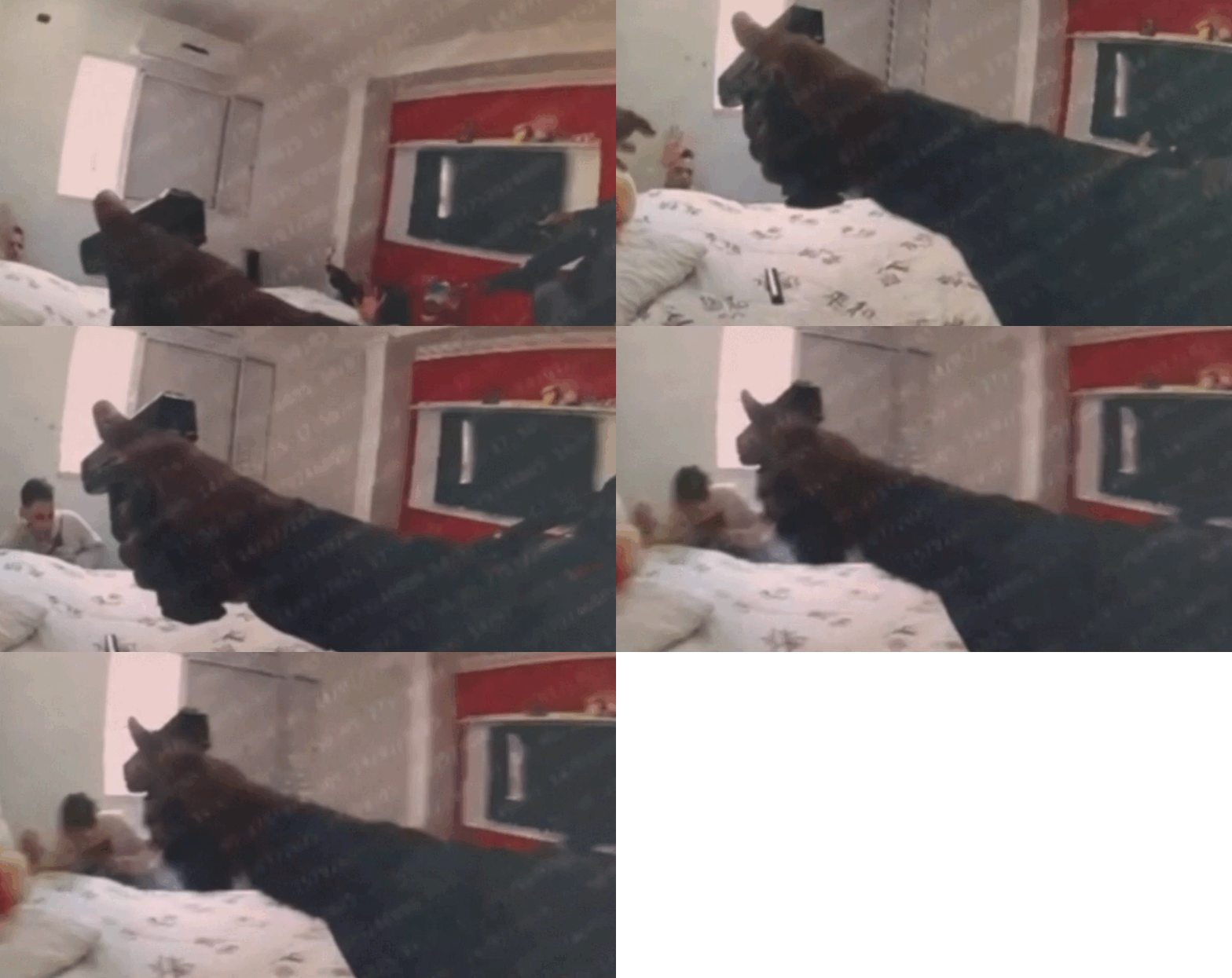
The trial of two Military Police corporals, Renato Torquato da Cruz and Robson Noguchi de Lima, commenced on Tuesday, May 28th, at the Barra Funda Criminal Court in São Paulo. They are accused of the double-qualified homicide of 24-year-old Igor de Oliveira Moraes Santos, who allegedly surrendered and was unarmed at the time of his death in Paraisópolis on July 10th, 2025. The jury consists of five men and two women, and the trial is expected to last two days. Thirteen witnesses, in addition to the two defendants, will be heard. The prosecution alleges that body camera footage shows Igor with his hands up when he was shot twice, and then shot again when he stood up. The defense claims the footage is a partial representation and that the officers acted in self-defense, citing the discovery of firearms, drugs, and wanted individuals at the scene. Two other soldiers, Hugo Leal de Oliveira Reis and Victor Henrique de Jesus, are also charged as accomplices in a separate process. The victim's family, represented by Jonatha Carvalho, asserts that Igor posed no threat and that the officers' actions were an "execution." The father, Magdo de Moraes Santos, called for accountability, stating that killing was not justified. The incident, which occurred during a drug distribution center investigation, led to protests and vandalism in Paraisópolis.
This trial examines the critical intersection of law enforcement accountability and the use of force. The prosecution's case hinges on body camera footage suggesting a surrender, while the defense emphasizes self-defense and the context of a drug operation. The legal proceedings will need to reconcile these competing narratives, considering the evidence presented by both sides, including witness testimonies and the interpretation of the visual record. This event highlights the ongoing societal debate regarding police conduct, the importance of robust oversight mechanisms, and the potential for technology like body cameras to both document and complicate incidents. The outcome will likely influence future training protocols and public trust in policing.
AI-generated to prompt reflection — not editorial opinion, not advice, not a statement of fact. How this works.