Truck carrying polyethylene overturns on BR-251 after being hit during an overtaking maneuver
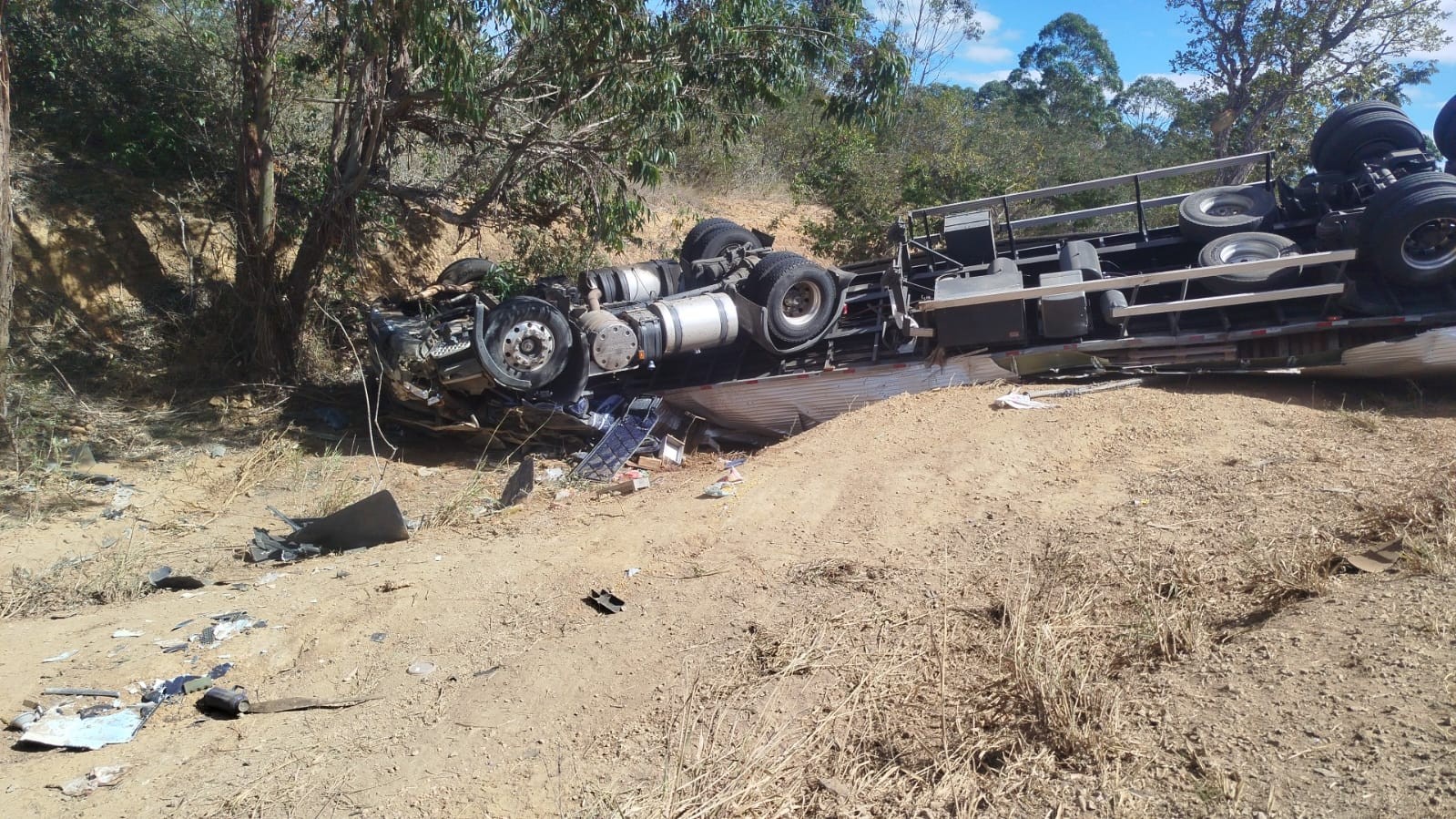
A 35-year-old truck driver was injured in an accident on Sunday, May 19th, on BR-251 in Salinas, Minas Gerais. The driver was en route from Fortaleza, Ceará, to São Paulo, São Paulo, when his truck, carrying a load of polyethylene, was struck by another truck. This second truck was traveling in the opposite direction and was attempting to overtake a third truck at the time of the collision. The impact caused the first truck to leave the roadway and overturn down an embankment, severely damaging its cabin. The two drivers involved in the overtaking maneuver were unharmed and assisted in extricating the injured driver before emergency services arrived. The injured driver, complaining of body aches, was attended by a Samu (Mobile Emergency Care Service) team and transported to Salinas Hospital. The spilled polyethylene cargo was scattered along the highway's shoulder. A small portion of the overturned truck remained on the highway and was removed by a tow truck. The accident occurred near kilometer 263, resulting in a 30-minute traffic stoppage on the BR-251.
This incident highlights the inherent risks associated with overtaking maneuvers on high-speed roadways, particularly when multiple vehicles are involved. The driver's decision to overtake, potentially under pressure or misjudgment of distance and speed, directly led to a collision that endangered multiple lives and caused significant property damage. Future road safety strategies could explore enhanced enforcement of traffic laws, improved road infrastructure design to mitigate high-risk overtaking zones, and the integration of advanced driver-assistance systems in commercial vehicles to provide real-time warnings and interventions. The economic impact, including cargo loss, vehicle damage, and traffic disruption, underscores the broader societal costs associated with such accidents.
AI-generated to prompt reflection — not editorial opinion, not advice, not a statement of fact. How this works.