Trump Accuses Netanyahu of Using Iran Intel to Prolong War
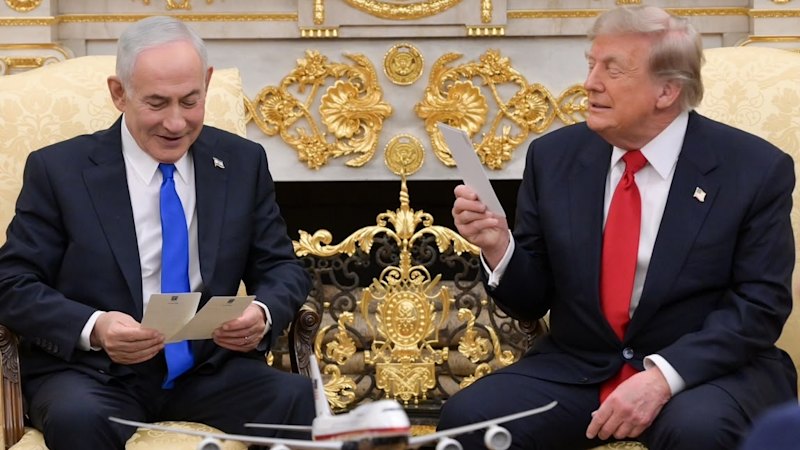
Former US President Donald Trump stated that Israeli Prime Minister Benjamin Netanyahu was showing him intelligence regarding Iran's nuclear capabilities because Netanyahu wished to extend the ongoing conflict. Trump made this candid admission during a meeting between the two leaders. This remark highlights a tense dynamic in the relationship between the US and Israel, particularly concerning regional security and the perception of motivations behind intelligence sharing. The statement suggests a divergence in strategic objectives or at least a difference in how those objectives are perceived by the former US president. Trump's comments imply a distrust of Netanyahu's intentions, framing the intelligence sharing not as a collaborative effort against a common threat but as a tactic to maintain a prolonged state of war. This interaction underscores the complexities of international diplomacy and the personal relationships between political leaders, especially in the context of volatile geopolitical situations. The exchange reveals potential friction points in how allies interpret each other's actions and information during times of conflict.
This interaction between Donald Trump and Benjamin Netanyahu reveals a potential disconnect in strategic priorities and trust between key allies. Trump's assertion that Netanyahu shared Iran intelligence to prolong conflict suggests a transactional view of foreign policy, where perceived self-interest, such as maintaining a prolonged war, might influence diplomatic actions. This perspective contrasts with traditional alliance frameworks that emphasize shared threat assessment and collective security. The dynamic highlights how personal relationships and individual leader incentives can shape international relations, potentially complicating unified responses to complex geopolitical challenges like Iran's nuclear program. Future diplomatic engagements may need to navigate these individualistic approaches to ensure alignment on critical security issues.
AI-generated to prompt reflection — not editorial opinion, not advice, not a statement of fact. How this works.