Trump Administration Demands Smithsonian Post Warnings on "Inaccurate" US History
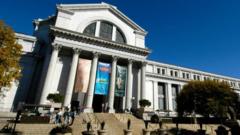
The Trump administration has frequently asserted that the Smithsonian Institution, the world's largest research museum, exhibits an anti-American bias. This sentiment has led to directives from the administration regarding the museum's content. Specifically, former President Donald Trump ordered the Smithsonian to place warnings on exhibits that the administration deemed to present an "inaccurate" portrayal of United States history. This action reflects a broader pattern of the administration challenging historical narratives and institutional interpretations of American history. The directive aimed to signal a perceived need for a more patriotic or conventionally celebratory account of the nation's past within the museum's displays. The Smithsonian, as a prominent national institution, became a focal point for these concerns about historical representation.
This directive highlights a tension between institutional historical interpretation and political viewpoints. The administration's request for "inaccurate" history warnings suggests a desire to shape public understanding of the past through state-influenced labeling. Such actions can raise questions about academic freedom and the role of government in curating national narratives. Future governance models may need to address how to balance diverse historical perspectives with national identity, particularly as AI-driven content analysis becomes more prevalent, potentially offering new ways to scrutinize historical claims but also risking algorithmic bias.
AI-generated to prompt reflection — not editorial opinion, not advice, not a statement of fact. How this works.