Trump Advises Netanyahu on F-35 Sales Amidst Turkish Interest
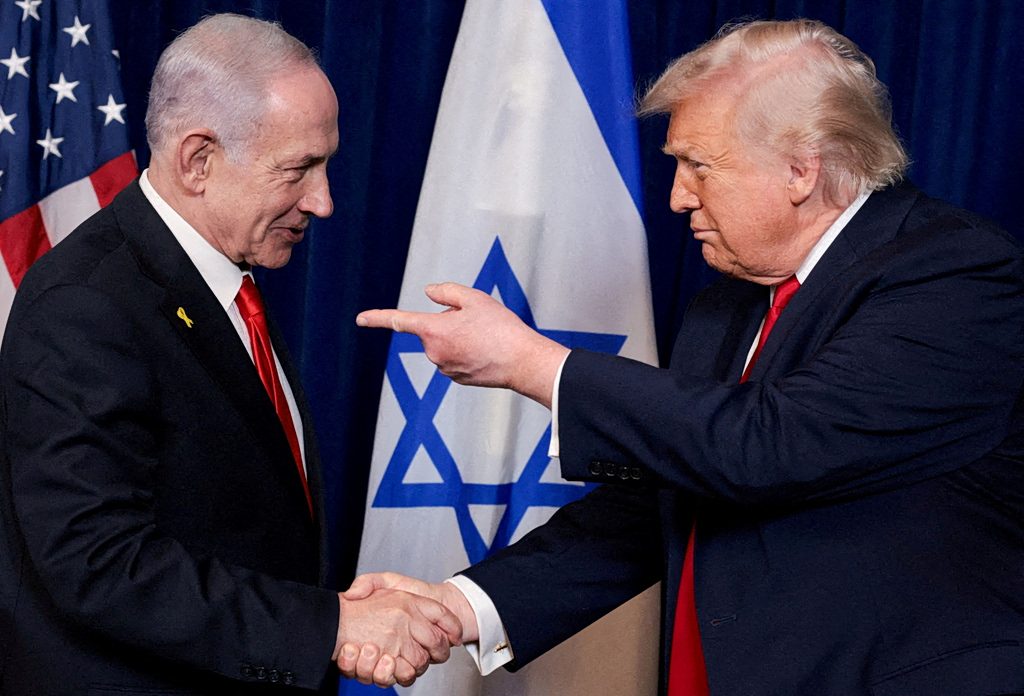
Former U.S. President Donald Trump has offered recommendations to Israeli Prime Minister Benjamin Netanyahu regarding the sale of F-35 fighter jets, particularly in light of Turkish President Recep Tayyip Erdoğan's interest in acquiring them. Trump's comments, which expressed his view that no one should dictate U.S. arms sales, were made shortly before Netanyahu's meeting with the current U.S. President. Trump's renewed praise for Turkey and Erdoğan, in the context of the F-35 issue, has drawn attention due to its timing and potential implications for regional security dynamics. The former president's stance suggests a potential shift or a continuation of his 'America First' approach to international arms deals, emphasizing U.S. sovereignty in such transactions. Netanyahu's meeting with the U.S. President was expected to address various bilateral issues, including defense cooperation and regional security concerns. The F-35 program, a cornerstone of modern air power for several allied nations, has faced complexities due to geopolitical considerations and the involvement of multiple international partners. Trump's unsolicited advice to Netanyahu highlights the intricate diplomatic landscape surrounding advanced military technology transfers and the influence of past U.S. administrations on ongoing foreign policy matters. The situation underscores the delicate balance of power and alliances in the Middle East, where decisions on military hardware can have significant strategic ramifications.
The former U.S. President's intervention in a sensitive arms sale negotiation, framed as advice to an ally concerning a third nation's interest, highlights the persistent influence of individual political figures on complex geopolitical and defense industrial policies. This situation underscores the tension between national sovereignty in defense manufacturing and the strategic implications of technology proliferation. The F-35 program, involving significant international cooperation and investment, faces inherent challenges when national interests diverge or when political shifts occur in key stakeholder nations. Future governance models for such multinational defense projects may need to incorporate more robust mechanisms for managing geopolitical risks and ensuring alignment among allies, beyond the immediate political cycles of individual leaders. Evaluating such events through the lens of long-term alliance stability and the evolving global security architecture is crucial for anticipating future challenges in international defense cooperation.
AI-generated to prompt reflection — not editorial opinion, not advice, not a statement of fact. How this works.