Trump Alleges Chinese Election Interference, Cites Voter Data
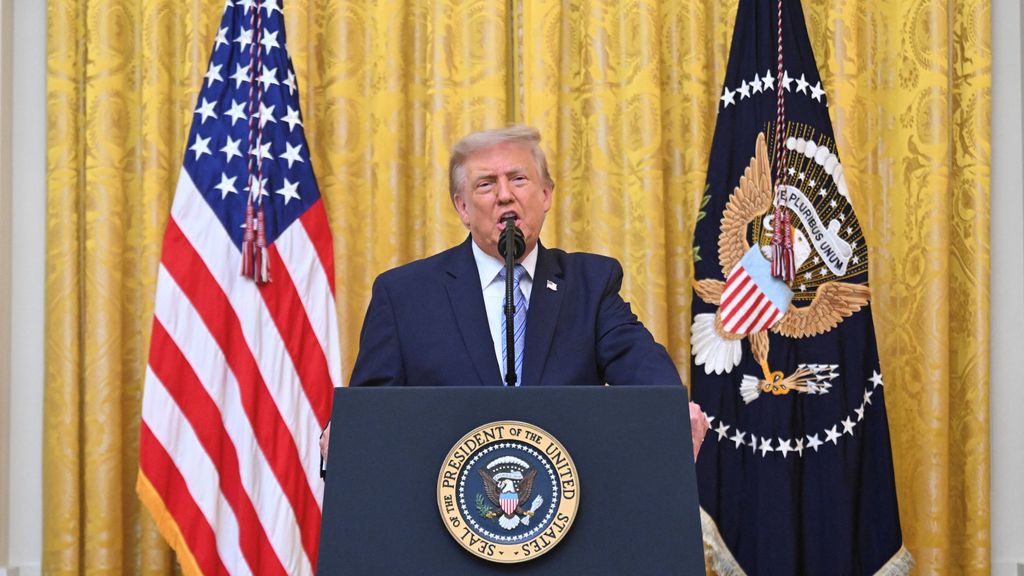
Former U.S. President Donald Trump has again accused China of interfering in the 2020 U.S. presidential elections, claiming in a televised address that Beijing extensively collected data on American voters. Trump asserted that China obtained information on 220 million registered voters and alleged that U.S. intelligence agencies deliberately withheld evidence of this interference. This contradicts the 2021 conclusion by U.S. intelligence services, led by then-Director of National Intelligence John Ratcliffe, that there was no evidence of foreign powers technically influencing the 2020 election outcome. Trump also reiterated his call for stricter voting laws, including a national voter ID requirement, to prevent election fraud. Numerous investigations and legal challenges have found no evidence of widespread fraud in the 2020 election, which Joe Biden won. Trump did not present evidence of vote alteration or manipulation during his speech. Several major U.S. television networks, including ABC, NBC, and CNN, opted not to broadcast Trump's 25-minute address live, citing the need for fact-checking, while Fox News aired it. Democrats accused Trump of reviving unsubstantiated claims to sow doubt about the upcoming November midterm elections. While it is known that China possessed voter registration data from millions of Americans, the U.S. intelligence community concluded this data was not used for manipulation. Trump also cited a figure of 278,000 non-citizens registered to vote, a number that has been significantly reduced in previous checks due to data inaccuracies and the status of newly naturalized citizens. Trump's push for stricter voting laws is linked to his proposed 'SAVE Act,' which would require proof of citizenship and identification at the polls, despite evidence suggesting non-citizen voting is rare. He has threatened to veto other legislation until his demands are met, but faces opposition from within his own party due to practical concerns and Senate procedural issues.
This event highlights the persistent use of unsubstantiated claims regarding election integrity to advance specific policy agendas. The framing of foreign interference, particularly by China, serves as a potent narrative to justify stricter voting regulations. While concerns about data privacy and foreign influence are valid, the analysis of such claims must be grounded in verifiable evidence. The discrepancy between alleged widespread interference and the findings of intelligence agencies and numerous court cases underscores the importance of rigorous fact-checking and objective assessment. In the context of evolving electoral systems and increasing digitalization, understanding the incentives for both disseminating and challenging election-related narratives is crucial for maintaining public trust and ensuring democratic processes are robust against manipulation, whether foreign or domestic. The focus on voter ID laws and non-citizen voting, while presented as preventative measures, warrants examination for their potential impact on voter access and their effectiveness in addressing proven vulnerabilities.
AI-generated to prompt reflection — not editorial opinion, not advice, not a statement of fact. How this works.