Trump and European far-right leverage Spanish migration crisis for political gain
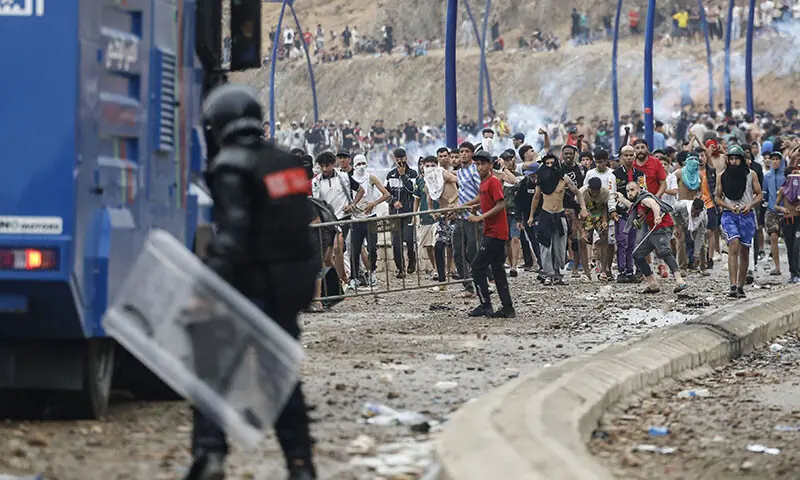
US President Donald Trump and far-right figures in Europe have seized upon a migration crisis in the Spanish territory of Ceuta to advance their political agendas. Trump, facing declining poll numbers ahead of the US midterm elections, cited the surge of migrants into Ceuta as a dire warning for America should his opponents win power. He suggested that a Democratic victory would lead to a similar situation in the United States within three years. News footage depicting migrants overwhelming barriers into Ceuta, a Spanish enclave on the Moroccan coast, was widely circulated on right-wing media and social media platforms aligned with Trump. In Europe, Alice Weidel, co-leader of Germany's far-right Alternative for Germany (AfD) party, claimed Ceuta was "left in ruins" and suggested Germany would be a likely destination for these migrants, calling for secured borders and rigorous rejections. Italy's Prime Minister Giorgia Meloni and Finland's ruling coalition proposed excluding Spain from the European visa-free zone due to the situation. Czech Prime Minister Andrej Babis, a Trump supporter, attributed the crisis to Spain's policies of granting legal status to hundreds of thousands of migrants already in the country, alleging a replacement of Spaniards with migrants. Trump's vice president, JD Vance, shared footage of the Ceuta influx, labeling it a consequence of "radical left-wing globalist policies" and an "Invasion of the West." White House Deputy Chief of Staff Stephen Miller also posted video of the crisis, warning that Democrats would allow homes to be "trampled and stolen by invaders."
This event highlights how international migration crises can be amplified and weaponized in political discourse, particularly by populist and far-right movements. The strategic use of imagery and rhetoric, framing migration as an "invasion" and a threat to national identity and security, serves to mobilize a political base concerned about demographic change and border control. Such narratives can create a feedback loop where perceived policy failures or humanitarian challenges are immediately translated into partisan attacks, potentially hindering nuanced policy discussions and international cooperation. The focus on immediate threats and stark warnings, rather than on the complex root causes of migration or the integration challenges faced by host countries, simplifies a multifaceted issue into a binary choice between security and perceived societal collapse. This approach risks exacerbating social divisions and may overlook long-term solutions that require comprehensive strategies addressing both origin and transit countries, as well as the integration of migrants into destination societies.
AI-generated to prompt reflection — not editorial opinion, not advice, not a statement of fact. How this works.