Trump Attends Repatriation Ceremony for US Service Members Killed in Iran Conflict
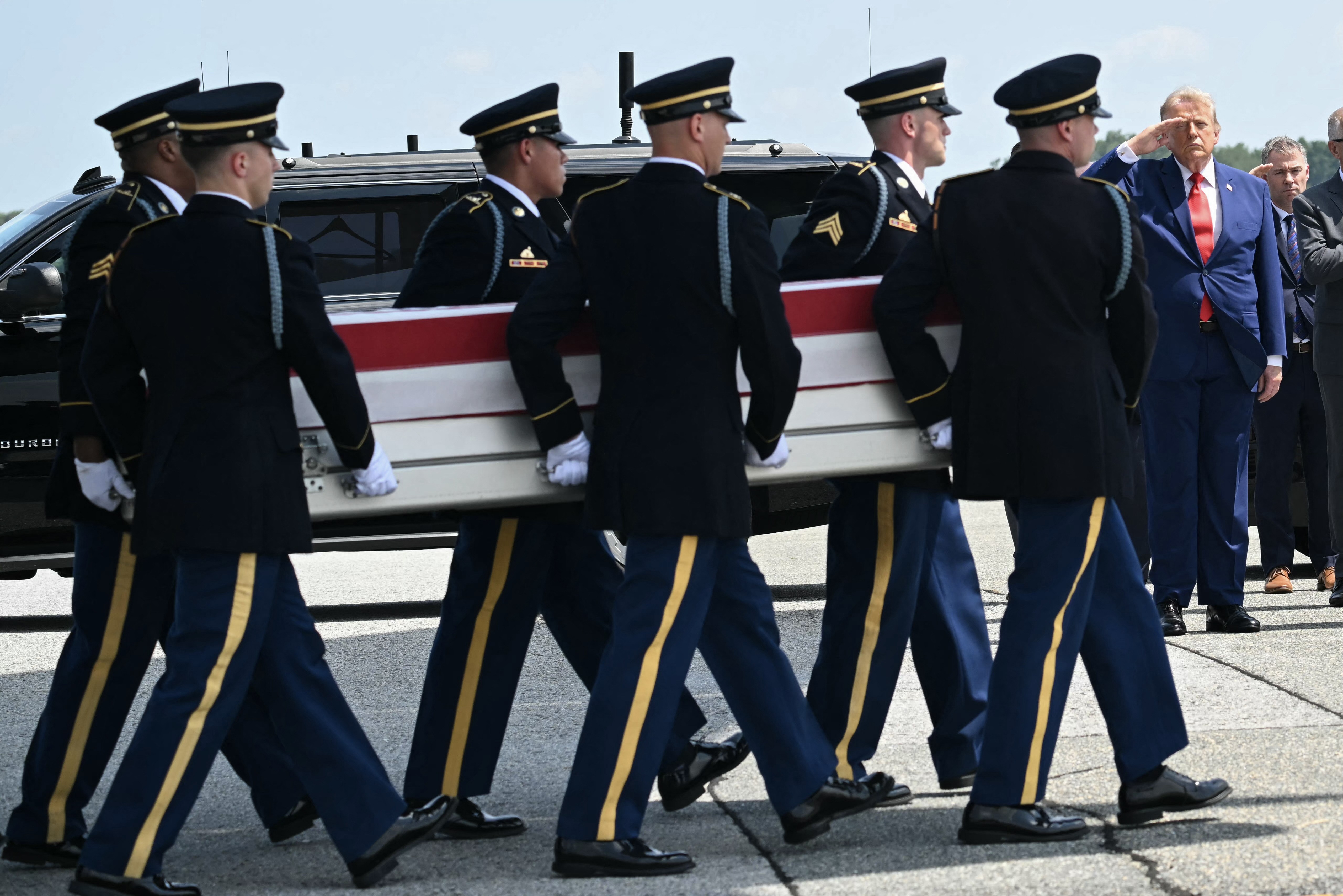
U.S. President Donald Trump attended a repatriation ceremony at Dover Air Force Base in Delaware on Wednesday, January 22nd, for American service members killed in the war with Iran. The past weekend saw some of the deadliest days for U.S. forces in the conflict, with two separate attacks resulting in three service members killed and one missing in the Middle East. This brings the total U.S. fatalities in the conflict to 17. While these figures are lower compared to other nations involved like Iran and Lebanon, which have suffered thousands of casualties, including many civilians, the American losses add to public pressure against the administration. President Trump's 2024 campaign slogan was "no more wars," and he promised to avoid new armed conflicts. Some segments of the U.S. population perceive these fallen soldiers as casualties of a war that primarily serves Israeli interests rather than American ones. On Friday, January 17th, Iranian missiles struck the Muwaffaq Salti Air Base in Jordan, killing two service members and leaving one missing. Early Sunday morning, January 19th, an Iranian drone explosion killed a sergeant in Erbil, Iraq. These deaths are in addition to 13 other U.S. military personnel who died while serving in the Middle East. The casualty count does not include a National Guard member who died of a medical emergency in Kuwait on March 8th. Iran and Lebanon have experienced the highest death tolls, with 3,468 and 3,696 victims respectively, as of June. Iran's casualties include its own supreme leader, Ayatollah Ali Khamenei, and several high-ranking officials. A bombing in Minab killed 156 civilians, including 120 children. Lebanon has faced Israeli bombings, justified as efforts to counter Hezbollah, leading to a high civilian death toll, which has caused friction between President Trump and Israeli Prime Minister Benjamin Netanyahu.
The U.S. involvement in the conflict with Iran, as highlighted by the repatriation of fallen service members, presents a complex geopolitical challenge. The administration faces domestic pressure to adhere to a non-interventionist stance, particularly given campaign promises to end "endless wars." Public sentiment appears divided, with some questioning the strategic necessity of U.S. engagement and its alignment with national interests versus those of allies. The high civilian casualties in Iran and Lebanon underscore the devastating human cost of regional conflicts and raise questions about proportionality and international humanitarian law. The friction between President Trump and Prime Minister Netanyahu regarding civilian deaths suggests potential strategic divergences and the inherent difficulties in balancing allied security objectives with the protection of non-combatants. Looking ahead, sustained U.S. military presence in the Middle East, even with limited casualties, risks drawing the nation into further entanglements, potentially undermining stated foreign policy goals and exacerbating regional instability.
AI-generated to prompt reflection — not editorial opinion, not advice, not a statement of fact. How this works.