Trump Claims Hamas Disarmament Deal, But Skepticism Lingers
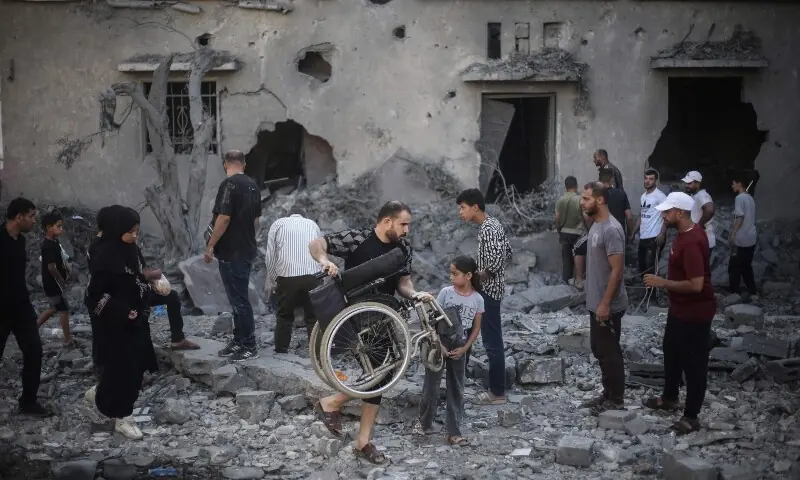
Former U.S. President Donald Trump announced on Thursday that a phased agreement for the "complete disarmament" of Hamas and other armed groups in Gaza had been reached during talks in Cairo. Trump described the deal, brokered by his "Board of Peace," as a "monumental step toward lasting PEACE and SECURITY," envisioning a Gaza governed by a new Palestinian administration that would work with the U.S. initiative and allow Israel to achieve its security needs. However, a Hamas official characterized the agreement as a "draft" and stated that disarmament would not occur prior to Israel's withdrawal from the Gaza Strip. U.S. officials expressed skepticism regarding Hamas's commitment to surrendering its weapons, with one official noting Israel's significant doubts about the Palestinian group's adherence to any such terms. A Hamas negotiator indicated that heavy weapons would be stored under a Palestinian administration and not transferred to Israel, contingent on an Israeli withdrawal. The timeline for disarmament remains unclear, with estimates ranging from 200 to 320 days, though U.S. officials downplayed these figures. Prior to Trump's announcement, an Israeli official stated that Israel had rejected a proposal, demanding complete disarmament and demilitarization as preconditions, which the current 15-point document allegedly did not satisfy. The announcement comes amidst ongoing violence, with Israeli strikes on Thursday reportedly killing at least six Palestinians, including children. The proposed plan also includes provisions for rebuilding Gaza, increased humanitarian aid, Israeli troop withdrawal, and the deployment of an international security force, though the practicalities of weapon handover and Israeli troop movements remain uncertain.
The announcement of a phased disarmament agreement for Hamas, as presented by former President Trump's "Board of Peace," highlights the complex geopolitical incentives and systemic challenges inherent in resolving the Israeli-Palestinian conflict. While framed as a breakthrough, the divergent interpretations from Hamas and the expressed skepticism from Israeli and U.S. officials underscore the deep-seated trust deficit and the difficulty of achieving mutually agreeable terms. The proposed "conditions-based deal" appears to prioritize immediate security concerns and governance restructuring, but its success hinges on the willingness of all parties to cede significant leverage, particularly regarding armed capabilities. Future iterations of such peace initiatives will need to address not only the immediate cessation of hostilities and disarmament but also the underlying political aspirations and long-term security guarantees for both Israelis and Palestinians, considering the evolving regional dynamics and the potential for external actors to influence outcomes.
AI-generated to prompt reflection — not editorial opinion, not advice, not a statement of fact. How this works.