Trump Claims Hormuz Strait Tolls for US Protection; Legal Basis Questioned
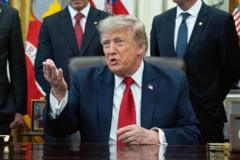
President Donald Trump has declared the United States as the protector of the Strait of Hormuz. He stated that in exchange for this protection, the U.S. would levy taxes on vessels passing through. This assertion raises questions about the legal authority for such a move. The Strait of Hormuz is a critical global chokepoint for oil transportation, with a significant portion of the world's oil supply transiting through it annually. International maritime law and the rights of passage through such straits are complex and governed by various treaties and customary international law. The U.S. Navy routinely patrols the waters around the Strait, ensuring freedom of navigation and the flow of commerce. However, imposing a direct toll or tax on international shipping for protection services would represent a significant departure from established international norms and legal frameworks. The legality of such a unilateral action by the U.S. would likely face challenges from other nations and international bodies. The implications for global trade and geopolitical stability could be substantial if such a policy were to be implemented.
President Trump's assertion of a toll for protecting the Strait of Hormuz highlights a potential tension between national security interests and international maritime law. While the U.S. Navy plays a significant role in regional security, the unilateral imposition of tolls for passage represents a novel interpretation of its role. This approach could be viewed through the lens of incentive structures, where the U.S. seeks to recoup security expenditures or leverage its position. However, international law typically governs passage through straits, and such a levy might be seen as an impediment to free navigation, potentially creating friction with other maritime nations. The long-term implications could involve challenges to U.S. influence and the establishment of alternative security arrangements or transit routes, impacting global energy markets and geopolitical dynamics in the coming decade.
AI-generated to prompt reflection — not editorial opinion, not advice, not a statement of fact. How this works.