Trump Criticizes European Allies, Primarily Targeting Pedro Sánchez
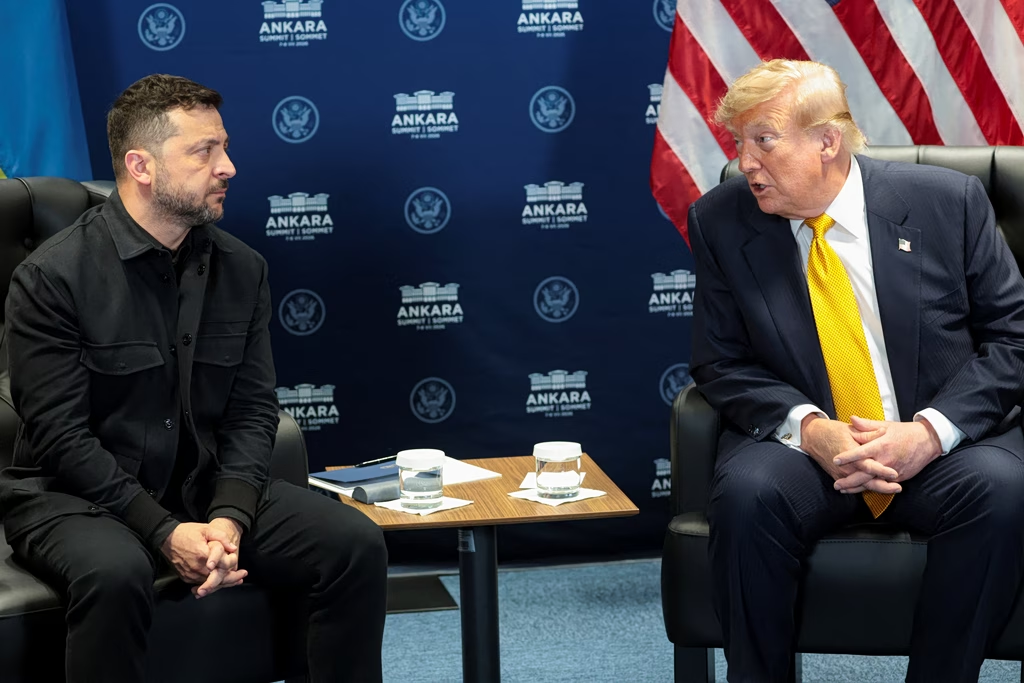
European leaders were concerned that President Trump would use the NATO Summit to launch new attacks against them, particularly regarding the conflict with Iran. Trump did not disappoint their fears, although his closing speech at the summit was relatively mild. The most significant surprise, however, was a positive one, though the provided text cuts off before detailing it. The original headline indicates that Trump's attacks were directed broadly, with Spanish Prime Minister Pedro Sánchez being a primary target. This suggests a potential focus on specific bilateral issues or policy disagreements between the US and Spain, in addition to broader transatlantic tensions. The context of the Iran war as a backdrop for these criticisms implies a divergence in foreign policy approaches between the US and some European nations within the NATO alliance. The summit likely served as a platform for Trump to voice these grievances and assert his administration's agenda on the international stage. The anticipation of Trump's remarks highlights the ongoing dynamic of his presidency and its impact on established international relationships. The unexpected positive surprise, hinted at but not revealed, leaves the full scope of the summit's outcomes unclear.
The event highlights the persistent tension between the United States under the Trump administration and its European NATO allies, particularly concerning foreign policy alignment and burden-sharing. The focus on specific leaders like Pedro Sánchez suggests that geopolitical disagreements may be personalized, potentially complicating diplomatic efforts. The underlying incentive structures for such confrontational rhetoric could stem from a desire to renegotiate alliance terms or assert national interests unilaterally. Looking ahead, such dynamics challenge the long-term cohesion and effectiveness of multilateral security frameworks like NATO, especially as global power balances shift and new technological and economic challenges emerge. The need for robust, adaptable diplomatic channels becomes crucial to navigate these divergences and maintain collective security in an evolving international landscape.
AI-generated to prompt reflection — not editorial opinion, not advice, not a statement of fact. How this works.