Trump Declares Iran Ceasefire Over, Calls Leaders 'Scum' Amid Renewed Hostilities
Hostilities between the United States and Iran have reignited following accusations from Tehran that the US violated a ceasefire agreement. The US military conducted strikes around the Strait of Hormuz and rescinded a temporary sanctions waiver on Iranian oil exports. These actions are the latest in a series of ceasefire violations by both nations, despite a truce that began in April. The renewed conflict has already caused a 3% increase in oil prices.
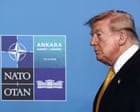
During a Nato summit in Ankara, President Donald Trump announced the end of the memorandum of understanding with Iran, labeling the country's leaders as "vicious, violent people" and "scum," stating he would not engage in negotiations with them. However, he suggested that talks might still proceed. Nato Secretary General Mark Rutte supported the US actions, emphasizing the importance of a forceful response to Iranian ceasefire violations.
The US military reported striking over 80 targets in retaliation for Iran's alleged attacks on three commercial vessels in the Strait of Hormuz. In response, Iran launched attacks on US military installations in Bahrain and Kuwait, with the Islamic Revolutionary Guard Corps claiming to have targeted 85 facilities.
The escalation of tensions between the US and Iran, marked by renewed military actions and harsh rhetoric, underscores the inherent instability in managing geopolitical disputes through punitive measures and sanctions. The stated justifications for military strikes, such as retaliation for alleged vessel attacks, are often intertwined with broader strategic objectives and domestic political considerations. The immediate market reaction, evidenced by rising oil prices, highlights the global economic vulnerability to such conflicts. Looking ahead, the reliance on military responses rather than sustained diplomatic engagement risks perpetuating cycles of retaliation, potentially leading to wider regional instability and further economic disruption. The effectiveness of sanctions waivers and their revocation as diplomatic tools warrants examination, particularly in light of their limited capacity to foster long-term de-escalation.
AI-generated to prompt reflection — not editorial opinion, not advice, not a statement of fact. How this works.