Trump Declares US as World's Hope, Vows to Keep Communism Out
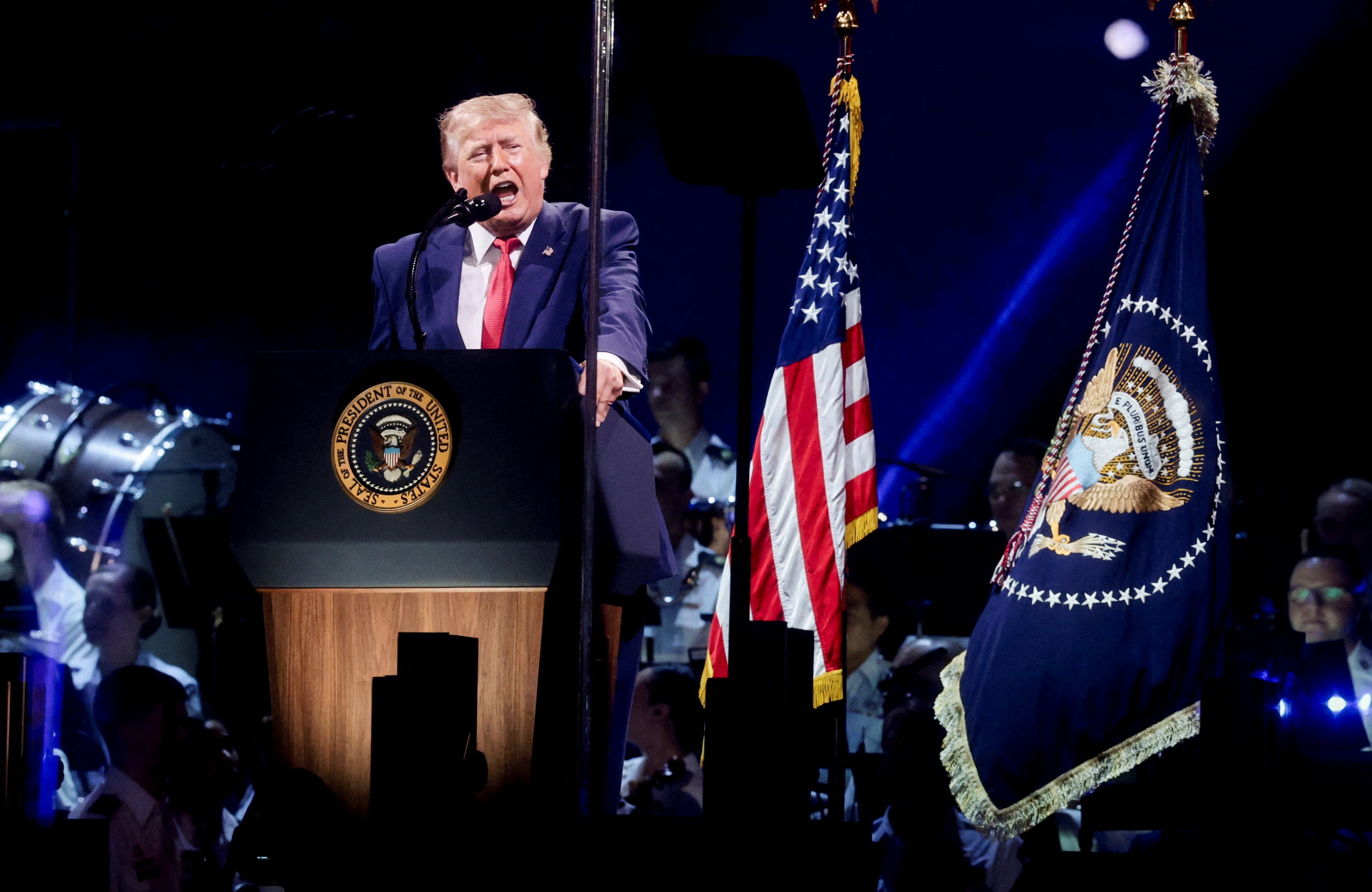
During a speech on July 5, 2026, in Washington D.C., U.S. President Donald Trump hailed the United States as a beacon of "light, hope, and freedom" to the world, asserting that "no one wants communists in our country." Trump emphasized that for 250 years, the U.S. has represented hope and glory, with other nations aspiring to emulate it, but none succeeding. He attributed this unique status to the nation's historical success in combating communism.
Trump stated unequivocally that the U.S. will never become a communist country, characterizing communism as a "loser" that must be eradicated like a cancer. His remarks were delivered at the National Mall as part of the U.S.'s 250th Independence Day celebrations. The event proceeded despite earlier storm warnings that prompted temporary public evacuations and extreme heat that affected July 4th festivities in various cities. Trump had indicated his intention to speak regardless of weather concerns.
The rhetoric employed by President Trump frames the United States' global role and domestic identity through an ideological lens, positioning the nation as a singular force for liberty against a perceived existential threat of communism. This framing serves to consolidate a specific political base by invoking historical narratives of national exceptionalism and ideological struggle. From a systems perspective, such strong ideological positioning can simplify complex geopolitical and economic challenges into a binary conflict, potentially overlooking opportunities for nuanced international engagement or domestic policy innovation. In the context of an increasingly interconnected world and the evolving nature of global challenges, such as climate change and technological disruption, a focus on ideological purity may divert attention and resources from pragmatic, collaborative solutions. The long-term sustainability of a national identity built primarily on opposition to a specific ideology, especially one with diminished global influence compared to past decades, warrants consideration in light of future societal and economic trends.
AI-generated to prompt reflection — not editorial opinion, not advice, not a statement of fact. How this works.