Trump decries threats to American identity at Mount Rushmore celebration
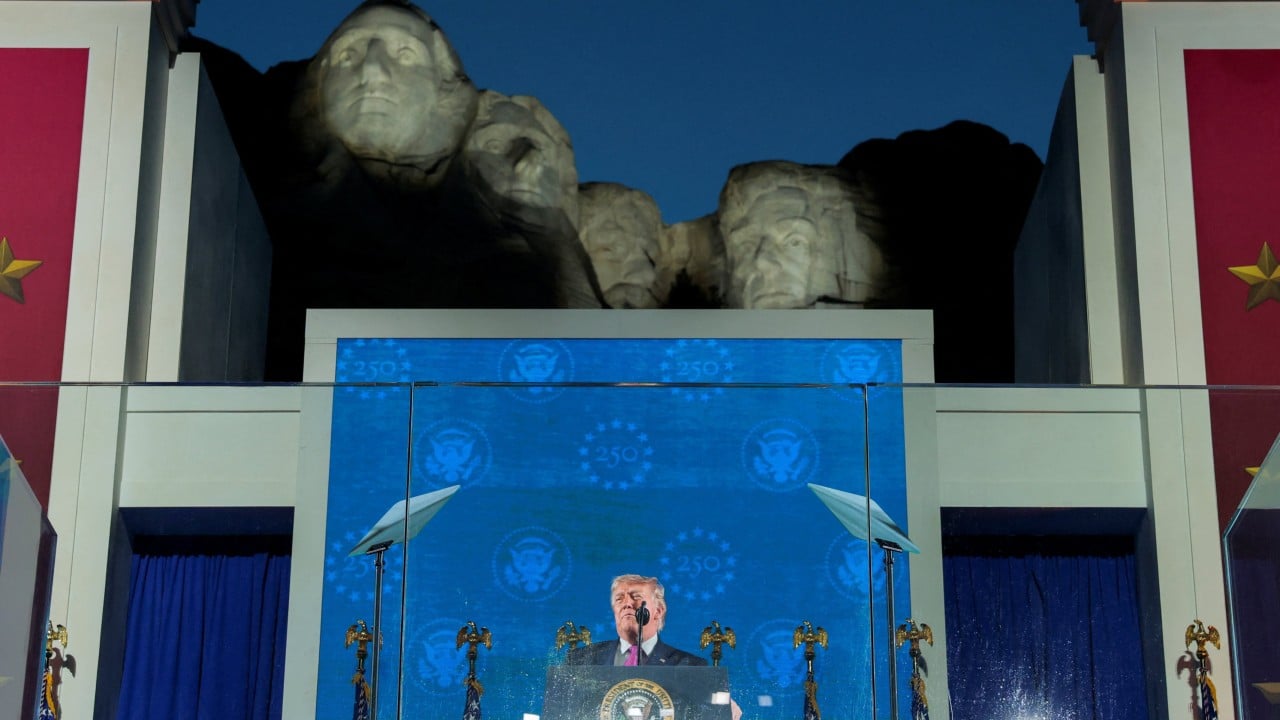
On the eve of America's 250th anniversary, U.S. President Donald Trump delivered a speech at Mount Rushmore warning of a "renewed attack" on the nation's identity. He specifically targeted domestic "radicals and extremists" whom he believes are undermining the country. The address, steeped in patriotic rhetoric, emphasized American exceptionalism and paid homage to historical leaders represented by the monument's carved figures. Trump's remarks positioned the current moment as a critical juncture for the nation as it approaches a significant milestone. The speech aimed to rally support around a particular vision of American values and history.
President Trump's address at Mount Rushmore frames the nation's upcoming 250th anniversary as a period of internal conflict over its identity. By identifying "radicals and extremists" as threats, the speech invokes a narrative of national defense against perceived ideological adversaries. This framing may serve to consolidate a particular political base by appealing to a sense of shared heritage and a perceived external or internal danger. The use of a historically charged location like Mount Rushmore amplifies the appeal to national symbolism and historical continuity. Future analyses will consider how this rhetoric shapes public discourse and policy decisions regarding national identity and social cohesion in the coming years, particularly in the context of evolving societal values and technological advancements.
AI-generated to prompt reflection — not editorial opinion, not advice, not a statement of fact. How this works.