Trump Defends Netanyahu Against Potential Arrest by NYC Mayor
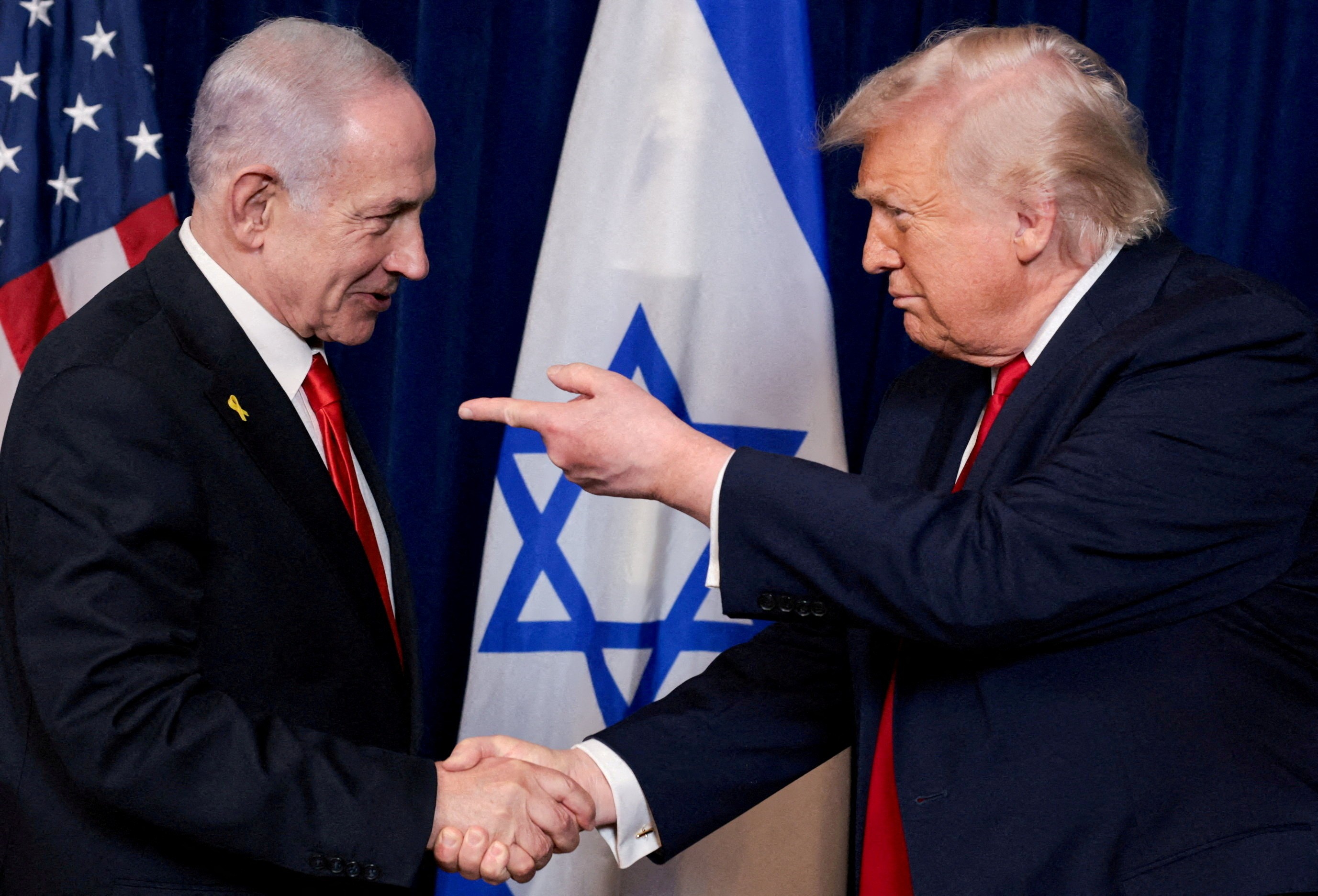
Former U.S. President Donald Trump stated on Monday, January 20th, that Israeli Prime Minister Benjamin Netanyahu will not be arrested while in the United States. Trump's remarks came after New York City Mayor Zohran Mamdani expressed consideration of attempting to arrest Netanyahu during the upcoming UN General Assembly. Mamdani, in an interview on Saturday, January 18th, suggested that Prime Minister Netanyahu "belongs in The Hague" and called him a "war criminal" accused by the International Criminal Court (ICC). While Mamdani acknowledged uncertainty about his authority to order the NYPD to detain a foreign leader, he indicated he is discussing the matter with the city's legal team, vowing to "do whatever the law allows me to do in New York City."
Trump also asserted that Netanyahu is fighting Iran, and suggested that "the only ones who should be arrested are those who have driven Iran into this unprecedented spiral of death and destruction." The UN General Assembly is scheduled for September in New York. In the past, Mamdani had pledged to deploy NYPD officers to enforce arrest warrants from the ICC, including for Netanyahu and Russian President Vladimir Putin. The ICC, based in The Hague, stated in 2024 that there were reasonable grounds to believe Netanyahu was responsible for war crimes and crimes against humanity stemming from Israel's offensive in Gaza following the October 7, 2023, Hamas attack. Israel's Ambassador to the UN, Danny Danon, criticized Mamdani's statements, accusing him of inciting hostility and attacking Israel instead of addressing antisemitism in New York.
This situation highlights the complex interplay between domestic political rhetoric, international legal frameworks, and geopolitical alliances. The potential for a municipal leader to challenge a foreign head of state based on international court accusations raises novel questions about jurisdictional reach and the enforcement of international law within sovereign borders. The differing perspectives underscore a broader global debate regarding accountability for actions during armed conflict, particularly concerning alleged war crimes. Future considerations may involve clarifying the precise legal standing and practical mechanisms for enforcing international warrants within national jurisdictions, as well as navigating the political implications of such actions on diplomatic relations and global stability. The event also prompts reflection on the role of municipal governments in engaging with international affairs and human rights issues.
AI-generated to prompt reflection — not editorial opinion, not advice, not a statement of fact. How this works.