Trump Downplays Russian Aid to Iran Despite Intelligence Reports
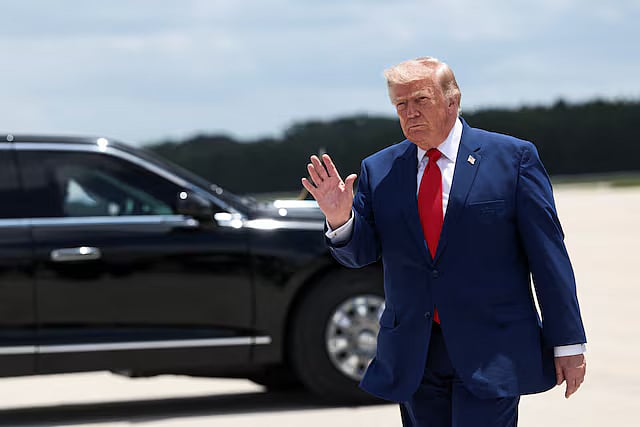
Despite intelligence suggesting Russia is aiding Iran in targeting U.S. forces, President Donald Trump has shown a notable disinterest in investigating the matter. This stance echoes his previous behavior when faced with similar intelligence during his first term. The issue resurfaced last week when Defense Secretary Pete Hegseth testified before a Senate committee, confirming that both China and Russia are providing Iran with assistance that enables its current operations. Following this, Secretary of State Mark Rubio sidestepped a question on the topic while seated opposite Russian Foreign Minister Sergey Lavrov. Trump subsequently took to social media, disagreeing with Hegseth's assessment and stating that China and Russia assured him they are not selling arms to Tehran, thus not participating in the conflict. He believes these nations would not want to disappoint him. U.S. and European officials suspect Moscow is supplying Iran with drones and drone components, though the Kremlin denies these allegations. Furthermore, Ukrainian President Volodymyr Zelensky claims Moscow has provided Iran with satellite imagery of U.S. bases, which Iran allegedly used to accurately target American military installations. When questioned about this on Monday, Trump downplayed its significance, stating it "couldn't have had an impact," though he did mention he would ask Russian President Vladimir Putin about it. CNN had initially reported on this intelligence, citing sources familiar with U.S. intelligence, back in March. The New York Times has also published reports on the matter, corroborating the belief among U.S. and European officials regarding drone component supplies. Steve Witkoff, Trump's former top negotiator for ending the Russia-Ukraine war, stated he had warned Russia against providing Iran with targeting information or other assistance. However, Trump himself has not publicly taken such a firm stance. This situation arises amidst renewed cross-border attacks between the U.S. and Iran this month, following the collapse of a ceasefire, which have resulted in U.S. casualties. The U.S. is reportedly investigating Russia's potential role in Iran's attack on a CIA facility. Trump's apparent lack of concern is reminiscent of his dismissal of intelligence during his first term suggesting Russia offered bounties for U.S. soldiers' deaths in Afghanistan, which he labeled as potential "hoaxes" and "fake news."
The intelligence reports suggesting Russian support for Iran's military actions against U.S. interests present a complex geopolitical challenge. President Trump's public skepticism and downplaying of these findings, particularly his reliance on personal assurances from foreign leaders over intelligence assessments, raises questions about the prioritization of national security versus diplomatic signaling. This approach risks undermining the credibility of U.S. intelligence agencies and potentially emboldening adversaries. The situation highlights a systemic tension between a leader's direct engagement with counterparts and the established processes for verifying and acting upon intelligence. In the context of escalating regional tensions and evolving global alliances, understanding the incentives driving Russia's alleged actions and Iran's strategic choices will be crucial for navigating future international relations and ensuring U.S. force protection. The long-term implications of perceived U.S. inaction or dismissal of such intelligence could influence future deterrence strategies and the stability of the international order.
AI-generated to prompt reflection — not editorial opinion, not advice, not a statement of fact. How this works.