Trump Halts Iran Attacks, Citing Imminent Deal
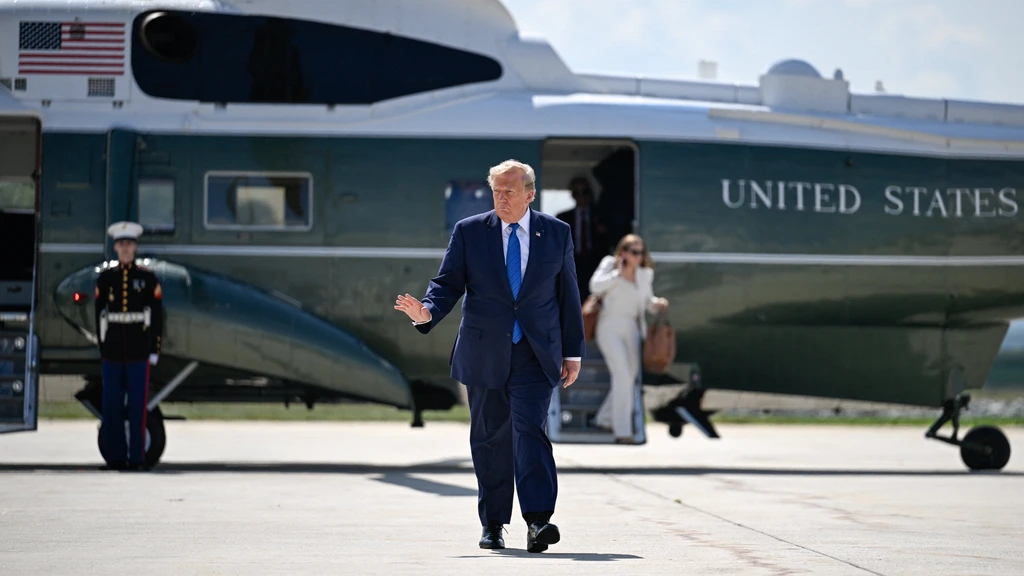
U.S. President Donald Trump announced that he has halted planned attacks on Iran, citing an imminent agreement to end the conflict. He stated that a preliminary accord is in place and emphasized the need for a swift finalization of the deal. Trump indicated on social media that the agreement would ensure the unconditional opening of the Strait of Hormuz and address Iran's nuclear threat. This shift occurred following reports from American media suggesting the U.S. and Israel were preparing for unprecedentedly severe strikes on Iran's energy infrastructure over the weekend. Trump had previously stated, according to CBS News, that these attacks would be so devastating that Iran would eventually concede it could no longer endure them. American citizens in the Middle East were advised to prepare for potential evacuation should the conflict escalate. Trump claimed that Iran and other Middle Eastern nations had requested the cessation of attacks to facilitate the agreement's completion. He also stated that Israel would collaborate with the U.S. on finalizing the deal, though Israel had not yet officially responded. Trump justified the decision as being in the "future interest of the WORLD and also for the survival of a successful and prosperous Iran." Saudi Crown Prince Mohammed bin Salman also spoke with Trump, stressing the importance of dialogue to de-escalate tensions, according to the Saudi state news agency. The conflict between the U.S. and Israel and Iran has now lasted five months. Iran's regime has not yet commented on Trump's statements, having previously accused the U.S. of escalating threats and warning that any regional state cooperating with Washington would face severe consequences. Trump faces domestic pressure in the U.S. due to the war's economic repercussions, including high fuel prices. This marks at least the fifth instance of Trump threatening significant military action before ultimately backing down, a pattern that has led to the satirical term "TACO" (Trump Always Chickens Out), coined by the Financial Times.
The de-escalation of military action by the U.S. against Iran, framed by President Trump as a precursor to a peace deal, highlights the complex interplay of geopolitical signaling and domestic political pressures. The announcement, if it leads to sustained de-escalation, could mitigate regional instability and the economic consequences of conflict, such as volatile energy prices. However, the repeated pattern of threatened escalation followed by withdrawal, as noted by the "TACO" moniker, raises questions about the predictability of U.S. foreign policy under this administration. This dynamic can create uncertainty for allies and adversaries alike, potentially impacting long-term strategic planning and the efficacy of diplomatic engagement. The focus on a "deal" that includes the Strait of Hormuz and Iran's nuclear program suggests a potential recalibration of U.S. priorities, but the absence of immediate Iranian or Israeli official comment indicates that the path to a stable resolution remains uncertain and subject to ongoing negotiation and regional power dynamics.
AI-generated to prompt reflection — not editorial opinion, not advice, not a statement of fact. How this works.