Trump Halts Netanyahu's Iran Push, Citing His Own Authority
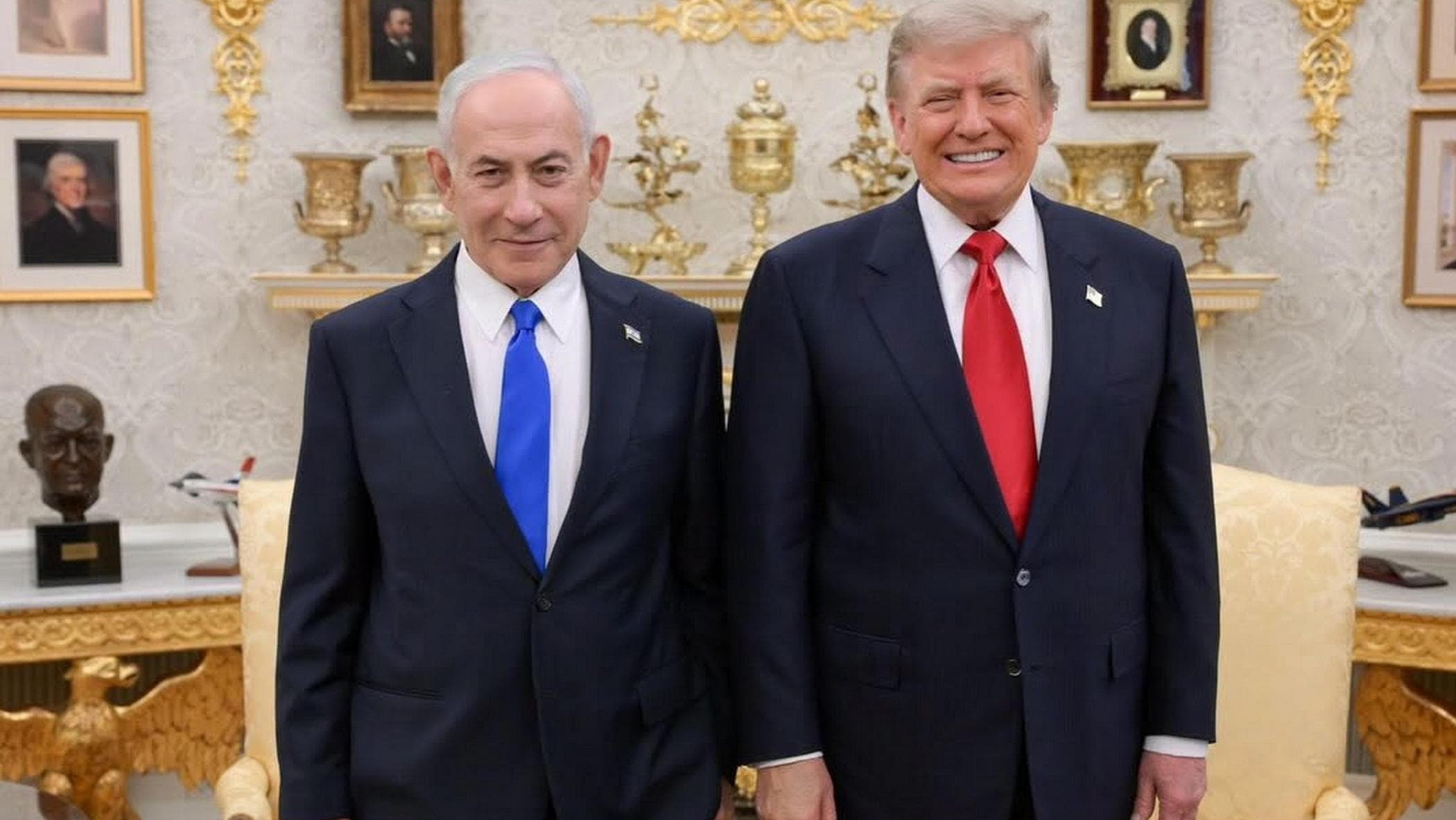
Former U.S. President Donald Trump met with Israeli Prime Minister Benjamin Netanyahu, during which Trump asserted his sole authority over any decision regarding Iran. Netanyahu had reportedly been lobbying Trump to take a harder stance on Iran's nuclear program. Trump indicated that while he received no criticism regarding Gaza or Israeli settlers, he would not be pressured into escalating conflict. He stated his preference for negotiation, warning that without an agreement, he would pursue the destruction of Iran's nuclear capabilities. Trump emphasized that any decision on military action or significant policy shifts concerning Iran rests entirely with him, not with the Israeli Prime Minister.
This interaction highlights the complex geopolitical dynamics between the United States and Israel, particularly concerning regional security threats. Donald Trump's assertion of unilateral decision-making power signals a potential divergence from established diplomatic protocols and alliances, prioritizing his personal judgment over collaborative foreign policy. While Trump frames his approach as a strategic negotiation tactic aimed at preventing Iran from acquiring nuclear weapons, this stance could introduce uncertainty for allies reliant on U.S. security guarantees. The emphasis on personal authority over coalition-based strategy may reflect a broader trend of transactional foreign policy, where bilateral relationships are managed through the lens of individual leader preferences and perceived national interests, potentially impacting long-term regional stability and international cooperation.
AI-generated to prompt reflection — not editorial opinion, not advice, not a statement of fact. How this works.