Trump Intervened with FIFA President Over US Player's Red Card
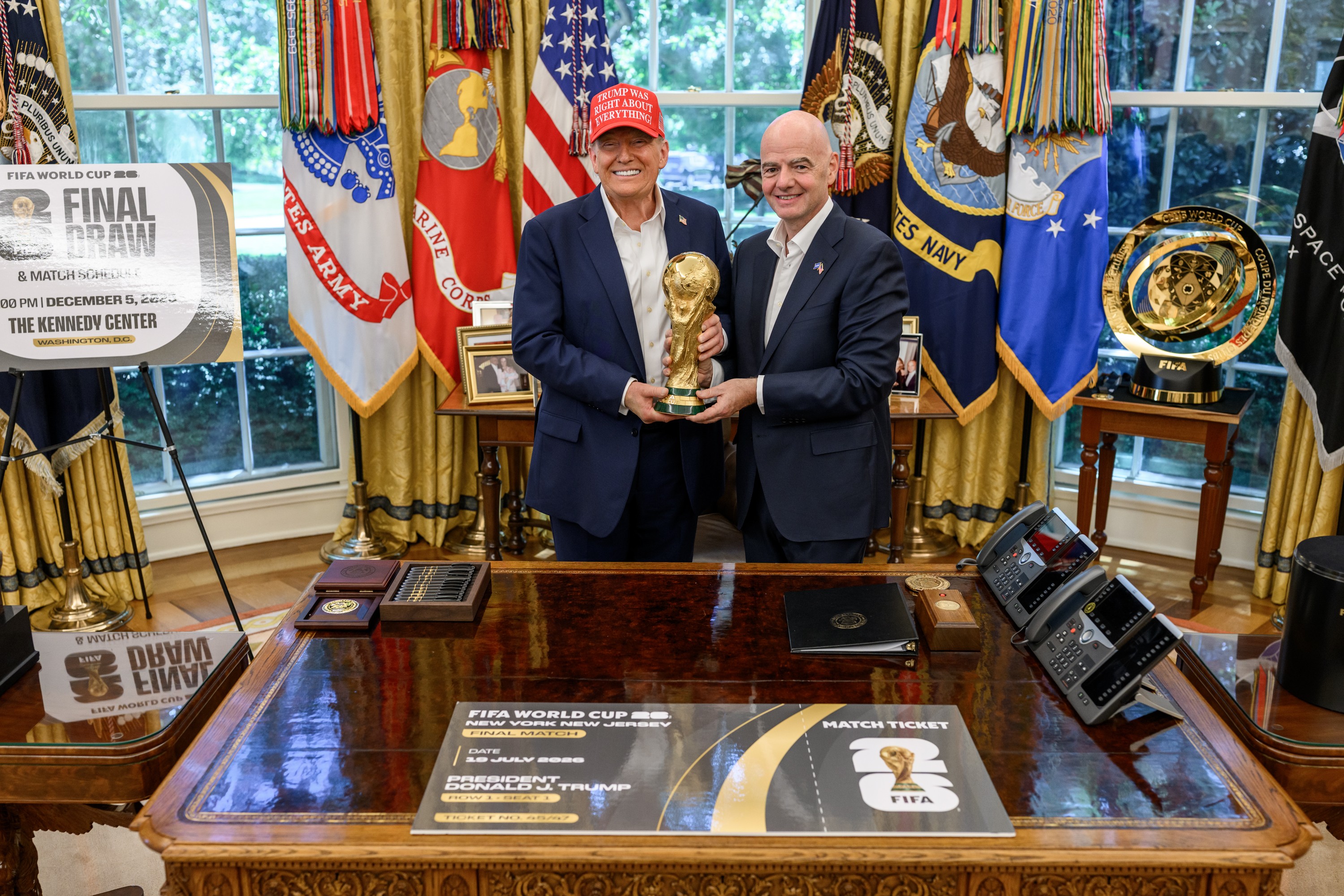
U.S. President Donald Trump directly contacted FIFA President Gianni Infantino to inquire about the red card issued to American forward Folarin Balogun during a match against Bosnia and Herzegovina. Balogun had received a red card for stepping on an opponent's ankle, which would have made him ineligible for the subsequent game against Belgium in the World Cup knockout stage. A U.S. official stated that the U.S. government provided additional evidence used in the appeal process, which is handled by an independent council. Following a review of the incident via VAR, the referee had initially issued the red card. President Trump publicly thanked FIFA for reversing what he called a "great injustice." U.S. national team coach Mauricio Pochettino also praised the decision, calling the original red card "completely unjust" and believing most people would agree. The suspension for Balogun has been converted into a one-year probationary period; if he commits another serious offense within this time, the automatic sanction will be reinstated. FIFA's Disciplinary Committee cited Article 27 of its Disciplinary Code, allowing for the suspension of disciplinary measures. However, the Belgian Football Federation expressed surprise and disagreement with the decision, citing Article 66.4 of the FIFA Disciplinary Code and Article 10.5 of the World Cup 2026 Regulations, which they argue mandate an automatic suspension for red cards. Belgium stated they are exploring all potential options to address the situation.
This event highlights the complex interplay between political influence and sports governance, particularly in high-stakes international competitions. The U.S. government's direct intervention, facilitated by the President, suggests a strategic prioritization of national team performance. FIFA's decision to review and overturn a disciplinary action, citing specific articles that allow for flexibility, raises questions about the consistency and perceived impartiality of its disciplinary processes. The Belgian federation's strong reaction points to a potential systemic tension between the desire for equitable application of rules and the pressures exerted by powerful stakeholders. The precedent set by this intervention could influence future disciplinary reviews, potentially creating a dynamic where political leverage becomes a factor in sports arbitration. This incident underscores the evolving landscape of global sports, where national interests can increasingly intersect with international sporting bodies.
AI-generated to prompt reflection — not editorial opinion, not advice, not a statement of fact. How this works.