Trump Links European Troop Levels to Greenland and Iran Issues
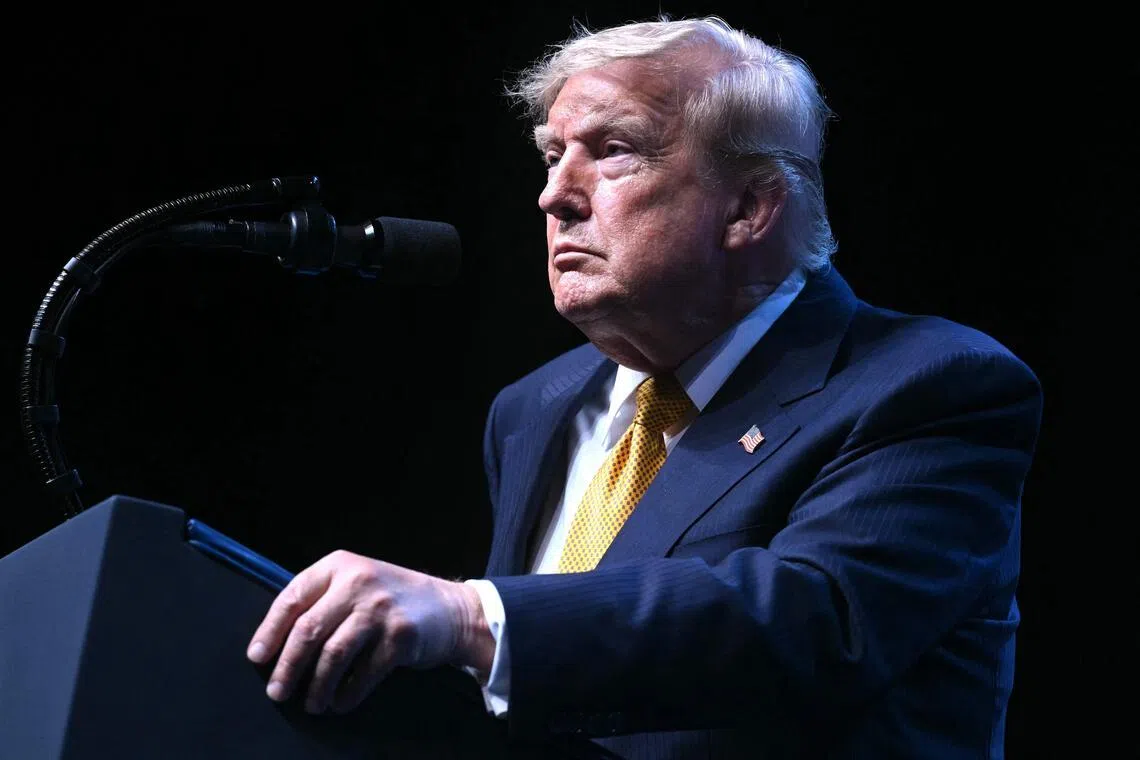
Former U.S. President Donald Trump has stated that troop levels in Europe will be contingent upon developments related to Greenland and Iran. These remarks are anticipated to heighten concerns among NATO member states regarding his dedication to the alliance's collective security framework. Trump's comments suggest a potential recalibration of U.S. military commitments in Europe, tying them to geopolitical issues beyond the traditional scope of NATO's defense mandate. The implications of this stance could lead to increased uncertainty for European allies who rely on U.S. military presence for their security. This approach may also signal a broader shift in U.S. foreign policy, prioritizing bilateral or issue-specific agreements over established multilateral security structures. The unpredictability introduced by such conditions could strain diplomatic relations and challenge the cohesion of the North Atlantic Treaty Organization.
This statement introduces a novel conditionality to U.S. troop deployments in Europe, linking them to unrelated geopolitical issues such as Greenland and Iran. Such a linkage could be interpreted as a strategic leverage tactic, potentially aimed at pressuring allies or advancing specific U.S. foreign policy objectives beyond collective defense. From a strategic perspective, decoupling troop presence from traditional security commitments might create instability within NATO, as allies may question the reliability of U.S. support. This approach could incentivize a more fragmented security landscape in Europe, potentially leading to increased defense spending by individual nations or the formation of alternative security arrangements. The long-term effect may be a redefinition of transatlantic security, driven by transactional diplomacy rather than mutual defense pacts, aligning with a potential future where alliances are more fluid and based on immediate, issue-specific interests.
AI-generated to prompt reflection — not editorial opinion, not advice, not a statement of fact. How this works.