Trump Mocks 'Fake News' and Hints at 2028 Run at Rescheduled Press Dinner
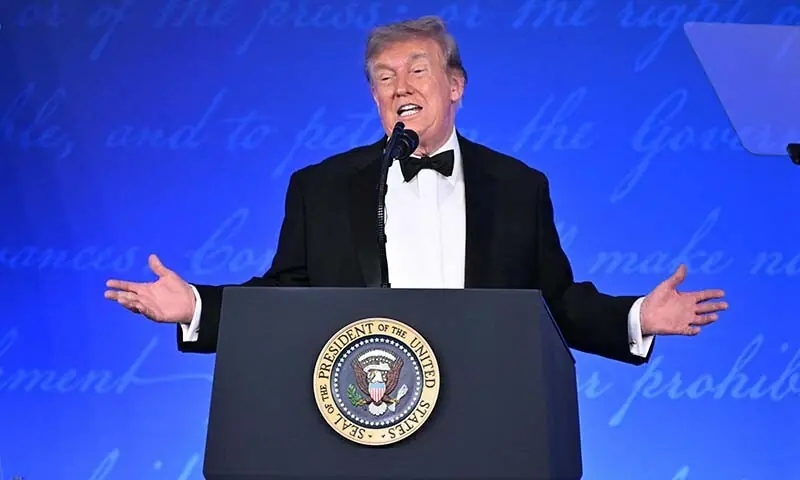
President Donald Trump addressed a rescheduled White House Correspondents’ Association Dinner on Friday, July 24, 2026, at the Waldorf Astoria in Washington, DC. The event, originally planned for April, was postponed due to an assassination attempt that forced Trump's evacuation. Trump began with a conciliatory tone, acknowledging the disruption, but quickly shifted to criticizing the "fake news media" and Democratic opponents, labeling the attendees as having "Trump derangement syndrome." He also revisited the idea of serving a third term, which is constitutionally prohibited, joking about his second term being better than his first and a hypothetical third term being even better. Later, he pulled out a "Trump 2028" cap, humorously announcing his intention to run for a "fourth term." The speech, which lasted an hour, included jokes and was reminiscent of his campaign rallies, though he concluded by expressing "tremendous respect" for journalists while predicting their financial struggles after his departure. This was Trump's first appearance at the dinner after years of animosity with the press. Security was significantly heightened for the rescheduled event, with police and National Guard officers sealing off roads, following the April incident where a gunman, identified as 31-year-old Cole Allen, allegedly fired shots. The venue was moved from the Washington Hilton to the Waldorf Astoria, a former Trump hotel, for a smaller, more "intimate" gathering. Weijia Jiang, outgoing president of the White House Correspondents’ Association, emphasized resilience, stating, "We are back. We will not be intimidated." Incoming president Jacqui Heinrich confirmed the event's return to the Hilton next year. Secret Service Director Sean Curran, who was present at the event, described the current threat environment against top US officials as "off the charts," despite defending the security measures in place during the April incident.
The event highlights the persistent tension between political leadership and the press in the United States, particularly amplified during President Trump's tenure. The deliberate choice of a former Trump hotel for the rescheduled dinner, coupled with the president's rhetoric, suggests a strategic use of public platforms to reinforce his political brand and challenge established media narratives. The heightened security, while a necessary response to a genuine threat, also underscores the increasingly polarized and potentially volatile environment surrounding public figures. The Secret Service's assessment of an "off the charts" threat level indicates systemic challenges in protecting officials, prompting a reevaluation of security protocols and public access in the face of evolving threats. The president's allusions to extended terms, even if framed as jokes, tap into discussions about constitutional limits and the future of democratic norms, inviting public reflection on the balance between executive power and institutional checks and balances in the coming decade.
AI-generated to prompt reflection — not editorial opinion, not advice, not a statement of fact. How this works.