Trump Reiterates Greenland Ambitions, Criticizes NATO Allies in Ankara
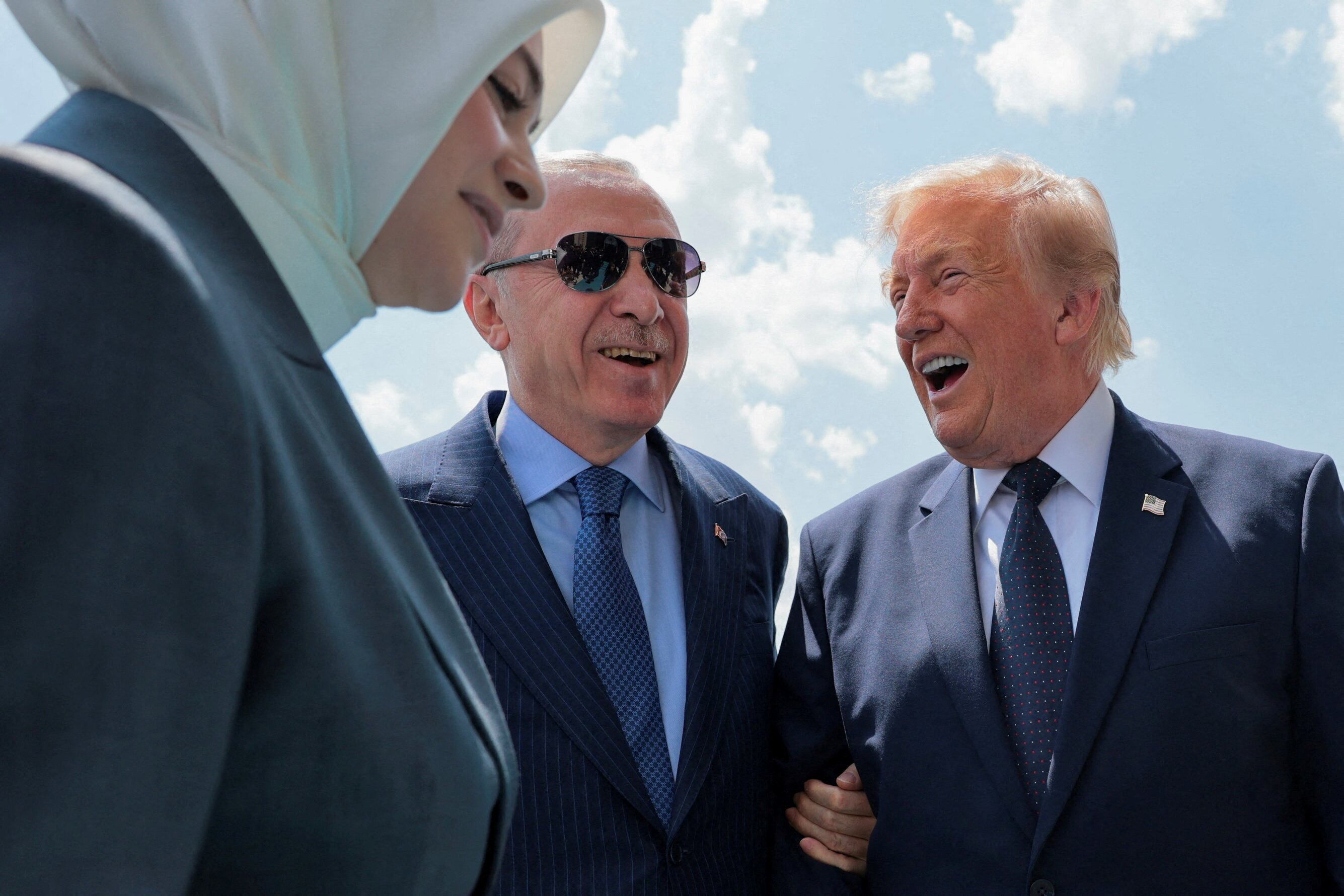
U.S. President Donald Trump has renewed his assertion that the Arctic island of Greenland should be controlled by the United States, rather than Denmark. Speaking in Ankara, Turkey, Trump also directed criticism towards NATO allies. He stated that the U.S. should control Greenland, implying a desire for American sovereignty over the strategically important Arctic territory. This stance reiterates previous remarks made by the president regarding the acquisition of Greenland. The president's comments in Turkey also extended to broader criticisms of NATO members, suggesting dissatisfaction with the current alliance dynamics. The specific nature of his criticisms against NATO allies was not detailed in the provided text, but the context suggests a continuation of his 'America First' foreign policy approach. Trump's focus on Greenland highlights its perceived strategic and economic value, while his remarks in Ankara underscore ongoing tensions within the transatlantic alliance.
The U.S. President's repeated assertions regarding Greenland reflect a strategic interest in Arctic territories, potentially driven by resource acquisition, geopolitical positioning, and expanded U.S. influence in a region of increasing global importance. His criticisms of NATO allies, voiced during a visit to Turkey, suggest a transactional approach to international relations, where adherence to perceived U.S. interests is paramount for alliance cohesion. This dual focus on territorial acquisition and alliance management indicates a foreign policy strategy prioritizing bilateral gains and challenging established multilateral frameworks. The long-term implications may involve shifts in global power dynamics, increased competition for Arctic resources, and potential reconfigurations of existing security alliances as nations re-evaluate their strategic partnerships in light of U.S. policy.
AI-generated to prompt reflection — not editorial opinion, not advice, not a statement of fact. How this works.