Trump's ASEAN Strategy Focuses on US-Centric Solutions Beyond Tariffs
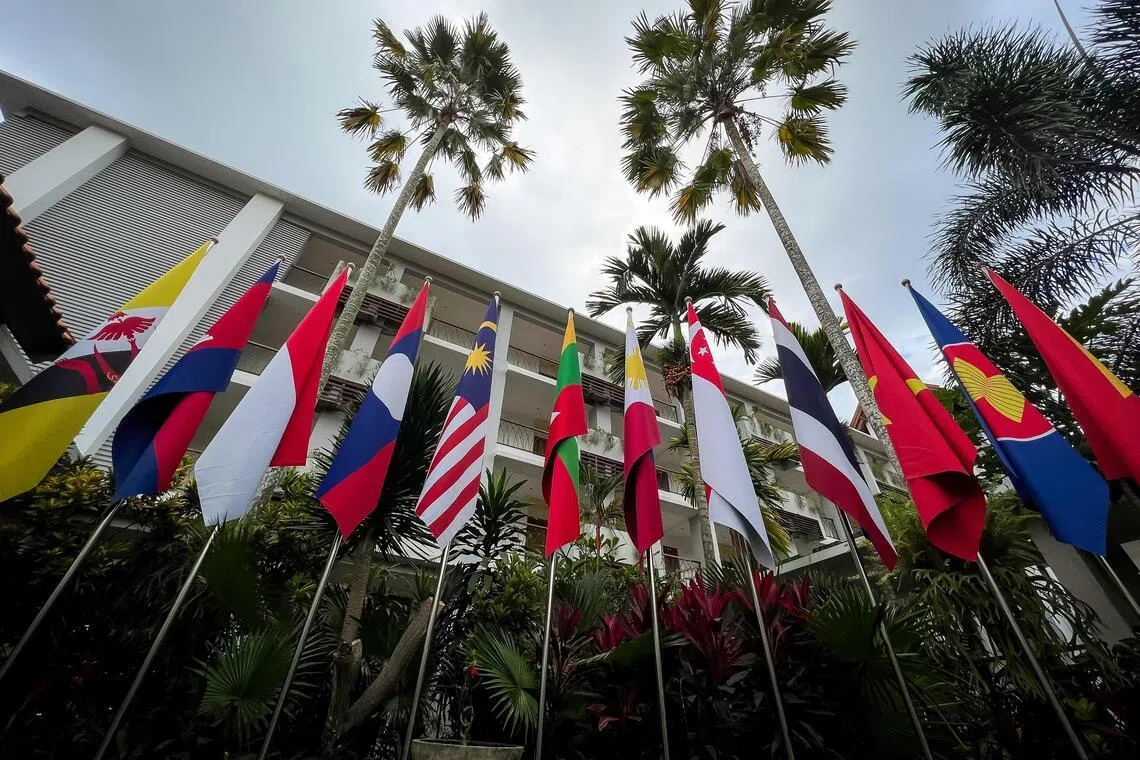
Former US President Donald Trump's approach to ASEAN nations is shifting towards prioritizing American solutions tailored to the region's needs, moving beyond traditional tariff-based trade policies. This strategic realignment is driven by a renewed focus on national security interests and a recognition of evolving geo-economic realities. The emphasis is on fostering economic partnerships that directly benefit the United States while addressing the specific demands and opportunities within Southeast Asia. This pragmatic playbook suggests a desire to leverage US capabilities and innovations to meet regional requirements, potentially creating new avenues for economic cooperation. The underlying principle appears to be a transactional approach, where mutual benefit is defined through the lens of American strategic and economic objectives. This marks a departure from broader, more generalized trade agreements, aiming for more targeted and mutually advantageous outcomes.
The described strategy reflects a potential shift towards a more transactional and national-interest-driven foreign economic policy. By focusing on "US solutions for ASEAN needs," the approach prioritizes direct economic and security benefits for the United States, potentially reconfiguring existing trade dynamics. This could foster a competitive environment where regional partners seek to align their development goals with US offerings. Such a model may create opportunities for targeted US investment and technological transfer, but it also raises questions about inclusivity and the potential for creating dependencies. Evaluating this approach requires considering its long-term impact on regional stability and the broader global economic order, particularly in the context of increasing geopolitical competition and the ongoing technological transformation.
AI-generated to prompt reflection — not editorial opinion, not advice, not a statement of fact. How this works.