Trump's Campaign Explores Anti-Communist Messaging for Midterm Elections
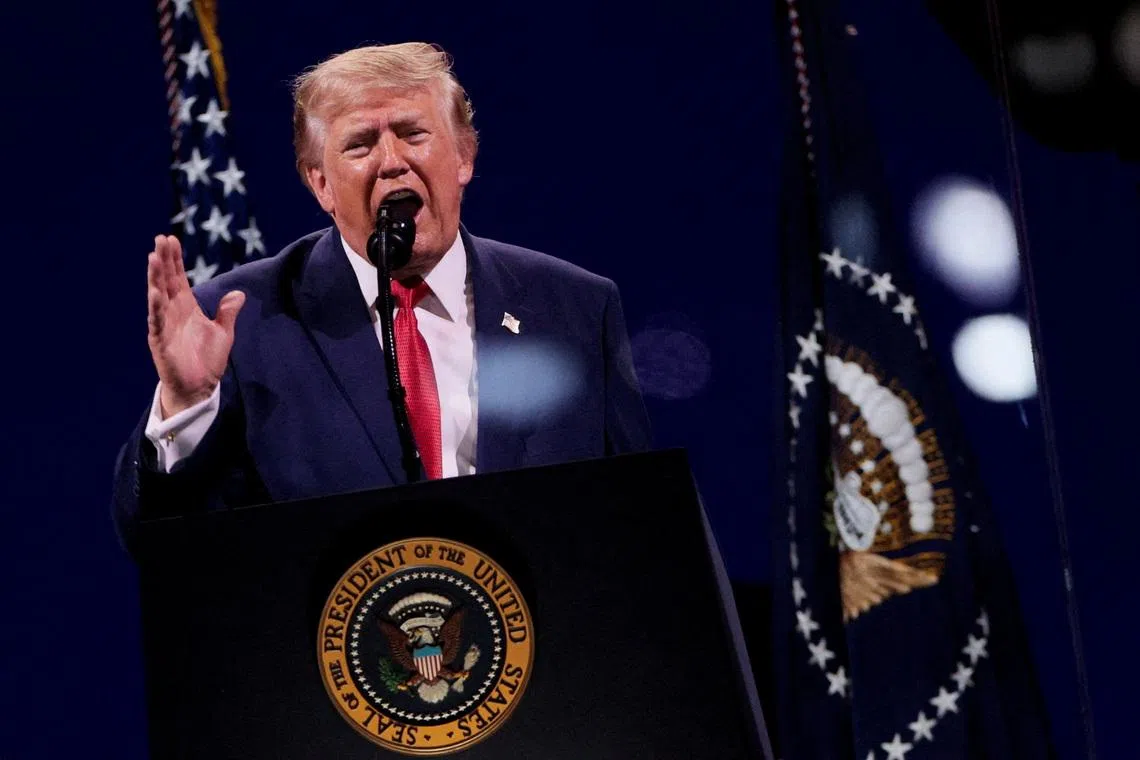
Ahead of the November midterm elections, U.S. President Donald Trump has significantly intensified his rhetoric, warning of a potential communist takeover within the Democratic Party. His political team is actively testing this anti-communist message to gauge its effectiveness beyond his established base of supporters. The strategy aims to mobilize voters by framing the upcoming elections as a crucial stand against perceived socialist or communist ideologies infiltrating the Democratic platform. This escalation in messaging suggests a strategic effort to define the opposition and energize his own political base through a strong ideological contrast. The effectiveness of this approach in appealing to a broader electorate remains a key focus for the Trump campaign as the midterms draw nearer.
The Trump campaign's exploration of an anti-communist message for the midterms reflects a recurring political tactic of leveraging ideological fears to mobilize voters. By framing political opponents through the lens of communism, the campaign seeks to create a stark "us vs. them" dichotomy, potentially simplifying complex policy debates into an existential struggle. This strategy aims to consolidate the base and appeal to undecided voters who may be susceptible to such alarmist framing. However, the long-term efficacy of such polarizing rhetoric in a diverse electorate, and its potential to alienate moderate voters or inadvertently legitimize fringe ideologies, warrants careful consideration of its strategic trade-offs. The approach also raises questions about its sustainability in an era where substantive policy discussions are increasingly overshadowed by identity politics and cultural grievances.
AI-generated to prompt reflection — not editorial opinion, not advice, not a statement of fact. How this works.