Trump's Ceasefire Call Linked to Depleted Missile Stocks, NYT Reports
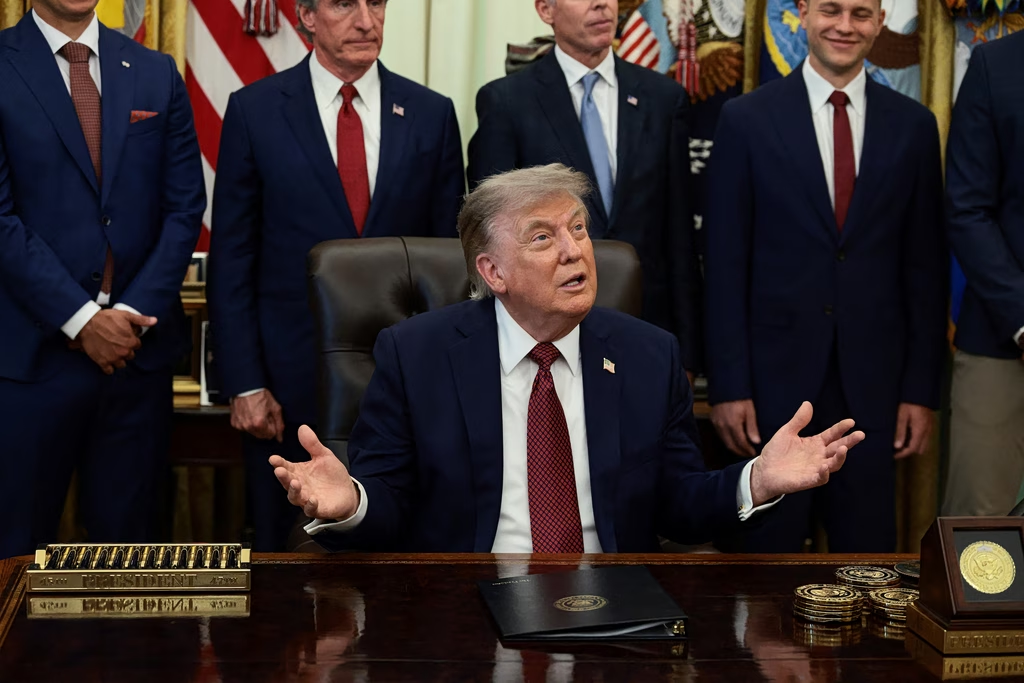
The New York Times has reported that a significant factor behind former U.S. President Donald Trump's shift in stance regarding a ceasefire may have been the rapid depletion of critical air defense missile stockpiles. This revelation suggests that military considerations, specifically the availability of essential weaponry, played a role in shaping foreign policy decisions. The report implies that the urgency to conserve remaining resources influenced the strategic approach to conflict resolution. While the specific context of the ceasefire call is not detailed, the implication is that the U.S. may have been hesitant to prolong or escalate certain conflicts due to a lack of readily available defensive assets. This situation highlights the complex interplay between military readiness and diplomatic initiatives. The availability of advanced weaponry is often a critical component in geopolitical calculations and the decision-making processes of world leaders. The report from the New York Times raises questions about the sustainability of military support and the potential impact on future engagements.
This report suggests that U.S. foreign policy decisions, particularly concerning ceasefires, may be influenced by the practical constraints of military logistics and inventory levels. The depletion of critical air defense missiles implies a potential strain on defense resources, which could necessitate a re-evaluation of military commitments and strategic objectives. This situation underscores the importance of robust defense industrial bases and strategic resource management for maintaining both national security and diplomatic flexibility. In the coming decade, as geopolitical tensions persist and technological advancements accelerate, nations will face increasing pressure to balance military readiness with diplomatic engagement, potentially leading to more resource-conscious foreign policy approaches.
AI-generated to prompt reflection — not editorial opinion, not advice, not a statement of fact. How this works.