Trump's Contradictory Stance on China: Friend to Xi, Foe to Beijing?
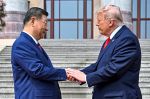
The article explores the apparent contradictions in U.S. President Donald Trump's approach to China, specifically his seemingly friendly personal relationship with Chinese President Xi Jinping while simultaneously labeling China as an adversary. This duality reflects a long-standing tradition of conflicting perspectives on Beijing within American political discourse. However, Trump's presidency has significantly disrupted and reoriented the established U.S. policy towards China. The piece suggests that while personal rapport with leaders can be a factor in international relations, it does not necessarily align with broader geopolitical strategies or national interests. The inherent tension between Trump's personal diplomacy and his administration's more confrontational stance towards China highlights the complex and often paradoxical nature of contemporary foreign policy decision-making.
The juxtaposition of personal diplomacy with national strategy presents a recurring challenge in international relations. While cultivating rapport with individual leaders can facilitate dialogue, it may not always align with the broader economic, security, or geopolitical interests of a nation. This dynamic can lead to policy inconsistencies, creating uncertainty for both domestic and international actors. Examining the incentive structures driving such approaches—whether personal relationships, electoral considerations, or strategic posturing—is crucial for understanding the long-term implications for global stability and trade relations. The next decade will likely see a continued evolution of these complex interactions as technological advancements and shifting global power balances reshape international engagement paradigms.
AI-generated to prompt reflection — not editorial opinion, not advice, not a statement of fact. How this works.