Trump's Diplomacy Plays Both Sides Amid Major Crises
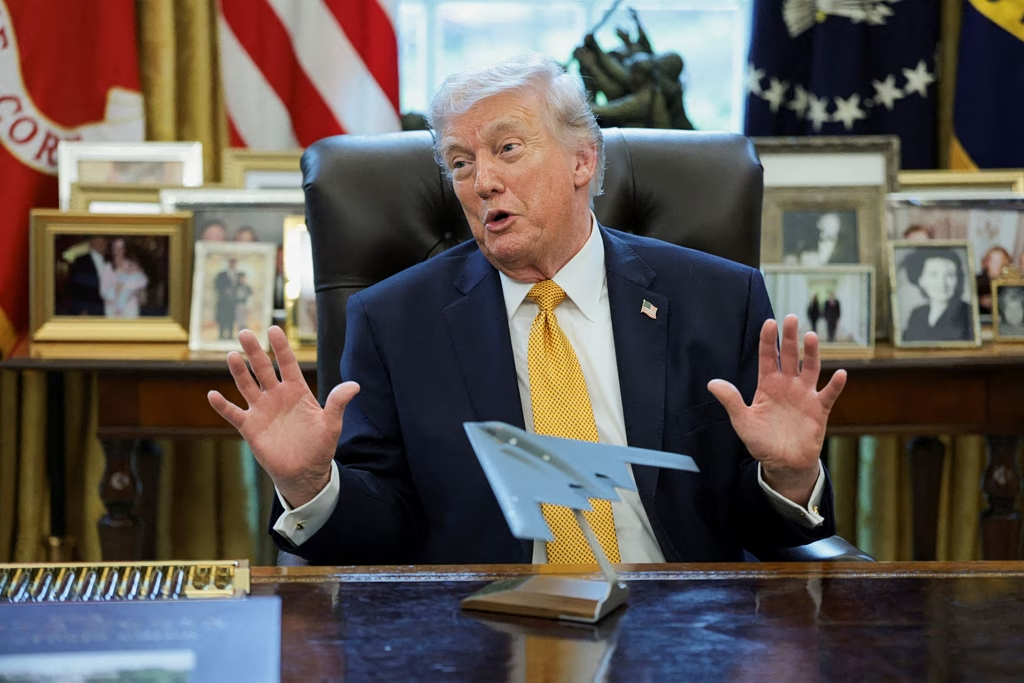
US President Donald Trump hosted Ukrainian President Volodymyr Zelensky and Israeli Prime Minister Benjamin Netanyahu at the White House in quick succession. This diplomatic effort aimed to balance the United States' engagement with two of the most significant ongoing crises in American foreign policy. The meetings occurred as the US navigates complex geopolitical situations involving both Ukraine and Israel. Trump's administration sought to manage these dual challenges, demonstrating a strategy of simultaneous engagement with leaders central to these international issues. The White House served as the venue for these critical discussions, highlighting the president's direct involvement in addressing these foreign policy hotspots. The dual meetings underscore the administration's focus on managing multiple high-stakes international relations concurrently.
The White House's strategy of hosting leaders from nations facing major international crises simultaneously reflects a complex geopolitical balancing act. This approach allows for direct engagement and potential de-escalation, but also risks perceptions of favoring one party over another or diluting focus. In the context of evolving global power dynamics and the increasing interconnectedness of international affairs, such dual diplomacy necessitates careful calibration to maintain credibility and achieve desired outcomes. Future administrations may need to develop more robust frameworks for managing simultaneous, high-intensity foreign policy challenges, ensuring that strategic objectives are met without compromising long-term alliances or regional stability.
AI-generated to prompt reflection — not editorial opinion, not advice, not a statement of fact. How this works.